
Treatment for Milia on the Face
Short answer
Milia treatment starts with confirming the diagnosis, then balances observation, gentle care, or clinician-performed removal.
This answers one question. It is not a diagnosis and does not replace an assessment by a licensed doctor.
At a glance
- First step
- Confirm what the bumps are
- Possible office care
- Sterile clinician-performed removal
- Medication
- Only after suitability is assessed
Why the diagnosis comes first
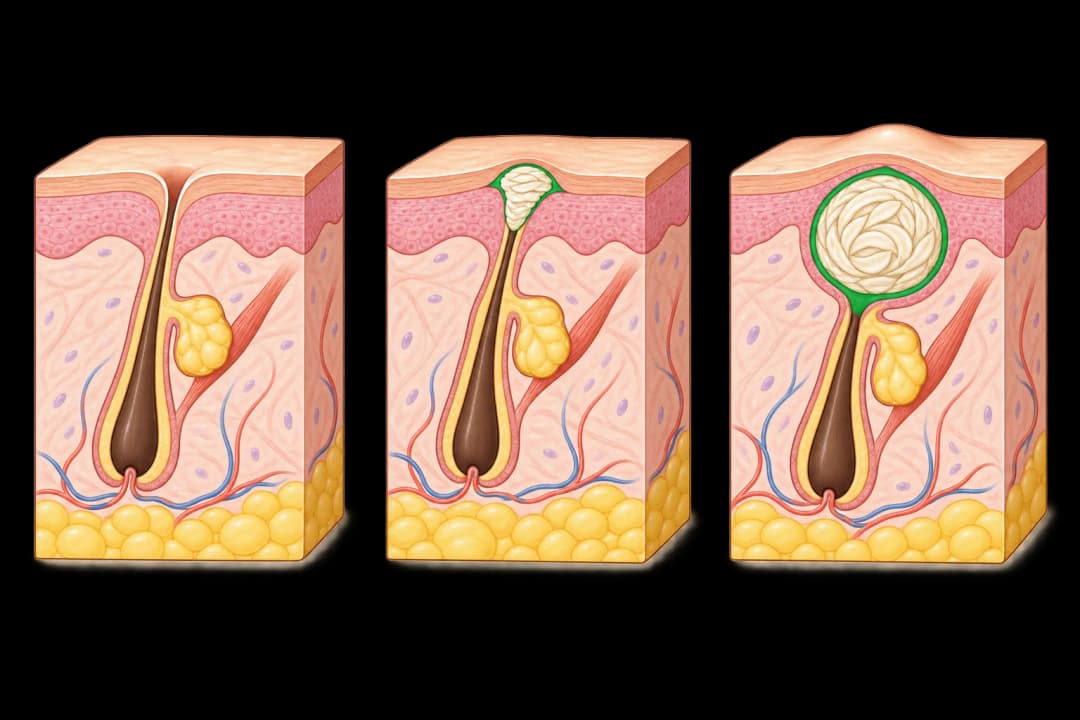
Milia are keratin-filled cysts that often look like firm, pale beads beneath the skin. They are usually not dangerous, but similar bumps can reflect acne, irritation, or another skin condition. A clinician considers the location, texture, number of lesions, and any inflammation before recommending treatment.
Treatment is optional when the bumps are stable and do not bother you. Picking can cause a wound without addressing the cyst, especially on the eyelids or under-eye skin.
Professional options and daily care
For a persistent isolated lesion, a dermatologist may use sterile extraction or another carefully selected office technique. [Curettage And Cautery](/treatments/surgical-dermatology/curettage-and-cautery/) may be discussed for selected cases, with advice about redness and skin care afterward.
If milia are recurrent or widespread, a clinician may consider [Topical Retinoids](/treatments/medical-dermatology/topical-retinoids/). These medicines are not suitable for every person or every facial area, so do not start a prescription product without guidance. Gentle cleansing and avoiding heavy, irritating products can support the skin between visits.
When to have the bumps checked
Seek an assessment when lesions become tender, red, warm, swollen, crusted, or bleed, or when a spot changes shape. A new group of [Whiteheads](/symptoms/whiteheads/) may need acne care rather than milia care. Get prompt help for painful swelling near the eye or possible infection.
Treatment discussion
Ask what confirms the diagnosis, whether observation is sensible, which option fits the lesion’s location, and how to reduce irritation afterward. Mention pregnancy, sensitive skin, eye-area lesions, and every product you apply before discussing medicine.
Find care
General Clinics & Polyclinics in Abu Dhabi
That answer is general. If you want it applied to your own case, these are licensed general clinics & polyclinics listed in Abu Dhabi.
27 Ar Ruwwad St - Shakhbout City - MSH4 - Abu Dhabi - United Arab Emirates
Accepts: Daman, Thiqa, Cigna, MetLife +20 more
Al Ruwais, Al Dhafrah
Accepts: Daman, Thiqa, AXA, Cigna +16 more
Al Bahyah - Al Bahyah Old - Abu Dhabi - United Arab Emirates
Accepts: Daman, Thiqa, Cigna, Allianz Care +18 more
Abu Dhabi
Accepts: Daman, Thiqa, AXA, Cigna +27 more
Ordered by verification status and how complete each clinic's public record is, then alphabetically. This is a directory listing, not a ranking — Zavis does not rate or recommend providers.
A factual listing drawn from the DHA, DOH and MOHAP licence registers. It is not a referral, an endorsement, or advice that any of these providers is right for you.
Questions people ask
Do all facial milia need treatment?
No. Stable, harmless milia can be observed when they are not troubling you.
Can treatment leave a mark?
Any procedure can irritate skin or leave a temporary or lasting mark, so discuss location-specific risks beforehand.
Related
Related reading
Keep reading
Medical disclaimer. This page is general health information, not medical advice, and it cannot diagnose you. Always consult a licensed healthcare provider about your own symptoms and treatment. In an emergency in the UAE, call 998 for an ambulance.