
What should you know about milia in genital area?
Short answer
A suspected genital-area milia should be examined before treatment because several infections, cysts, and normal skin variants can look similar.
This answers one question. It is not a diagnosis and does not replace an assessment by a licensed doctor.
At a glance
- Key point
- Genital bumps have several possible causes
- Do not do
- Do not pierce or squeeze the area
- Assessment
- External skin and mucosal lesions may need different care
Why the location matters
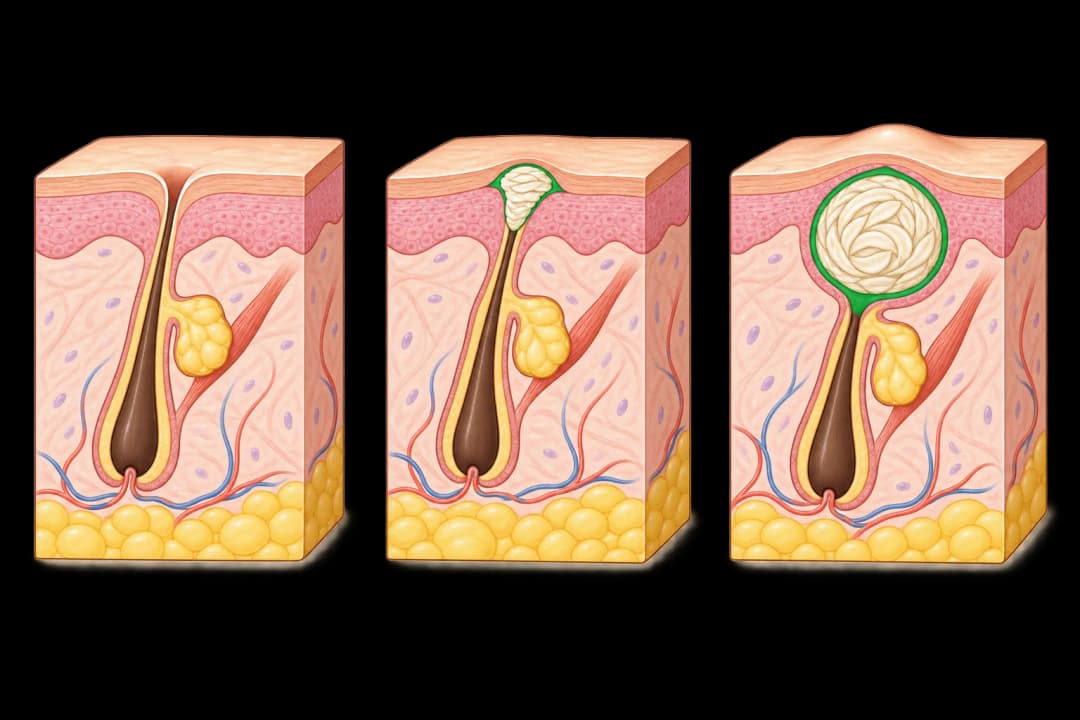
Milia are tiny keratin-filled cysts beneath the skin and are typically firm, smooth, and pale. They are not sexually transmitted. However, bumps around the vulva, penis, scrotum, or groin can also reflect blocked glands, irritation, folliculitis, warts, or other conditions, so a photograph or self-diagnosis cannot reliably settle the question.
Tell the clinician whether the bump is on external skin or a mucosal surface, how long it has been present, and whether there is itching, pain, discharge, ulceration, or recent sexual exposure. This information helps guide the examination.
Safe care
Keep the area gently clean and dry, avoid squeezing or cutting the bump, and pause fragranced products or shaving over irritated skin. Do not apply facial acids or retinoids to genital skin unless a clinician specifically prescribes them for that site.
If the diagnosis is milia and removal is desired, a qualified clinician can choose a suitable sterile procedure. Curettage and cautery may be discussed for selected lesions, with attention to delicate skin, healing, and pigment change.
When to seek care
Arrange prompt medical review for pain, blisters, ulcers, bleeding, pus, spreading redness, fever, new discharge, burning urination, or rapidly changing bumps. Seek sexual-health advice when a sexually transmitted infection is possible. A painless bump that persists or changes also deserves an in-person assessment.
Questions to bring
Ask what the bump most resembles, whether testing is needed, and which products should be avoided. If it is confirmed as milia, ask whether observation or removal is preferable and how the chosen method may affect sensitive skin.
Find care
General Clinics & Polyclinics in Abu Dhabi
That answer is general. If you want it applied to your own case, these are licensed general clinics & polyclinics listed in Abu Dhabi.
27 Ar Ruwwad St - Shakhbout City - MSH4 - Abu Dhabi - United Arab Emirates
Accepts: Daman, Thiqa, Cigna, MetLife +20 more
Al Ruwais, Al Dhafrah
Accepts: Daman, Thiqa, AXA, Cigna +16 more
Al Bahyah - Al Bahyah Old - Abu Dhabi - United Arab Emirates
Accepts: Daman, Thiqa, Cigna, Allianz Care +18 more
Abu Dhabi
Accepts: Daman, Thiqa, AXA, Cigna +27 more
Ordered by verification status and how complete each clinic's public record is, then alphabetically. This is a directory listing, not a ranking — Zavis does not rate or recommend providers.
A factual listing drawn from the DHA, DOH and MOHAP licence registers. It is not a referral, an endorsement, or advice that any of these providers is right for you.
Questions people ask
Are genital-area milia an STI?
Milia themselves are not sexually transmitted, but a similar-looking bump may have another cause, so examination matters.
Can I use a retinoid there?
Avoid self-starting one on genital skin; the area may react strongly and treatment should be clinician-directed.
Related
Related reading
Keep reading
Medical disclaimer. This page is general health information, not medical advice, and it cannot diagnose you. Always consult a licensed healthcare provider about your own symptoms and treatment. In an emergency in the UAE, call 998 for an ambulance.