
What should you know about milia how to treat?
Short answer
Milia are treated with gentle skin care, selected prescription products, or sterile removal by a dermatologist after the diagnosis is confirmed.
This answers one question. It is not a diagnosis and does not replace an assessment by a licensed doctor.
At a glance
- Diagnosis
- Usually based on appearance and texture
- Treatment setting
- Dermatology clinic for sterile removal
- Home rule
- Do not puncture or squeeze
Understanding the diagnosis
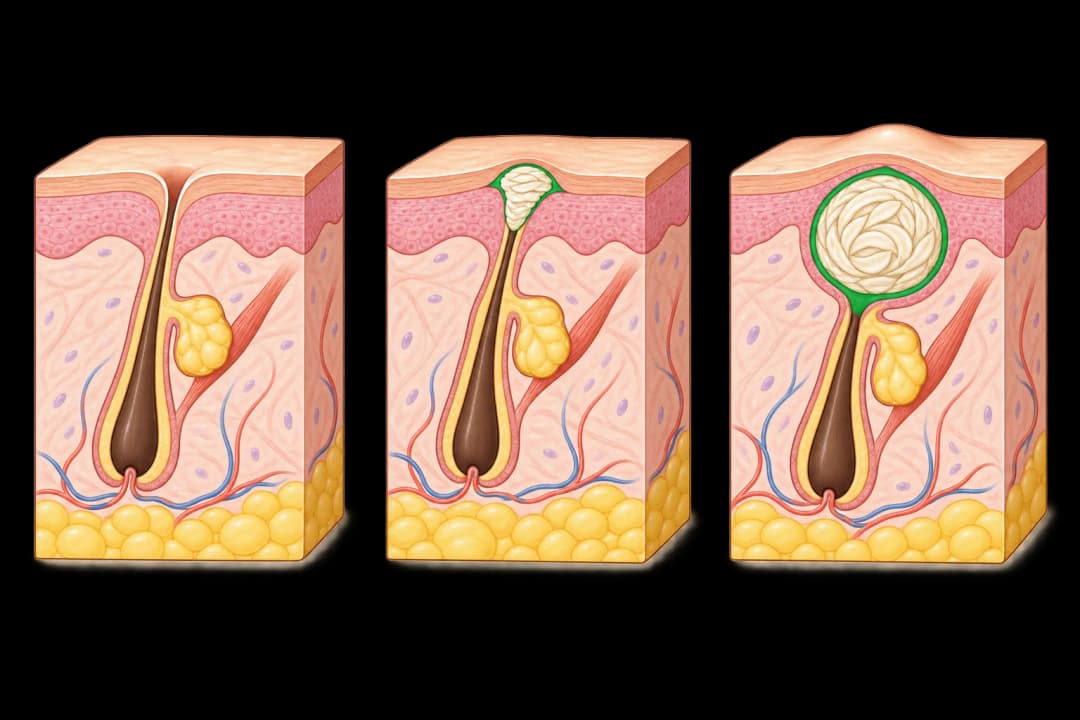
Milia are small, firm cysts containing keratin beneath the skin surface. They commonly look like white or pearly pinpoints and may not hurt or itch. Their appearance can overlap with [Whiteheads](/symptoms/whiteheads/) and other [Skin Bumps](/symptoms/skin-bumps/), so treatment should follow an examination rather than a guess. The number and location of lesions help guide the choice.
How treatment is selected
For mild or limited cases, a clinician may recommend observation and a non-irritating routine. A prescription [Topical Retinoids](/treatments/medical-dermatology/topical-retinoids/) may support skin-cell turnover in selected patients, but dryness and irritation are possible and instructions matter. A dermatologist can also make a tiny sterile opening and remove the cyst. [Curettage And Cautery](/treatments/surgical-dermatology/curettage-and-cautery/) may be discussed for suitable lesions. Avoid home needles, squeezing, and abrasive products, especially near the eyes.
When a review matters
Make an appointment if the diagnosis is uncertain, lesions are persistent or numerous, or self-care has irritated the area. Seek prompt attention for rapid change, bleeding, ulceration, pus, increasing warmth, or significant pain. A different-looking lesion should be assessed directly rather than treated as ordinary milia.
Questions worth asking
What confirms that these are milia? Which treatment fits their location? Could a topical retinoid irritate my skin? What aftercare follows extraction, and how can I reduce the chance of a dark or persistent mark?
Find care
General Clinics & Polyclinics in Abu Dhabi
That answer is general. If you want it applied to your own case, these are licensed general clinics & polyclinics listed in Abu Dhabi.
27 Ar Ruwwad St - Shakhbout City - MSH4 - Abu Dhabi - United Arab Emirates
Accepts: Daman, Thiqa, Cigna, MetLife +20 more
Al Ruwais, Al Dhafrah
Accepts: Daman, Thiqa, AXA, Cigna +16 more
Al Bahyah - Al Bahyah Old - Abu Dhabi - United Arab Emirates
Accepts: Daman, Thiqa, Cigna, Allianz Care +18 more
Abu Dhabi
Accepts: Daman, Thiqa, AXA, Cigna +27 more
Ordered by verification status and how complete each clinic's public record is, then alphabetically. This is a directory listing, not a ranking — Zavis does not rate or recommend providers.
A factual listing drawn from the DHA, DOH and MOHAP licence registers. It is not a referral, an endorsement, or advice that any of these providers is right for you.
Questions people ask
What is the usual treatment for milia?
A dermatologist may observe them, prescribe a suitable topical treatment, or remove them with sterile technique.
Can acne products treat milia?
Some products may irritate without helping; use a prescribed retinoid only when a clinician recommends it.
Related
Related reading
Keep reading
Medical disclaimer. This page is general health information, not medical advice, and it cannot diagnose you. Always consult a licensed healthcare provider about your own symptoms and treatment. In an emergency in the UAE, call 998 for an ambulance.