
Metastatic melanoma with spread to the liver, skin and brain
Short answer
Metastatic melanoma with spread to the liver, skin and brain is advanced melanoma requiring coordinated specialist assessment and treatment planning.
This answers one question. It is not a diagnosis and does not replace an assessment by a licensed doctor.
At a glance
- Disease
- Melanoma that has spread beyond its original site
- Sites mentioned
- Liver, skin and brain
- Care
- Coordinated specialist assessment
What this diagnosis means
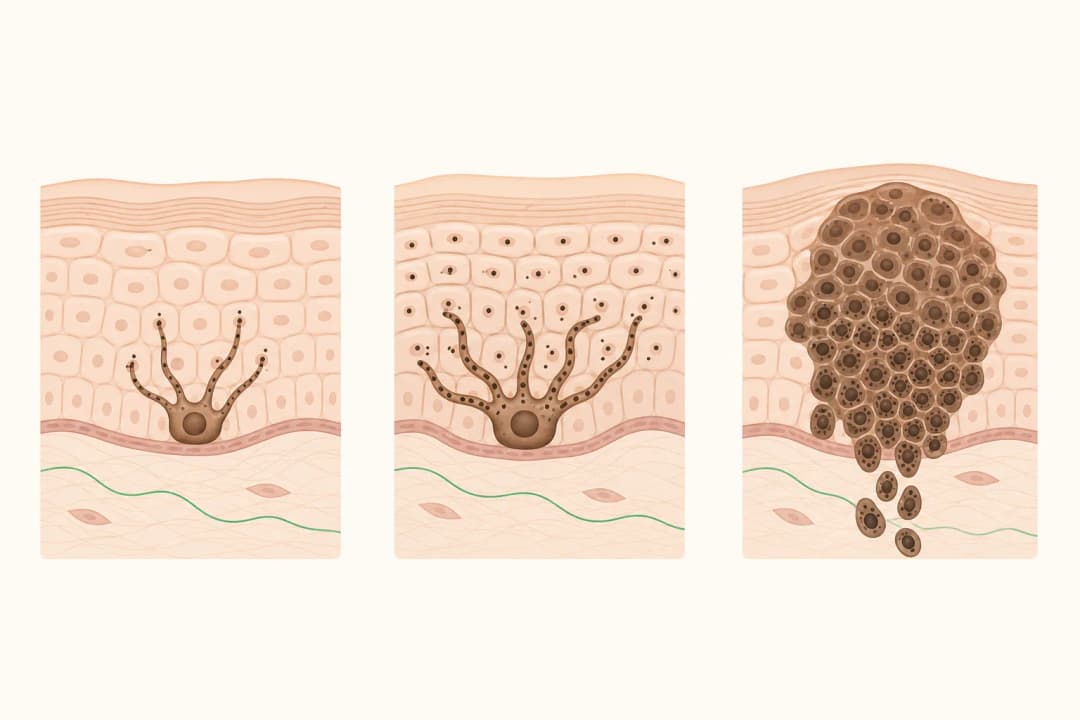
Melanoma begins in pigment-producing cells and can travel beyond the original skin site. In this situation, deposits have been identified in several organs. Liver involvement may affect appetite, energy or abdominal comfort, while skin deposits may appear as firm or changing nodules. Brain metastases can cause headache, weakness, confusion, seizures or changes in balance, although symptoms vary.
Doctors usually combine examination with scans, tissue results and blood tests to understand the extent of disease and choose a plan. The outlook and treatment choices depend on the locations involved, overall health, previous treatment and how the melanoma behaves.
What to do next
Ask for a coordinated review involving oncology, dermatology and other specialists as needed. Treatment may include immunotherapy, medicines directed through the bloodstream, radiation, surgery for a specific deposit, or a combination. Immunotherapy helps the immune system recognise and attack cancer cells, but it can also cause inflammation in healthy organs.
Keep a written list of medicines and symptoms, attend planned imaging and report new changes promptly. Do not start supplements or stop prescribed treatment without discussing it with the treating team. A melanoma information page and an overview of brain metastases can help you prepare for consultations.
When to seek urgent care
Seek urgent medical help for a first seizure, sudden weakness or numbness, new difficulty speaking, severe or rapidly worsening headache, repeated vomiting, marked confusion, fainting or a sudden change in vision. These symptoms can reflect pressure or irritation in the brain and need prompt assessment.
Contact the oncology team promptly for yellowing of the skin or eyes, unusual bleeding, severe abdominal pain, rapidly enlarging skin nodules, fever or a major change in alertness. Keep emergency contact details available, especially when treatment has recently changed.
Questions for your doctor
Which areas have been confirmed by imaging or biopsy, and is further testing needed? What is the aim of each proposed treatment? Which symptoms should trigger an emergency call? How will brain, liver and skin deposits be monitored? What side effects should be reported the same day?
Find care
General Clinics & Polyclinics in Abu Dhabi
That answer is general. If you want it applied to your own case, these are licensed general clinics & polyclinics listed in Abu Dhabi.
27 Ar Ruwwad St - Shakhbout City - MSH4 - Abu Dhabi - United Arab Emirates
Accepts: Daman, Thiqa, Cigna, MetLife +20 more
Al Ruwais, Al Dhafrah
Accepts: Daman, Thiqa, AXA, Cigna +16 more
Al Bahyah - Al Bahyah Old - Abu Dhabi - United Arab Emirates
Accepts: Daman, Thiqa, Cigna, Allianz Care +18 more
Abu Dhabi
Accepts: Daman, Thiqa, AXA, Cigna +27 more
Ordered by verification status and how complete each clinic's public record is, then alphabetically. This is a directory listing, not a ranking — Zavis does not rate or recommend providers.
A factual listing drawn from the DHA, DOH and MOHAP licence registers. It is not a referral, an endorsement, or advice that any of these providers is right for you.
Questions people ask
Does a skin deposit always hurt?
No. A skin deposit may be painless, tender, firm or changing, so any new or growing nodule should be assessed.
Can treatment involve more than one approach?
Yes. Specialists may combine systemic treatment with surgery or radiation when that fits the disease pattern and your health.
Related
Related reading
Keep reading
Medical disclaimer. This page is general health information, not medical advice, and it cannot diagnose you. Always consult a licensed healthcare provider about your own symptoms and treatment. In an emergency in the UAE, call 998 for an ambulance.