
What should you know about metastatic melanoma stage 4?
Short answer
Stage 4 metastatic melanoma has spread to a distant part of the body, and its care is planned from scan findings, tumour features, symptoms, and overall health.
This answers one question. It is not a diagnosis and does not replace an assessment by a licensed doctor.
At a glance
- Stage 4
- Melanoma has reached a distant site.
- Treatment choices
- Systemic and local treatments may be used alone or together.
- Support
- Symptom control, rehabilitation, and emotional care can accompany cancer treatment.
What stage 4 means
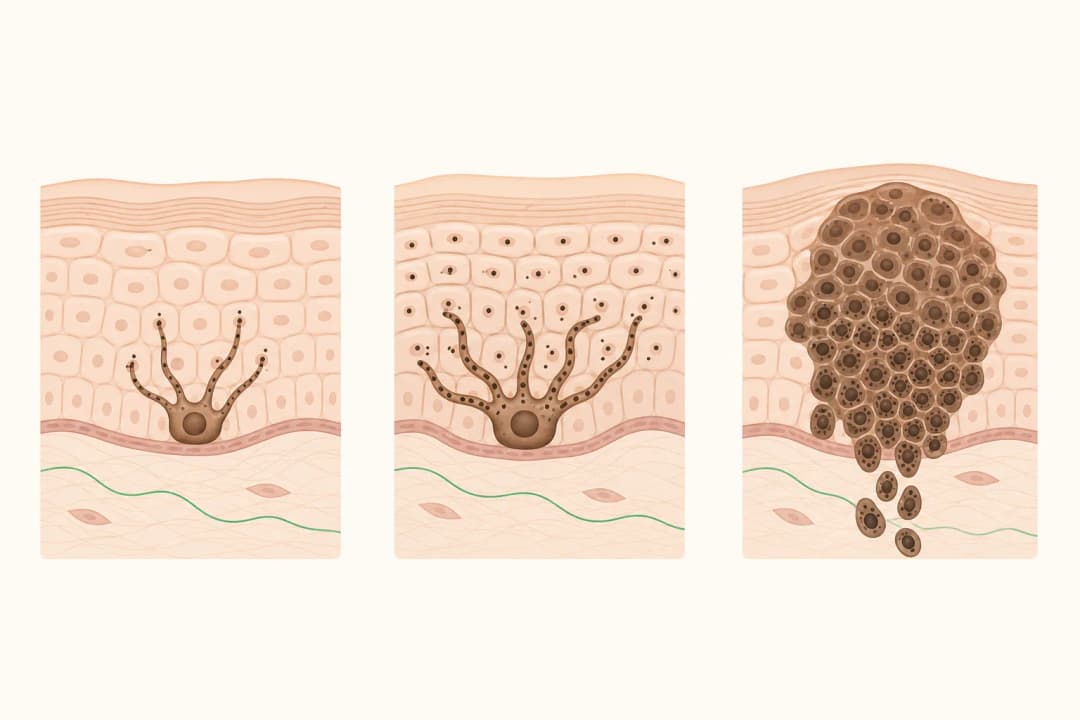
Stage 4 describes melanoma that has travelled beyond the original skin or nearby lymph nodes to a distant organ, distant skin site, or other tissue. It does not identify one fixed pattern: some people have one area, while others have several. Symptoms depend on the sites involved, and some people feel well when the diagnosis is made.
Doctors may use CT, MRI, PET imaging, blood tests, and biopsy to map the disease and understand its biology. Staging helps the team compare options and set realistic aims, which may include controlling melanoma, reducing symptoms, preserving function, and supporting daily life.
Planning care
Ask for a clear treatment plan from a melanoma oncology team. Options can include immunotherapy, surgery or radiation for a selected site, clinical monitoring, and symptom or supportive care. The best fit depends on the location and pace of disease, previous treatment, relevant tumour changes, organ function, and your preferences.
Keep copies of reports and a current medicine list. Tell the team about autoimmune illness, transplant history, steroid use, allergies, and any rapidly changing symptom before treatment starts. Emotional support, nutrition advice, rehabilitation, and palliative care can be part of care at any stage.
When to seek urgent care
Get emergency help for severe breathlessness, chest pain, collapse, a seizure, sudden weakness, new confusion, uncontrolled bleeding, repeated vomiting, or severe pain that escalates quickly. Contact the oncology team promptly for fever, inability to drink, or a new symptom after treatment.
Questions for your doctor
Ask where melanoma is located, whether biopsy or further imaging is needed, and what each treatment aims to do. Discuss side effects, monitoring, fertility or work concerns, symptom contacts, and how supportive care can help.
Find care
General Clinics & Polyclinics in Abu Dhabi
That answer is general. If you want it applied to your own case, these are licensed general clinics & polyclinics listed in Abu Dhabi.
27 Ar Ruwwad St - Shakhbout City - MSH4 - Abu Dhabi - United Arab Emirates
Accepts: Daman, Thiqa, Cigna, MetLife +20 more
Al Ruwais, Al Dhafrah
Accepts: Daman, Thiqa, AXA, Cigna +16 more
Al Bahyah - Al Bahyah Old - Abu Dhabi - United Arab Emirates
Accepts: Daman, Thiqa, Cigna, Allianz Care +18 more
Abu Dhabi
Accepts: Daman, Thiqa, AXA, Cigna +27 more
Ordered by verification status and how complete each clinic's public record is, then alphabetically. This is a directory listing, not a ranking — Zavis does not rate or recommend providers.
A factual listing drawn from the DHA, DOH and MOHAP licence registers. It is not a referral, an endorsement, or advice that any of these providers is right for you.
Questions people ask
Is stage 4 melanoma the same for everyone?
No. The sites involved, tumour features, symptoms, previous care, and general health differ, so treatment plans are personalised.
What is supportive care?
Supportive care helps manage symptoms, treatment effects, practical needs, and emotional wellbeing alongside melanoma treatment.
Related
Related reading
Keep reading
Medical disclaimer. This page is general health information, not medical advice, and it cannot diagnose you. Always consult a licensed healthcare provider about your own symptoms and treatment. In an emergency in the UAE, call 998 for an ambulance.