
What should you know about large milia under the eye?
Short answer
Large milia under the eye are usually superficial keratin cysts, but their delicate location makes professional assessment and removal advisable.
This answers one question. It is not a diagnosis and does not replace an assessment by a licensed doctor.
At a glance
- Location
- Thin, mobile skin requires careful technique.
- Avoid
- Home extraction and rubbing the eyelid.
- Urgent signs
- Vision change, severe pain or major swelling.
Why the under-eye area needs care
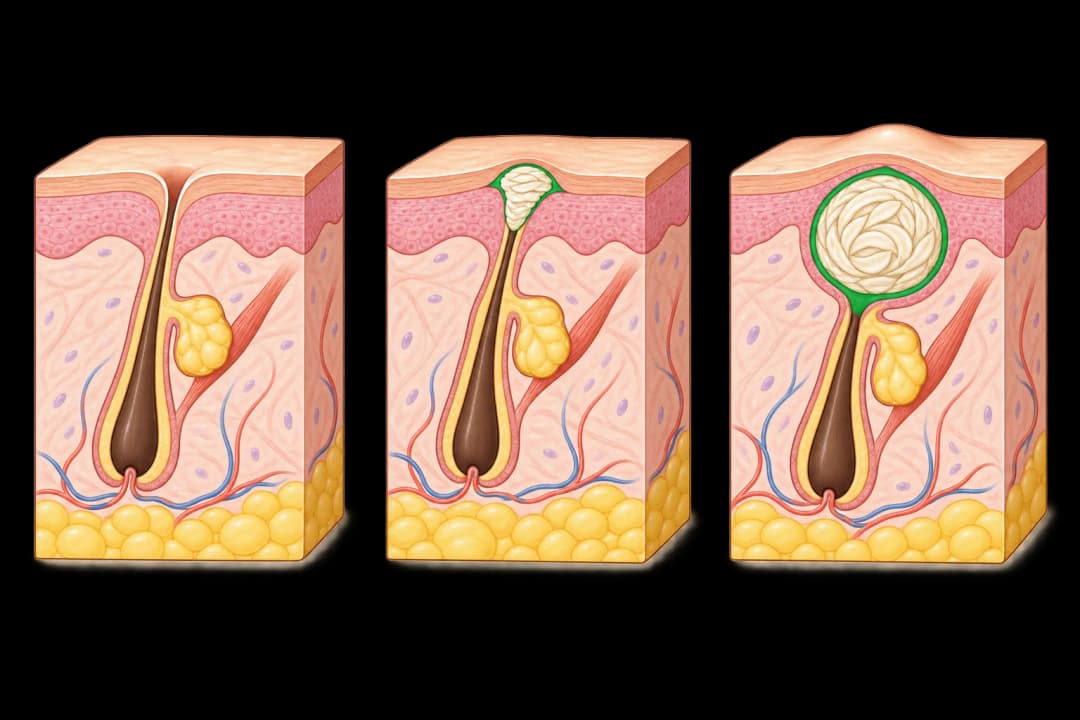
Milia are firm, pale bumps caused by trapped keratin near the surface of the skin. Under-eye skin is thin and moves with blinking, so a bump there should not be treated like a spot on the cheek. A clinician can distinguish milia from whiteheads, a blocked gland, irritation or another lesion by examining its surface and position.
Size does not by itself show whether a bump is serious. A lesion that is red, painful, rapidly changing or associated with eyelid swelling deserves a closer assessment. Avoid placing active products close to the eye unless a clinician has explained exactly where and how to apply them.
Safe options under the eye
Do not squeeze, lance or scrape an under-eye milium. A slip can injure the eyelid or eye surface, and rough handling can leave inflammation or a mark. Use gentle cleansing and remove eye makeup without rubbing. Tell the clinician about contact lenses, eye disease, allergies and products used around the eyes.
A dermatologist may remove a suitable milium with sterile opening and extraction. Curettage and cautery may be discussed for selected lesions, while topical retinoids are not appropriate for every under-eye bump and can irritate this sensitive area. Follow the exact aftercare instructions and keep unapproved products away from the healing site.
When to seek prompt advice
Arrange medical review if the bump bleeds, crusts, grows quickly, becomes tender or is accompanied by persistent eyelid redness. Seek urgent care for vision changes, severe pain, marked swelling, light sensitivity or difficulty opening the eye. These symptoms can arise from several eye or skin problems and should not be managed with home extraction.
Questions for your doctor
Ask whether the bump is truly milia, how close treatment can safely be to the eyelid margin, which method is planned, how to protect the eye during treatment, and when eye makeup, contact lenses and skincare can be resumed.
Find care
General Clinics & Polyclinics in Abu Dhabi
That answer is general. If you want it applied to your own case, these are licensed general clinics & polyclinics listed in Abu Dhabi.
27 Ar Ruwwad St - Shakhbout City - MSH4 - Abu Dhabi - United Arab Emirates
Accepts: Daman, Thiqa, Cigna, MetLife +20 more
Al Ruwais, Al Dhafrah
Accepts: Daman, Thiqa, AXA, Cigna +16 more
Al Bahyah - Al Bahyah Old - Abu Dhabi - United Arab Emirates
Accepts: Daman, Thiqa, Cigna, Allianz Care +18 more
Abu Dhabi
Accepts: Daman, Thiqa, AXA, Cigna +27 more
Ordered by verification status and how complete each clinic's public record is, then alphabetically. This is a directory listing, not a ranking — Zavis does not rate or recommend providers.
A factual listing drawn from the DHA, DOH and MOHAP licence registers. It is not a referral, an endorsement, or advice that any of these providers is right for you.
Questions people ask
Can under-eye milia affect vision?
Milia are superficial, but vision change or significant eye discomfort is not typical and needs prompt assessment.
Is retinoid cream safe under the eye?
Retinoids can irritate delicate eyelid skin, so use them there only when specifically directed by a clinician.
Related
Related reading
Keep reading
Medical disclaimer. This page is general health information, not medical advice, and it cannot diagnose you. Always consult a licensed healthcare provider about your own symptoms and treatment. In an emergency in the UAE, call 998 for an ambulance.