
What should you know about large milia removal?
Short answer
Large milia removal is usually a brief clinical procedure, with the method chosen according to the cyst’s site and skin sensitivity.
This answers one question. It is not a diagnosis and does not replace an assessment by a licensed doctor.
At a glance
- Choice
- Method depends on site, size and skin sensitivity.
- Home care
- Do not pierce or squeeze the cyst yourself.
- Aftercare
- Gentle wound care and sun protection support healing.
Understanding removal
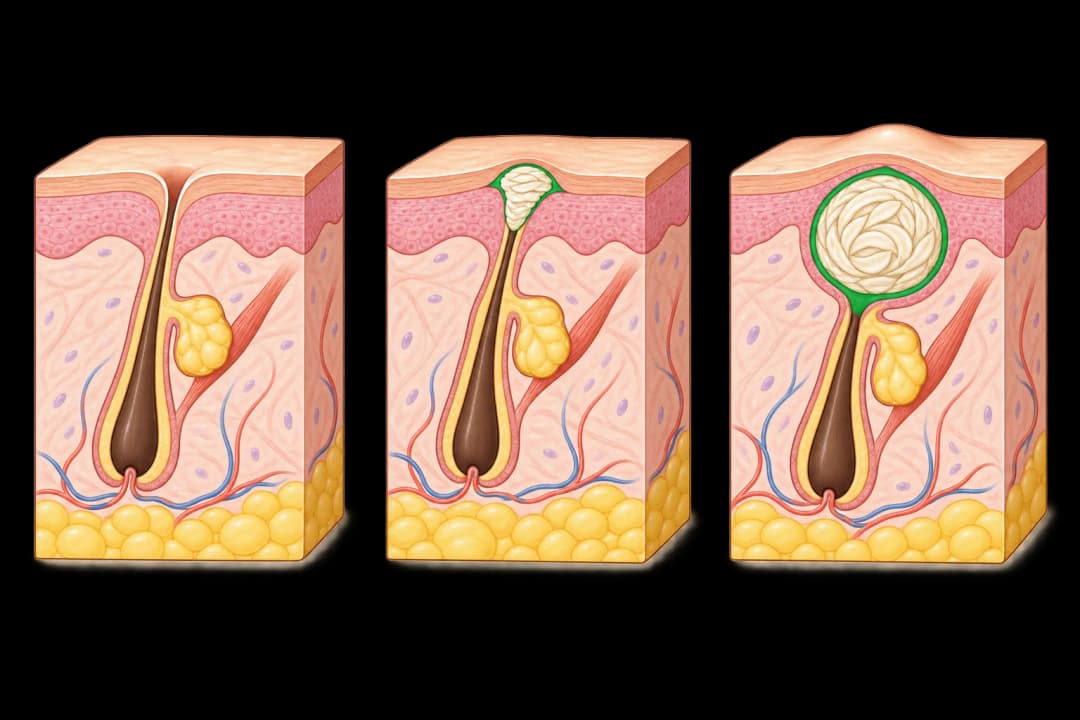
A milium is a small cyst containing compact keratin beneath the outer skin. When it is prominent, persistent or cosmetically bothersome, a clinician can confirm the diagnosis and discuss removal. The aim is to release the cyst while limiting injury to the surrounding skin; the eye area and thin facial skin require extra precision.
Removal is not the same as treating acne. A clinician may use sterile opening and extraction, while curettage and cautery can suit selected lesions. A topical retinoid may be suggested in some situations, especially when new milia are appearing, but it does not replace an examination of an atypical bump.
Preparing for and after removal
Before an appointment, tell the clinician about allergies, medicines, cold sores, eczema, recent peels and products that irritate your skin. Arrive with clean skin if requested, and do not attempt to empty the cyst yourself.
Afterwards, follow the wound-care instructions, keep hands away from the area and protect healing skin from strong sun. Temporary redness, a tiny crust or tenderness can occur. Pause exfoliating products or retinoids if the clinician advises, then restart them gradually only when the skin has settled.
When to contact the clinic
Contact the clinic if redness expands, pain worsens, discharge appears, bleeding does not settle with gentle pressure or the area becomes increasingly warm and swollen. Around the eye, seek prompt advice for vision changes, severe swelling or difficulty opening the eye. A bump that returns or changes should be reassessed rather than repeatedly removed.
Questions for your doctor
Ask how the diagnosis was made, whether extraction or curettage and cautery is more suitable, what aftercare is needed, whether a mark is expected, and when makeup, swimming, exercise and active skincare can resume.
Find care
General Clinics & Polyclinics in Abu Dhabi
That answer is general. If you want it applied to your own case, these are licensed general clinics & polyclinics listed in Abu Dhabi.
27 Ar Ruwwad St - Shakhbout City - MSH4 - Abu Dhabi - United Arab Emirates
Accepts: Daman, Thiqa, Cigna, MetLife +20 more
Al Ruwais, Al Dhafrah
Accepts: Daman, Thiqa, AXA, Cigna +16 more
Al Bahyah - Al Bahyah Old - Abu Dhabi - United Arab Emirates
Accepts: Daman, Thiqa, Cigna, Allianz Care +18 more
Abu Dhabi
Accepts: Daman, Thiqa, AXA, Cigna +27 more
Ordered by verification status and how complete each clinic's public record is, then alphabetically. This is a directory listing, not a ranking — Zavis does not rate or recommend providers.
A factual listing drawn from the DHA, DOH and MOHAP licence registers. It is not a referral, an endorsement, or advice that any of these providers is right for you.
Questions people ask
Can I remove a large milium at home?
Home piercing or squeezing can introduce bacteria and injure skin, so removal should be performed by a trained clinician.
Can milia return after removal?
A treated cyst can be cleared, but new milia may develop elsewhere or in the same area and may need separate assessment.
Related
Related reading
Keep reading
Medical disclaimer. This page is general health information, not medical advice, and it cannot diagnose you. Always consult a licensed healthcare provider about your own symptoms and treatment. In an emergency in the UAE, call 998 for an ambulance.