
How does diagnostic hysteroscopy work?
Short answer
Diagnostic hysteroscopy uses a slim camera passed through the cervix to inspect the inside of the womb and identify possible causes of symptoms.
This answers one question. It is not a diagnosis and does not replace an assessment by a licensed doctor.
At a glance
- Route
- Through the vagina and cervix
- What is used
- Slim camera and fluid
- Possible sample
- Small womb-lining biopsy
How does diagnostic hysteroscopy work?
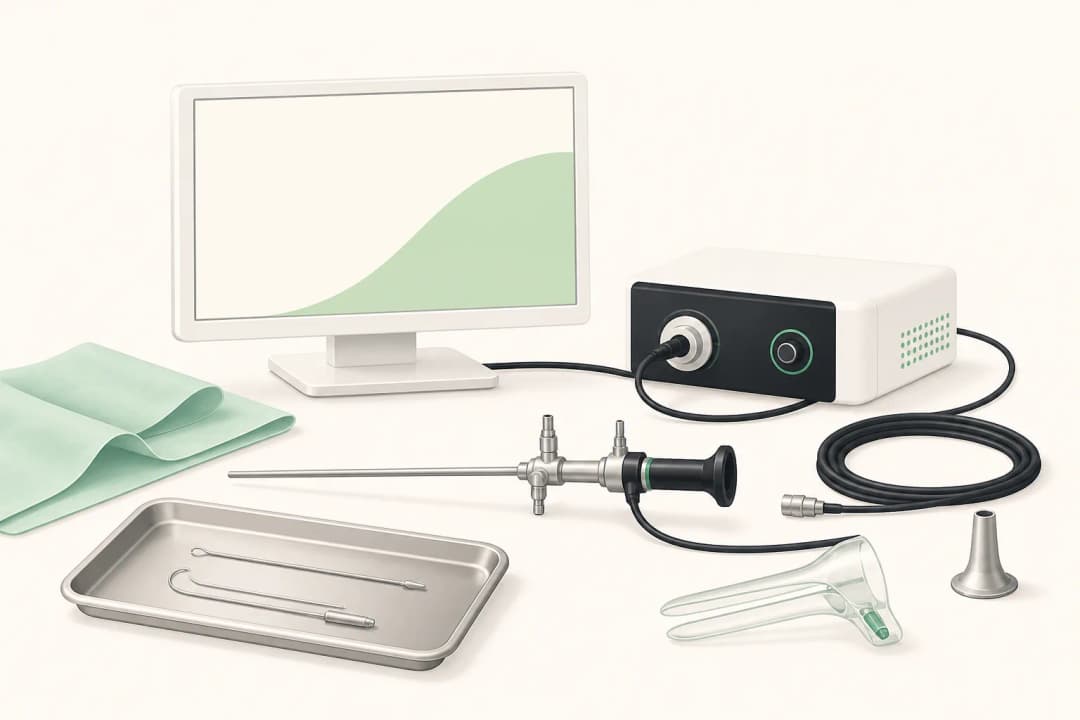
Diagnostic hysteroscopy uses a slim camera passed through the cervix to inspect the inside of the womb and identify possible causes of symptoms. Fluid gently expands the womb so the clinician can see its lining. The camera may show polyps, fibroids or other changes, and a small tissue sample may be taken.
What the test examines
A [Hysteroscope](/technology/hysteroscope/) is a narrow lighted instrument. It travels through the vagina and cervix, so no abdominal cut is needed for a diagnostic examination. The test may be suggested for unusual bleeding, fertility concerns or an image that needs closer assessment. [Endometrial Polyps](/conditions/endometrial-polyps/) are one possible finding.
Pain varies. Some people feel cramping as the instrument or fluid is introduced. Depending on the setting and purpose, the procedure may use local anaesthesia, sedation or a general anaesthetic. If an abnormal area is seen, the clinician will explain whether sampling or a separate treatment is appropriate.
Preparing and recovering
Tell the team about pregnancy possibility, allergies, medicines and previous reactions to anaesthesia. Follow instructions about food, drink and transport if sedation or anaesthesia is planned. Afterward, mild cramps and light bleeding can occur. Rest as needed, use sanitary pads if advised, and follow instructions about sex, bathing and returning to usual activity.
When to seek care
Contact the care team for fever, worsening pain, heavy bleeding, faintness or foul-smelling discharge after the procedure. Seek urgent help for severe pain, collapse, breathing difficulty or bleeding that feels uncontrolled. Do not wait for the planned result appointment if you feel acutely unwell.
Questions for your doctor
Ask why hysteroscopy is recommended, which anaesthetic is planned, whether a biopsy or removal might happen, when results are expected, and which activities should be avoided during recovery.
Find care
General Clinics & Polyclinics in Abu Dhabi
That answer is general. If you want it applied to your own case, these are licensed general clinics & polyclinics listed in Abu Dhabi.
27 Ar Ruwwad St - Shakhbout City - MSH4 - Abu Dhabi - United Arab Emirates
Accepts: Daman, Thiqa, Cigna, MetLife +20 more
Al Ruwais, Al Dhafrah
Accepts: Daman, Thiqa, AXA, Cigna +16 more
Al Bahyah - Al Bahyah Old - Abu Dhabi - United Arab Emirates
Accepts: Daman, Thiqa, Cigna, Allianz Care +18 more
Abu Dhabi
Accepts: Daman, Thiqa, AXA, Cigna +27 more
Ordered by verification status and how complete each clinic's public record is, then alphabetically. This is a directory listing, not a ranking — Zavis does not rate or recommend providers.
A factual listing drawn from the DHA, DOH and MOHAP licence registers. It is not a referral, an endorsement, or advice that any of these providers is right for you.
Questions people ask
Does hysteroscopy require abdominal surgery?
Diagnostic hysteroscopy usually reaches the womb through the vagina and cervix, so it does not require an abdominal incision.
Can a hysteroscopy find a polyp?
Yes. The camera can identify a polyp or another change in the womb lining, and the clinician may discuss sampling or treatment.
Related
Related reading
Keep reading
Medical disclaimer. This page is general health information, not medical advice, and it cannot diagnose you. Always consult a licensed healthcare provider about your own symptoms and treatment. In an emergency in the UAE, call 998 for an ambulance.