
What should you know about extrinsic asthma?
Short answer
Extrinsic asthma is asthma linked with allergic triggers, causing sensitive airways to narrow and produce cough, wheeze or chest tightness.
This answers one question. It is not a diagnosis and does not replace an assessment by a licensed doctor.
At a glance
- Underlying problem
- Inflamed, narrowed airways
- Common pattern
- Symptoms after an allergic exposure
- Useful tool
- Written asthma action plan
What the term means
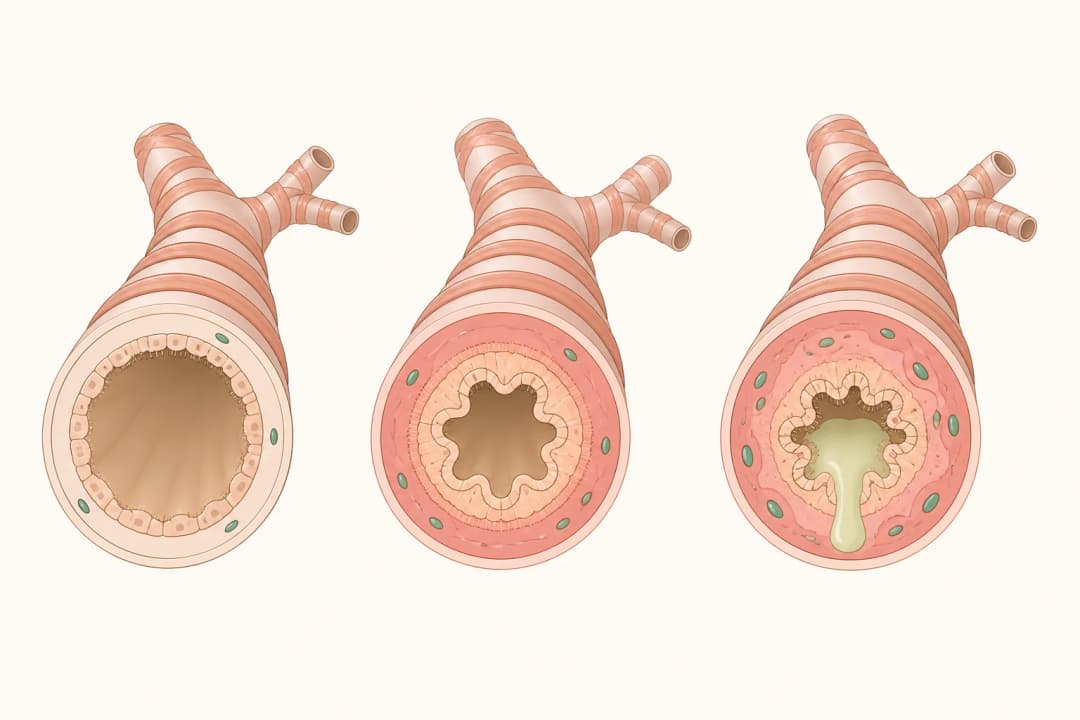
Extrinsic asthma is an older term for asthma associated with an allergic response. Triggers may include house dust mites, pollen, mould, animal dander or other inhaled substances. The airway lining becomes inflamed and the surrounding muscle tightens, which can make breathing feel difficult. Symptoms may vary between episodes and can include wheezing, cough, chest tightness and shortness of breath. Allergic rhinitis can coexist and may worsen airway symptoms. A trigger pattern can be useful, but symptoms can also occur without an obvious exposure.
Managing symptoms
Use your prescribed preventer and reliever inhalers according to your written asthma plan, and ask for an inhaler-technique check if control is poor. Note when symptoms occur, including after cleaning, exercise, workplace exposure or contact with pets. Reduce avoidable triggers by improving ventilation, controlling damp and following personalised advice about dust-mite or pollen exposure. Keep reliever medicine accessible. A clinician may review allergy symptoms, breathing tests and treatment needs. Nebuliser treatment is sometimes used in a healthcare setting for significant breathing difficulty, but it is not a substitute for an agreed action plan.
When to seek urgent care
Follow your asthma action plan during a flare. Seek emergency help if breathing is rapidly worsening, speaking is difficult, lips look blue or grey, you feel exhausted or confused, or your reliever is not helping as expected. Arrange prompt review after a night-time episode, repeated reliever use, or symptoms that limit normal activity. Sudden chest tightness can have causes other than asthma and should be assessed if it feels unusual or severe.
Questions for your doctor
Ask whether allergy testing or breathing tests would help, which triggers are most relevant, how to adjust treatment during a flare, and when to seek emergency care. Ask for a written action plan and a demonstration of inhaler technique.
Find care
General Clinics & Polyclinics in Abu Dhabi
That answer is general. If you want it applied to your own case, these are licensed general clinics & polyclinics listed in Abu Dhabi.
27 Ar Ruwwad St - Shakhbout City - MSH4 - Abu Dhabi - United Arab Emirates
Accepts: Daman, Thiqa, Cigna, MetLife +20 more
Al Ruwais, Al Dhafrah
Accepts: Daman, Thiqa, AXA, Cigna +16 more
Al Bahyah - Al Bahyah Old - Abu Dhabi - United Arab Emirates
Accepts: Daman, Thiqa, Cigna, Allianz Care +18 more
Abu Dhabi
Accepts: Daman, Thiqa, AXA, Cigna +27 more
Ordered by verification status and how complete each clinic's public record is, then alphabetically. This is a directory listing, not a ranking — Zavis does not rate or recommend providers.
A factual listing drawn from the DHA, DOH and MOHAP licence registers. It is not a referral, an endorsement, or advice that any of these providers is right for you.
Questions people ask
Is extrinsic asthma different from asthma?
It describes an allergic pattern of asthma; the airway narrowing and inflammation still need standard asthma management.
Can dust mites trigger symptoms?
Yes, house dust mites can trigger symptoms in some people, especially when exposure is repeated indoors.
Related
Related reading
Keep reading
Medical disclaimer. This page is general health information, not medical advice, and it cannot diagnose you. Always consult a licensed healthcare provider about your own symptoms and treatment. In an emergency in the UAE, call 998 for an ambulance.