
What should you know about an electrosurgery grounding pad?
Short answer
An electrosurgery grounding pad helps complete the electrical circuit safely during procedures that use a return electrode.
This answers one question. It is not a diagnosis and does not replace an assessment by a licensed doctor.
At a glance
- Purpose
- Provides a broad return path for electrical energy
- Placement
- On suitable intact skin selected by the clinical team
- Tell staff about
- Adhesive reactions, wounds, rashes, and implanted devices
Why a pad may be used
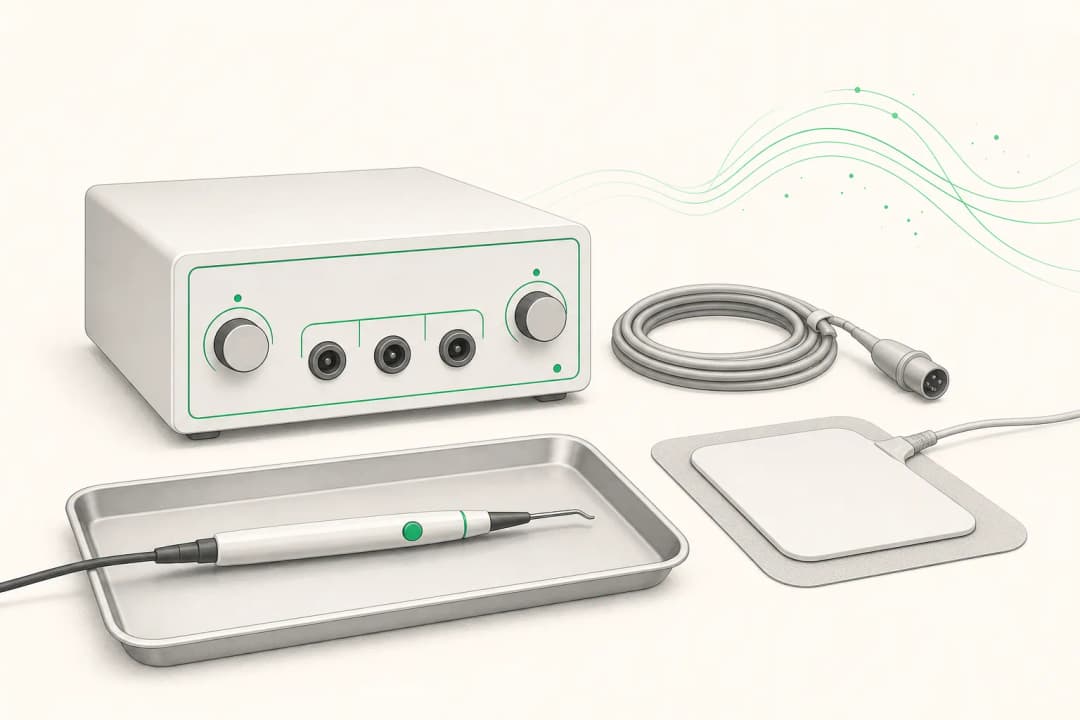
In some electrosurgery systems, energy travels from the generator through an active electrode and returns through a broad pad placed on the patient. Its wide contact area helps disperse the returning energy. The clinical team chooses a suitable site with intact, clean skin and checks that the pad is making good contact before treatment begins. The exact arrangement depends on the equipment and technique, so not every procedure uses the same accessory.
Tell the team if you have a rash, wound, adhesive sensitivity, significant scar, or implanted electronic device near a possible pad site. Hair, lotion, moisture, or poor contact may affect placement. The pad is not a treatment for a skin condition and does not determine whether a lesion should be removed; assessment comes first.
What you can do
Wear clothing that allows the treatment team to reach the planned area without unnecessary exposure. Do not apply oil, cream, or powder to the skin where equipment or dressings will sit unless the clinic instructs you to do so. During setup, tell staff promptly if the adhesive feels sharply painful, if the pad lifts, or if you feel unusual heat under it. After removal, mild redness from adhesive can settle, but avoid scratching and follow the team’s advice for sensitive skin.
When to report a skin reaction
Contact the clinic if redness under the pad spreads, blistering appears, pain persists or increases, or the area becomes swollen, hot, or moist. Seek urgent help for severe pain, extensive blistering, breathing difficulty, fainting, or facial swelling. If the treated wound itself is bleeding or producing unpleasant-smelling drainage, report that separately because it may need a different assessment.
Questions before treatment
Ask whether your procedure needs a grounding pad, where it will be placed, and what skin preparation is required. Check how the team will accommodate adhesive sensitivity, implanted devices, scars, or a wound. You can also ask what warmth is expected, how the pad site should look afterward, and who to contact if irritation continues.
Find care
General Clinics & Polyclinics in Abu Dhabi
That answer is general. If you want it applied to your own case, these are licensed general clinics & polyclinics listed in Abu Dhabi.
27 Ar Ruwwad St - Shakhbout City - MSH4 - Abu Dhabi - United Arab Emirates
Accepts: Daman, Thiqa, Cigna, MetLife +20 more
Al Ruwais, Al Dhafrah
Accepts: Daman, Thiqa, AXA, Cigna +16 more
Al Bahyah - Al Bahyah Old - Abu Dhabi - United Arab Emirates
Accepts: Daman, Thiqa, Cigna, Allianz Care +18 more
Abu Dhabi
Accepts: Daman, Thiqa, AXA, Cigna +27 more
Ordered by verification status and how complete each clinic's public record is, then alphabetically. This is a directory listing, not a ranking — Zavis does not rate or recommend providers.
A factual listing drawn from the DHA, DOH and MOHAP licence registers. It is not a referral, an endorsement, or advice that any of these providers is right for you.
Questions people ask
Does every electrosurgery procedure need a grounding pad?
No. The need depends on the generator, electrode arrangement, and technique used.
Can I place the pad myself?
No. Placement and contact checks should be handled by trained clinical staff.
Related
Related reading
Keep reading
Medical disclaimer. This page is general health information, not medical advice, and it cannot diagnose you. Always consult a licensed healthcare provider about your own symptoms and treatment. In an emergency in the UAE, call 998 for an ambulance.