
What should you know about coughing up thick phlegm with blood?
Short answer
Coughing up thick phlegm with blood should be assessed promptly because irritation and infection are possible, while heavy bleeding or breathlessness requires emergency help.
This answers one question. It is not a diagnosis and does not replace an assessment by a licensed doctor.
At a glance
- What to record
- Colour, thickness, amount, smell and episodes of blood.
- Possible source
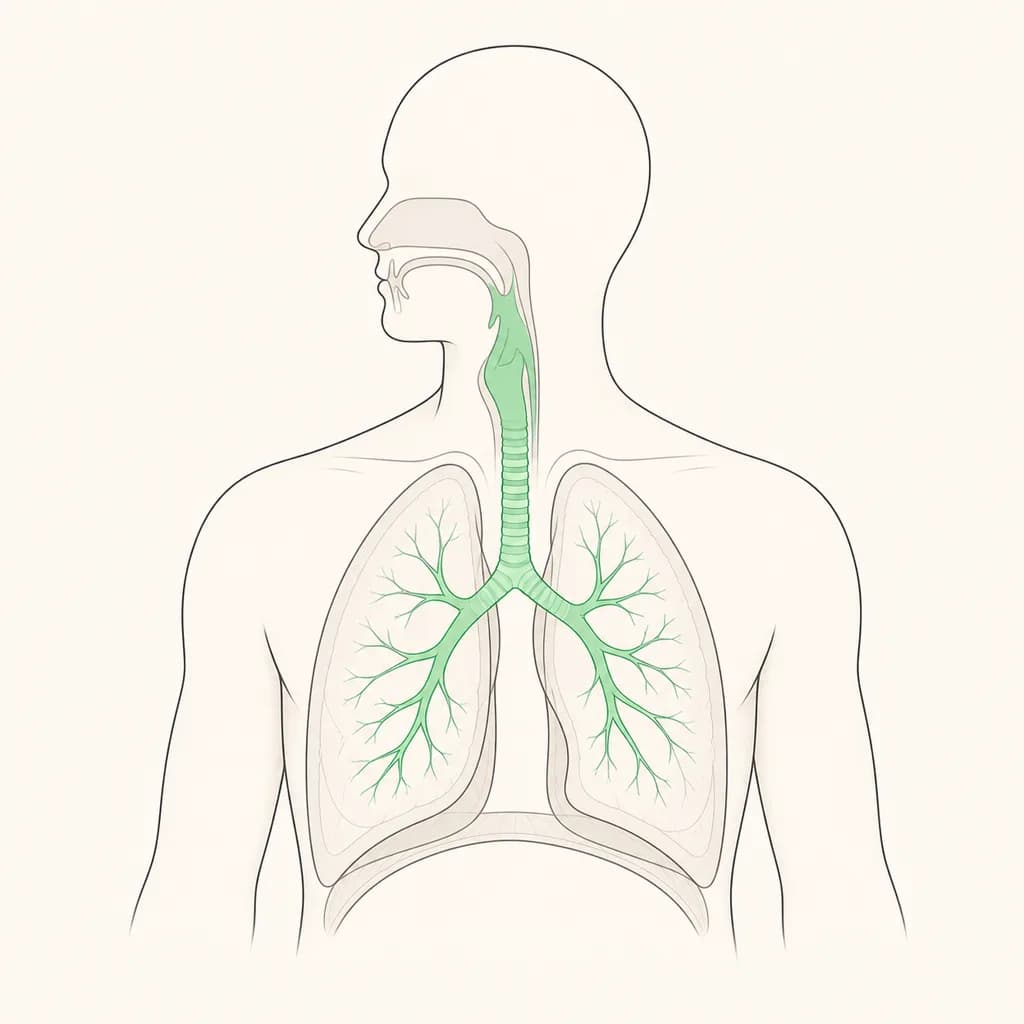
- Irritated or inflamed airways can bleed after repeated coughing.
- Emergency care
- Sudden breathlessness, chest pain or faintness needs immediate help.
Possible explanations
Thick sputum can be harder to clear, so repeated coughing may irritate the airway and leave streaks of blood. Pneumonia can cause heavy mucus alongside fever, chills or chest pain. Bronchiectasis is associated with persistent sputum and can bleed during a flare. A clinician may also consider pulmonary embolism, tuberculosis or lung cancer when symptoms, history and examination point in those directions.
Compare the sputum with your normal pattern: note its colour, smell, amount, consistency and how often blood appears. A description of associated symptoms is more useful than colour alone.
Practical steps
Seek prompt medical advice and mention any lung disease, recent infection, smoking, travel or medicine that affects clotting. Sip fluids if you normally can, rest upright and avoid smoke. Do not delay assessment by trying to produce more sputum. Avoid starting antibiotics without a prescription because thick mucus has several possible causes.
Warning signs
Use emergency services if you develop sudden or severe breathlessness, sharp chest pain, faintness, confusion, blue lips, or bleeding that is heavy, repeated or worsening. Arrange same-day care if fever and weakness are increasing, the blood does not stop, or you cannot clear the mucus. Do not drive if you feel faint or short of breath.
Questions for your doctor
Ask whether your sputum needs testing, whether a chest examination or scan is appropriate, how to clear mucus safely, and which changes mean you should return urgently.
Find care
General Clinics & Polyclinics in Abu Dhabi
That answer is general. If you want it applied to your own case, these are licensed general clinics & polyclinics listed in Abu Dhabi.
27 Ar Ruwwad St - Shakhbout City - MSH4 - Abu Dhabi - United Arab Emirates
Accepts: Daman, Thiqa, Cigna, MetLife +20 more
Al Ruwais, Al Dhafrah
Accepts: Daman, Thiqa, AXA, Cigna +16 more
Al Bahyah - Al Bahyah Old - Abu Dhabi - United Arab Emirates
Accepts: Daman, Thiqa, Cigna, Allianz Care +18 more
Abu Dhabi
Accepts: Daman, Thiqa, AXA, Cigna +27 more
Ordered by verification status and how complete each clinic's public record is, then alphabetically. This is a directory listing, not a ranking — Zavis does not rate or recommend providers.
A factual listing drawn from the DHA, DOH and MOHAP licence registers. It is not a referral, an endorsement, or advice that any of these providers is right for you.
Questions people ask
Can thick phlegm cause more coughing?
Yes. Mucus that is difficult to clear can trigger repeated coughing, which may irritate airway surfaces; blood that persists still needs review.
Should I save a sample for my appointment?
Follow the clinician’s instructions. Do not delay urgent care or repeatedly cough hard to collect one; a clear description may be enough initially.
Related
Related reading
Keep reading
Medical disclaimer. This page is general health information, not medical advice, and it cannot diagnose you. Always consult a licensed healthcare provider about your own symptoms and treatment. In an emergency in the UAE, call 998 for an ambulance.