
COPD stage 4 and life expectancy
Short answer
Stage 4 COPD indicates very severe airflow limitation, but it cannot predict one person’s life expectancy because health, flare-ups and treatment response differ.
This answers one question. It is not a diagnosis and does not replace an assessment by a licensed doctor.
At a glance
- Stage 4
- Very severe airflow limitation
- Prediction
- A stage cannot set an individual timetable
- Review
- Symptoms, flare-ups and other health conditions matter
What stage 4 tells you
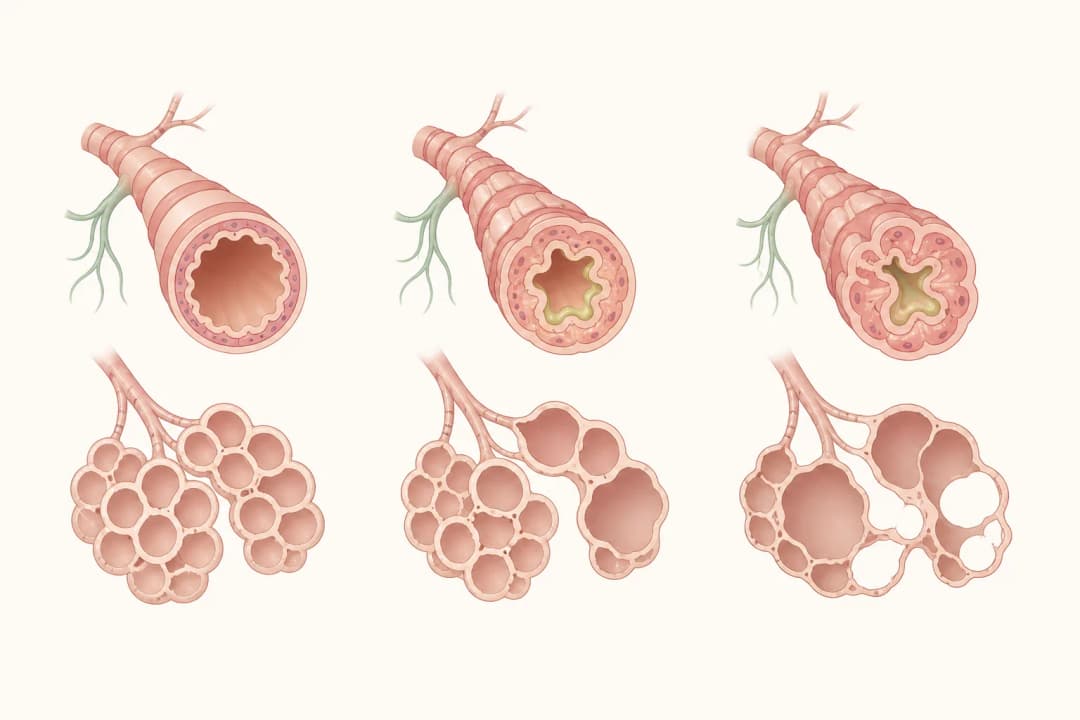
Stage 4 is a label for advanced COPD based mainly on breathing-test results and the wider clinical picture. It does not describe a fixed timetable. Breathlessness, cough, phlegm, wheezing and chest tightness may limit ordinary activities, while repeated flare-ups can cause a person’s condition to change quickly. Other illnesses, nutrition, fitness, smoking exposure and access to suitable treatment also shape how someone feels.
[Spirometry](/treatments/diagnostics-and-screening/spirometry/) is one part of assessment; symptoms and recent changes matter too. A clinician may review oxygen levels, medicines, inhaler technique and the practical support needed at home.
What may help now
Ask for a personalised plan rather than relying on a stage label. A [Chronic Disease Review](/treatments/consultations-and-assessment/chronic-disease-review/) can check inhalers, flare-up instructions, activity goals, nutrition and vaccinations. If you smoke, a [Smoking Cessation Programme](/treatments/lifestyle-and-wellness/smoking-cessation-programme/) can provide structured support to stop exposure to smoke.
Keep a record of breathlessness, sputum changes, sleep, walking tolerance and rescue medicine use. Share this record with your clinician; a worsening pattern may need treatment adjustment. Discuss breathlessness support and future care preferences early, including who should be contacted during a flare-up.
When urgent help is needed
Get urgent medical help for severe or rapidly worsening breathlessness, inability to speak in comfortable sentences, blue or grey lips, confusion, marked drowsiness, fainting or chest pain. Seek prompt advice when phlegm changes substantially, fever develops or your usual reliever is not working. These signs reflect a possible acute problem, not a calculation about life expectancy.
Useful questions
Ask what your breathing tests show, which changes should trigger a call, how to use rescue treatment, and whether oxygen or pulmonary rehabilitation assessment is relevant. Ask who can support you and your family during a flare-up.
Find care
General Clinics & Polyclinics in Abu Dhabi
That answer is general. If you want it applied to your own case, these are licensed general clinics & polyclinics listed in Abu Dhabi.
27 Ar Ruwwad St - Shakhbout City - MSH4 - Abu Dhabi - United Arab Emirates
Accepts: Daman, Thiqa, Cigna, MetLife +20 more
Al Ruwais, Al Dhafrah
Accepts: Daman, Thiqa, AXA, Cigna +16 more
Al Bahyah - Al Bahyah Old - Abu Dhabi - United Arab Emirates
Accepts: Daman, Thiqa, Cigna, Allianz Care +18 more
Abu Dhabi
Accepts: Daman, Thiqa, AXA, Cigna +27 more
Ordered by verification status and how complete each clinic's public record is, then alphabetically. This is a directory listing, not a ranking — Zavis does not rate or recommend providers.
A factual listing drawn from the DHA, DOH and MOHAP licence registers. It is not a referral, an endorsement, or advice that any of these providers is right for you.
Questions people ask
Does stage 4 COPD tell me exactly how long I will live?
No. It is a severity category, not a personal timetable. Your clinician considers symptoms, flare-ups, other conditions and response to treatment.
Can advanced COPD still be treated?
Yes. Treatment can support breathing, reduce triggers, manage flare-ups and improve comfort and daily function.
Related
Related reading
Keep reading
Medical disclaimer. This page is general health information, not medical advice, and it cannot diagnose you. Always consult a licensed healthcare provider about your own symptoms and treatment. In an emergency in the UAE, call 998 for an ambulance.