
The scope used for colposcopy
Short answer
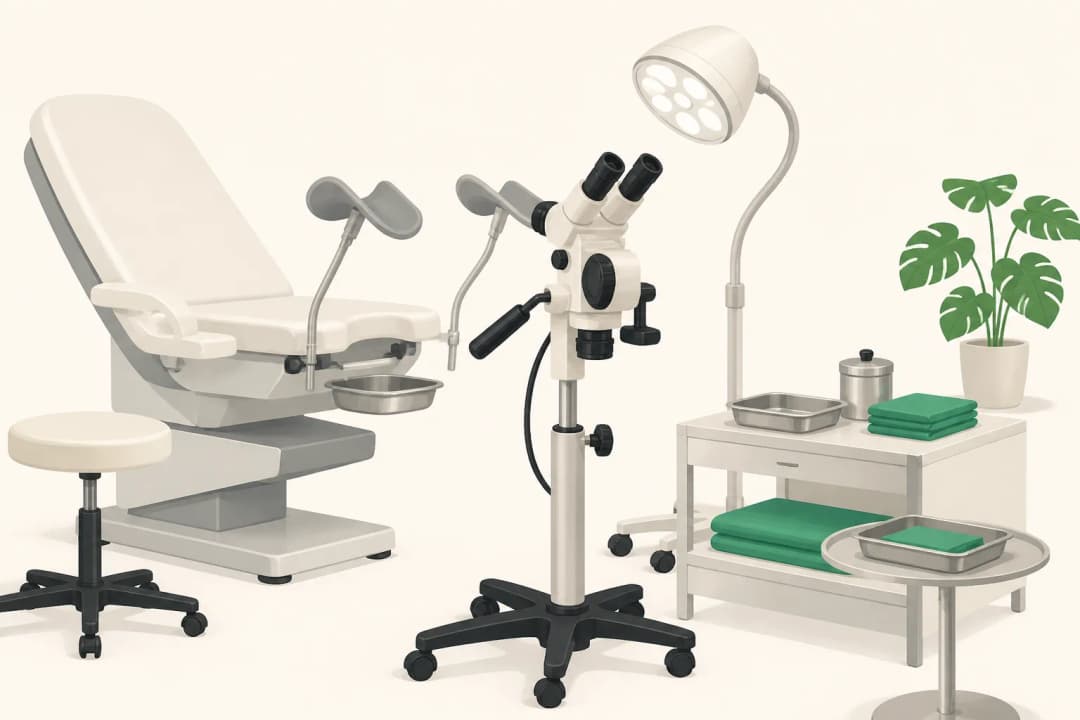
The scope used in colposcopy is an external lighted magnifier called a colposcope; it does not enter the vagina or cervix.
This answers one question. It is not a diagnosis and does not replace an assessment by a licensed doctor.
At a glance
- Name
- The specialised scope is called a colposcope.
- Location
- It remains outside the body throughout the examination.
- Function
- Light and magnification reveal fine surface details.
What is the scope in colposcopy?
It may resemble binoculars on a movable stand and is positioned near the examination couch. A speculum, not the scope, is placed in the vagina to provide a view of the cervix. The clinician adjusts the scope's focus and magnification while its light illuminates the tissue.
What the scope can and cannot show
Magnification can reveal the transformation zone, surface patterns, small blood vessels and tissue responses to liquids applied during the examination. These details help the clinician select an area for biopsy when sampling is appropriate. The scope may also be used to examine the vaginal walls or vulva if that is relevant to the referral.
An unusual appearance through the scope does not by itself establish cervical dysplasia or cervical cancer. The clinician considers the reason for referral and previous cervical screening, and laboratory examination is used when a tissue diagnosis is needed.
Making the examination manageable
Tell the team before starting if you may be pregnant, have pelvic pain, are bleeding, use medicine that affects bleeding or have found previous examinations difficult. Ask where the scope will be positioned and agree on how you will signal if you need a pause. You can also request a chaperone and an explanation before a speculum or biopsy instrument is used.
Try to let your knees rest outward and release tension from your abdomen and pelvic floor while breathing slowly. If discomfort persists, say so; changing position or speculum size may help. Follow the clinic's instructions if a sample is collected.
When to get help afterward
The external scope does not cause bleeding or pain. Light spotting or cramps can follow contact with the cervix or a biopsy. Call the clinic for heavy or worsening bleeding, severe or increasing pelvic pain, fever, foul-smelling discharge or feeling significantly unwell. Obtain urgent care for fainting, shortness of breath, profound weakness or rapidly increasing blood loss.
Clarifying your examination and results
Ask whether the clinician could see the full area that needed assessment, whether a biopsy was taken and what happens to that sample. Confirm when the report is expected, how it will be shared and whether follow-up depends on the colposcopy view, the sample result or both.
Find care
General Clinics & Polyclinics in Abu Dhabi
That answer is general. If you want it applied to your own case, these are licensed general clinics & polyclinics listed in Abu Dhabi.
27 Ar Ruwwad St - Shakhbout City - MSH4 - Abu Dhabi - United Arab Emirates
Accepts: Daman, Thiqa, Cigna, MetLife +20 more
Al Ruwais, Al Dhafrah
Accepts: Daman, Thiqa, AXA, Cigna +16 more
Al Bahyah - Al Bahyah Old - Abu Dhabi - United Arab Emirates
Accepts: Daman, Thiqa, Cigna, Allianz Care +18 more
Abu Dhabi
Accepts: Daman, Thiqa, AXA, Cigna +27 more
Ordered by verification status and how complete each clinic's public record is, then alphabetically. This is a directory listing, not a ranking — Zavis does not rate or recommend providers.
A factual listing drawn from the DHA, DOH and MOHAP licence registers. It is not a referral, an endorsement, or advice that any of these providers is right for you.
Questions people ask
Is a colposcopy scope the same as a speculum?
No. The colposcope magnifies from outside, while the speculum is inserted to gently separate the vaginal walls.
Can the scope diagnose abnormal cervical cells immediately?
It can identify areas that merit assessment, but a biopsy and laboratory report may be needed to determine the type of cell change.
Does the scope use radiation?
No. A colposcope uses visible light and optical or digital magnification.
Related
Related reading
Keep reading
Medical disclaimer. This page is general health information, not medical advice, and it cannot diagnose you. Always consult a licensed healthcare provider about your own symptoms and treatment. In an emergency in the UAE, call 998 for an ambulance.