
Bronchiectasis and coughing up blood: what to know
Short answer
Coughing up blood can occur in bronchiectasis when inflamed, widened airways bleed, but it always deserves prompt medical advice.
This answers one question. It is not a diagnosis and does not replace an assessment by a licensed doctor.
At a glance
- Medical term
- Haemoptysis means coughing blood from the airways.
- First step
- Arrange prompt medical advice, even after a small episode.
- Emergency sign
- Breathing difficulty with bleeding needs emergency help.
What the blood may mean
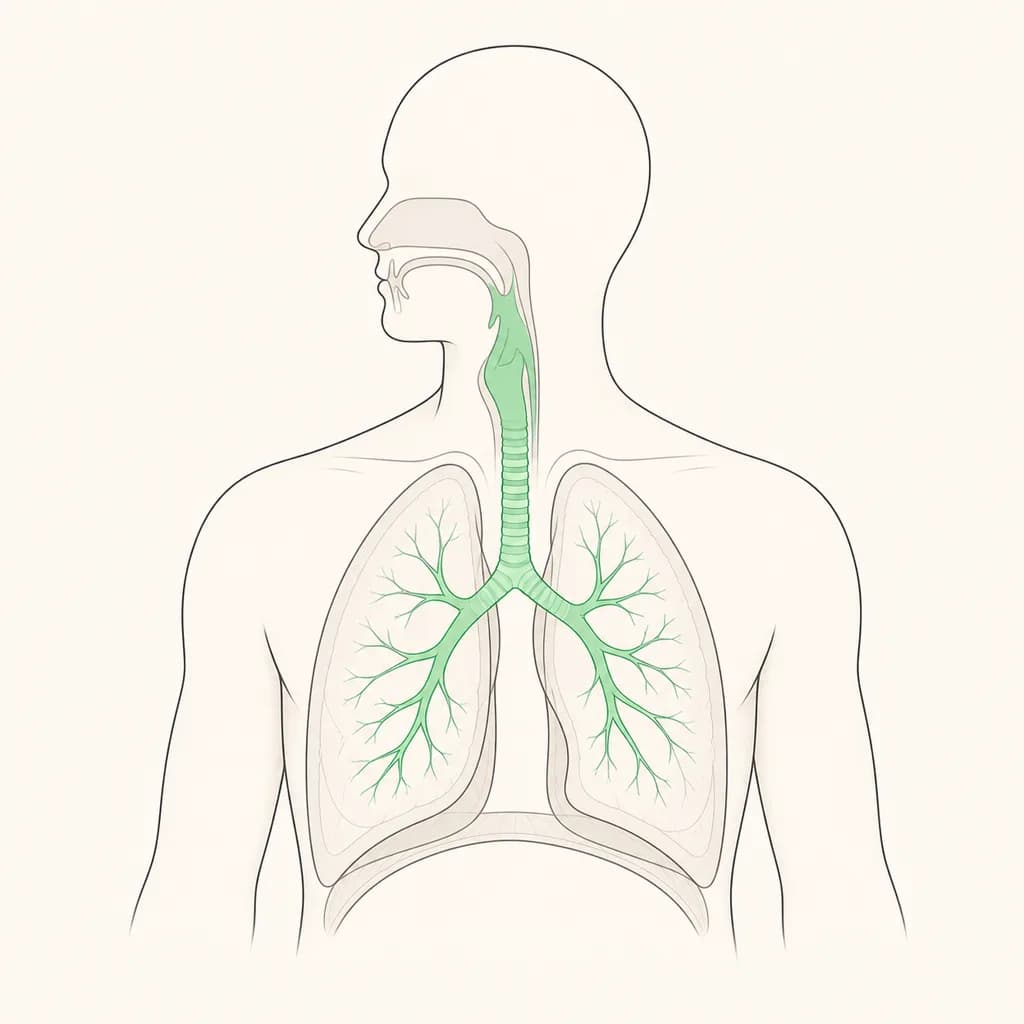
Bronchiectasis damages and widens parts of the breathing tubes. Repeated infection, irritation, or forceful coughing can disturb small blood vessels in the airway lining. Blood may appear as streaks mixed with phlegm or as red sputum. The amount, colour, recurrence, and accompanying symptoms help a clinician judge the cause.
Bleeding is not automatically caused by bronchiectasis. Chest infection, pneumonia, tuberculosis, a clot in the lung, and lung cancer are among the problems a clinician may need to consider. A chest examination and sometimes imaging or other tests can help separate these possibilities.
What to do now
Contact your doctor or respiratory team promptly, even if the bleeding has stopped. Record when it began, whether it was streaking or a larger amount, and whether you also have fever, chest pain, breathlessness, or a change in sputum. Take prescribed bronchiectasis medicines as directed, but do not start leftover antibiotics or stop a blood-thinning medicine without medical advice.
Sit upright, stay calm, and avoid smoking while arranging advice. If you have a written airway-clearance plan, follow it only if your clinician has told you what to do during bleeding.
When to seek urgent help
Call emergency services if bleeding is heavy, continues, returns repeatedly over a short time, or makes breathing difficult. Seek urgent assessment for sudden chest pain, faintness, confusion, blue or grey lips, or a fast worsening of breathlessness. These signs can indicate significant blood loss or a serious lung problem and should not be watched at home.
Questions to take with you
Ask what may have triggered the bleeding, whether your current medicines affect clotting, and whether you need a chest scan or sputum testing. Clarify which amount or pattern should prompt emergency help and how to adapt airway-clearance exercises until the episode is assessed.
Find care
General Clinics & Polyclinics in Abu Dhabi
That answer is general. If you want it applied to your own case, these are licensed general clinics & polyclinics listed in Abu Dhabi.
27 Ar Ruwwad St - Shakhbout City - MSH4 - Abu Dhabi - United Arab Emirates
Accepts: Daman, Thiqa, Cigna, MetLife +20 more
Al Ruwais, Al Dhafrah
Accepts: Daman, Thiqa, AXA, Cigna +16 more
Al Bahyah - Al Bahyah Old - Abu Dhabi - United Arab Emirates
Accepts: Daman, Thiqa, Cigna, Allianz Care +18 more
Abu Dhabi
Accepts: Daman, Thiqa, AXA, Cigna +27 more
Ordered by verification status and how complete each clinic's public record is, then alphabetically. This is a directory listing, not a ranking — Zavis does not rate or recommend providers.
A factual listing drawn from the DHA, DOH and MOHAP licence registers. It is not a referral, an endorsement, or advice that any of these providers is right for you.
Questions people ask
Is a small streak of blood always an emergency?
Not always, but blood in sputum with bronchiectasis should be reported promptly because the cause and risk depend on the pattern and accompanying symptoms.
Should airway-clearance exercises continue during bleeding?
Follow your clinician’s specific plan. Some people need to pause or modify techniques until the bleeding has been assessed.
Related
Related reading
Keep reading
Medical disclaimer. This page is general health information, not medical advice, and it cannot diagnose you. Always consult a licensed healthcare provider about your own symptoms and treatment. In an emergency in the UAE, call 998 for an ambulance.