
Brain MRI scanner: what to expect
Short answer
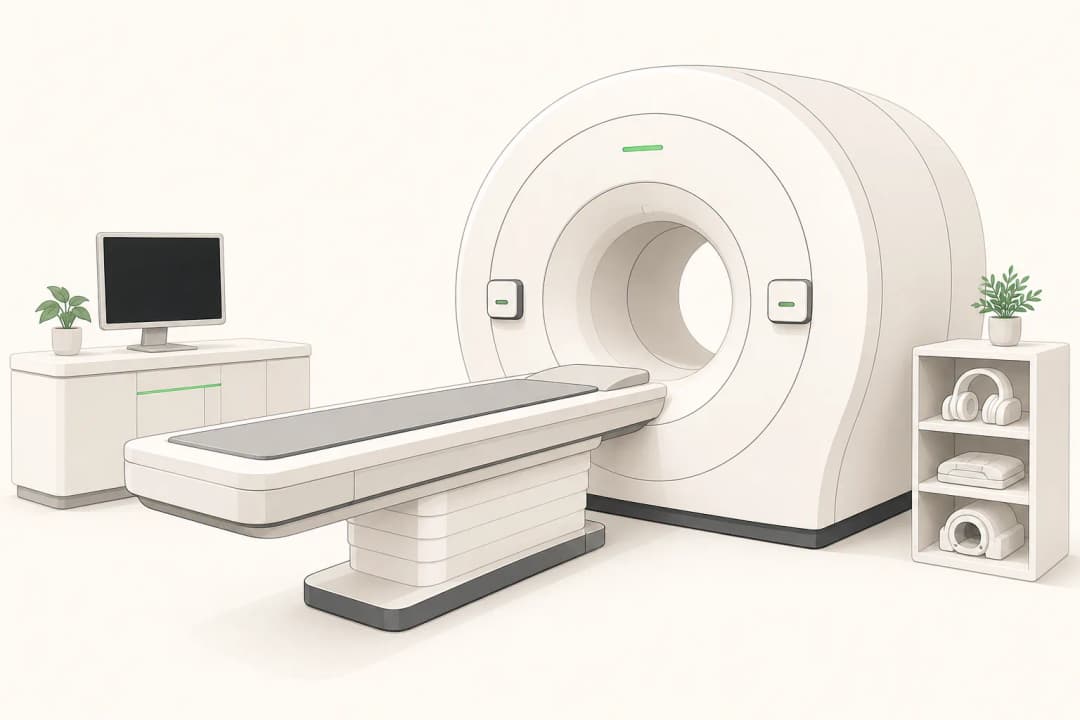
A brain MRI scanner uses a strong magnetic field and radio waves to create detailed images without using ionising radiation.
This answers one question. It is not a diagnosis and does not replace an assessment by a licensed doctor.
At a glance
- Imaging method
- Magnetic fields and radio waves create detailed brain images.
- Radiation
- MRI does not use ionising radiation.
- Key preparation
- Disclose all implants, devices, metal exposure and relevant medical conditions.
The short answer
You lie on a table that moves into a tunnel-shaped machine. The scan is noisy, and keeping your head still helps produce clear pictures. Some examinations use an injected contrast agent to make particular tissues or blood vessels easier to assess.
What the images can help assess
MRI can show the brain, its coverings, fluid spaces and nearby structures in different types of image sequence. Clinicians use it to investigate symptoms, characterise an abnormal area, plan treatment, or compare changes across follow-up scans.
An MRI finding does not by itself always identify exactly what an abnormal area is. The radiologist interprets its location and imaging pattern alongside symptoms, examination findings and earlier scans. Further imaging or a biopsy may sometimes be needed.
Before and during the appointment
Complete the safety questionnaire accurately. Report a pacemaker, aneurysm clip, cochlear implant, medicine pump, metal fragment, previous surgery, kidney problems, pregnancy or possible pregnancy. The imaging team must confirm whether each device or implant is compatible with the scanner.
Remove metal objects as instructed and tell staff if enclosed spaces make you anxious. Ear protection and an intercom are provided, and you can communicate with the radiographer. If contrast is planned, mention previous contrast reactions and follow the centre's instructions about food, drink and medicines.
When not to wait for a routine scan
Call emergency services for a first seizure, sudden facial droop or limb weakness, new trouble speaking, loss of consciousness, severe confusion, or an abrupt and unusually intense headache. These symptoms need urgent clinical assessment rather than waiting for a scheduled MRI.
After contrast, alert staff immediately to breathing difficulty, swelling of the face or throat, widespread hives, or feeling faint. For milder symptoms after leaving, contact the imaging service or seek medical advice using the discharge instructions provided.
Questions to ask about the scan
Ask whether contrast is expected, whether an implant needs documentation, how to manage claustrophobia, and who will explain the result. If this is a follow-up examination, ask which earlier images should be available for comparison and what clinical decision the scan is intended to inform.
Questions people ask
Can I have a brain MRI if I have a metal implant?
It depends on the exact implant and its documented MRI conditions. Give the imaging team the device name or implant card before the appointment so they can check compatibility.
Why does the MRI scanner make loud sounds?
The sounds come from components that switch magnetic gradients while different image sequences are collected. Ear protection reduces the noise reaching you.
Does an abnormal MRI result confirm a brain tumour?
No. MRI describes the appearance and location of an abnormality, but clinicians may need clinical context, comparison imaging or tissue testing to determine its cause.
Related
Related reading
Keep reading
Cancer care in the UAE
Hospitals & Medical Centers in Abu Dhabi
Most UAE cancer care is delivered inside hospital services rather than by standalone oncology clinics, so these are licensed hospitals & medical centers listed in Abu Dhabi. Confirm the specific cancer service exists before you travel, and know that asking for a second opinion is routine.
Ahalia Hospital Musaffah Building - Musaffah - Musaffah Industrial - Abu Dhabi - United Arab Emirates
Accepts: Daman, Thiqa, AXA, Cigna +26 more
Al Ruwais Industrial City - Abu Dhabi - United Arab Emirates
Accepts: Daman, Thiqa, AXA, Cigna +30 more
Abu Dhabi, Abu Dhabi
Accepts: Daman, Thiqa, AXA, Cigna +30 more
Second opinions are routine in cancer care and asking for one does not affect your treatment. How to arrange a second opinion in the UAE.
Ordered by verification status and how complete each clinic's public record is, then alphabetically. This is a directory listing, not a ranking — Zavis does not rate or recommend providers.
A factual listing drawn from the DHA, DOH and MOHAP licence registers. It is not a referral, an endorsement, or advice that any of these providers is right for you.
Medical disclaimer. This page is general health information, not medical advice, and it cannot diagnose you. Always consult a licensed healthcare provider about your own symptoms and treatment. In an emergency in the UAE, call 998 for an ambulance.