
Big milia under the eye: what to know
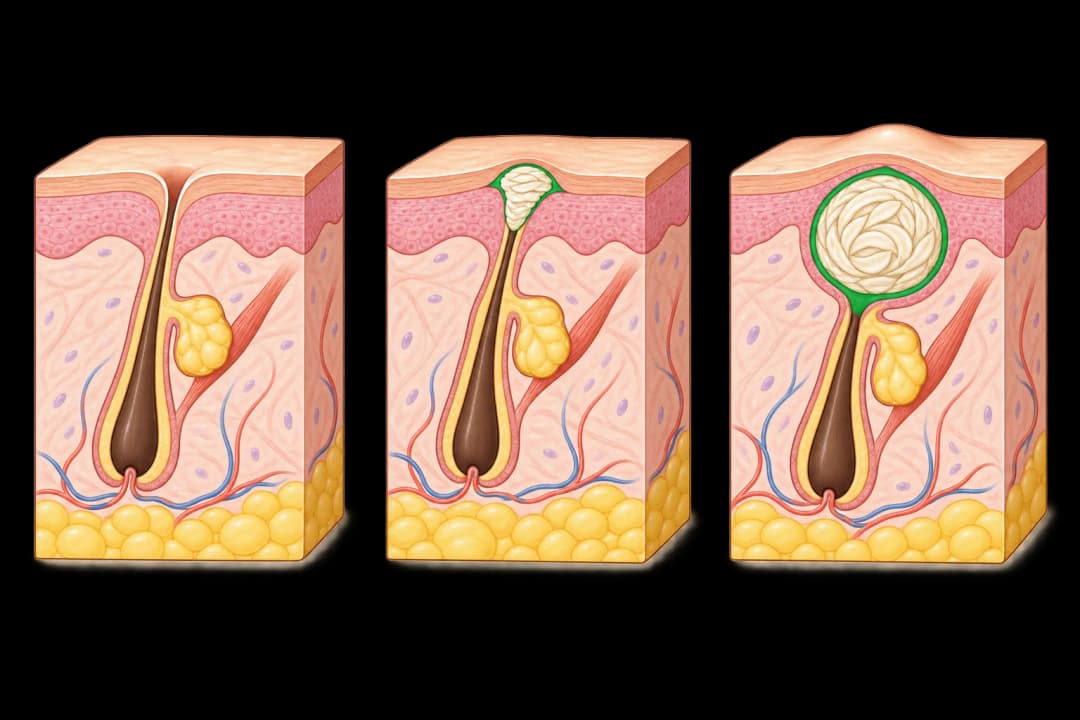
Short answer
A large, firm white bump under the eye may be milia, but its size and location make professional assessment safer than squeezing it.
This answers one question. It is not a diagnosis and does not replace an assessment by a licensed doctor.
At a glance
- Typical feel
- Firm and beneath the skin
- Avoid
- Squeezing or piercing near the eye
- Assessment
- Useful when large, changing or uncertain
The short answer
Milia are small cysts filled with keratin, a protein found in the outer skin. A bump that looks unusually large may instead be another type of cyst or skin growth, so appearance alone cannot confirm the diagnosis.
What the bump may mean
Typical milia feel firm and sit just beneath the skin rather than behaving like a pus-filled spot. They can occur around the eyelids and upper cheeks, where the skin is thin. Unlike acne whiteheads, they do not arise from an inflamed pore and may remain unchanged for some time.
Size, colour, surface texture and change over time help a clinician distinguish milia from blocked glands, other cysts and benign growths. Redness or tenderness suggests irritation or inflammation rather than uncomplicated milia.
Safe next steps
Leave the bump intact and cleanse the area gently. Avoid needles, squeezing and harsh scrubs: pressure can injure delicate eyelid skin, introduce infection or leave a mark. Keep strong exfoliating products away from the eye unless a clinician has confirmed that both the product and placement are suitable.
A dermatologist can inspect the lesion closely. If removal is appropriate, the clinician may open and extract it with sterile instruments; treatment choice depends on its depth and exact position. Prescription topical retinoids sometimes help recurring milia elsewhere, but require special caution near the eyes.
When to arrange medical care
Book an assessment if the bump is enlarging, changing colour, crusting, bleeding, painful or repeatedly inflamed. Seek prompt care for eyelid swelling, spreading redness, discharge, fever, eye pain or any change in vision. These features are not typical of a simple milium and need a direct examination.
Useful questions at your visit
Ask what features support the diagnosis, whether the bump can be observed, and which removal method protects the nearby eyelid. Mention previous attempts to treat it, products used around the eyes, recent injury or procedures, and whether similar bumps keep appearing.
Find care
General Clinics & Polyclinics in Abu Dhabi
That answer is general. If you want it applied to your own case, these are licensed general clinics & polyclinics listed in Abu Dhabi.
27 Ar Ruwwad St - Shakhbout City - MSH4 - Abu Dhabi - United Arab Emirates
Accepts: Daman, Thiqa, Cigna, MetLife +20 more
Al Ruwais, Al Dhafrah
Accepts: Daman, Thiqa, AXA, Cigna +16 more
Al Bahyah - Al Bahyah Old - Abu Dhabi - United Arab Emirates
Accepts: Daman, Thiqa, Cigna, Allianz Care +18 more
Abu Dhabi
Accepts: Daman, Thiqa, AXA, Cigna +27 more
Ordered by verification status and how complete each clinic's public record is, then alphabetically. This is a directory listing, not a ranking — Zavis does not rate or recommend providers.
A factual listing drawn from the DHA, DOH and MOHAP licence registers. It is not a referral, an endorsement, or advice that any of these providers is right for you.
Questions people ask
Can I squeeze a large milium under my eye?
No. Squeezing may damage thin eyelid skin without releasing the keratin, and it can cause inflammation, infection or scarring.
Will a big milium disappear without treatment?
Some milia clear on their own, while others persist. A large or changing bump should be identified before deciding to watch or remove it.
Is a milium the same as a whitehead?
No. A milium is a small keratin-filled cyst, whereas a whitehead is a blocked acne pore.
Related
Related reading
Keep reading
Medical disclaimer. This page is general health information, not medical advice, and it cannot diagnose you. Always consult a licensed healthcare provider about your own symptoms and treatment. In an emergency in the UAE, call 998 for an ambulance.