
Athletic asthma: breathing well during exercise
Short answer
Athletic asthma usually refers to exercise-induced bronchoconstriction, in which physical activity temporarily narrows sensitive airways and causes cough, wheeze, chest tightness or breathlessness.
This answers one question. It is not a diagnosis and does not replace an assessment by a licensed doctor.
At a glance
- Preferred term
- Exercise-induced bronchoconstriction
- Typical pattern
- Cough, wheeze or tightness during hard effort or soon afterward
- Main goal
- Control airway symptoms while maintaining safe physical activity
The short answer
It may occur in someone with asthma or in a person who has symptoms only with exertion. A clinician can distinguish it from poor fitness, vocal cord problems and other causes of breathlessness.
What happens in the airways
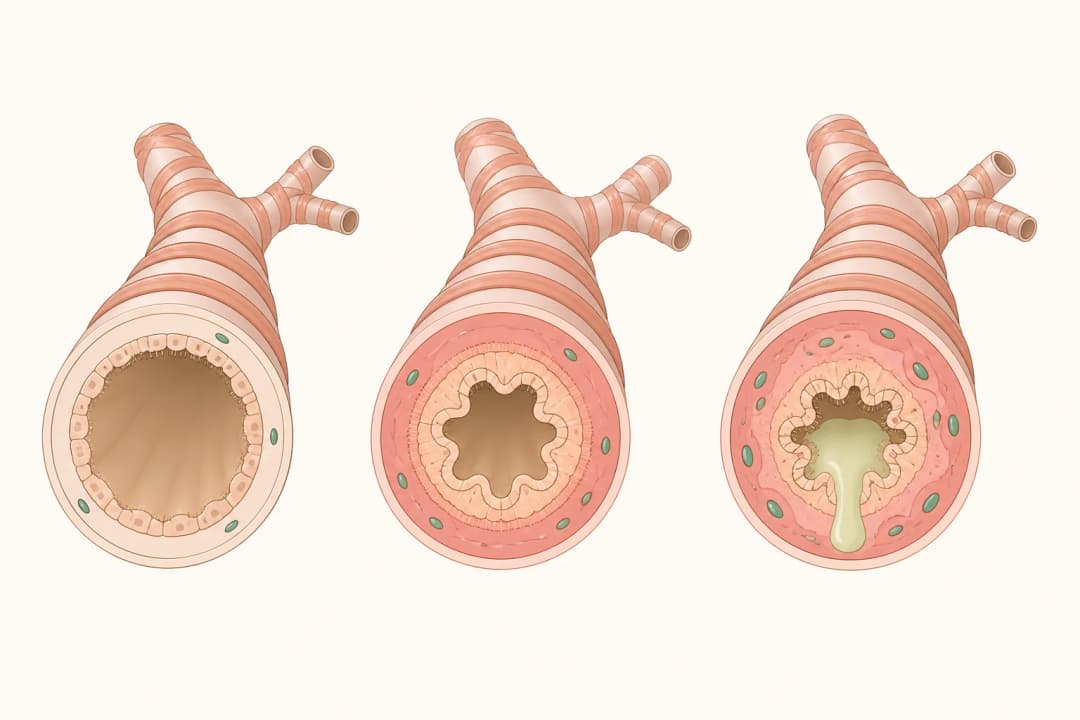
Fast breathing during sport brings larger amounts of cool or dry air into the lungs. In susceptible people, this can prompt the airway lining to react and the muscles around the breathing tubes to tighten. Symptoms often begin during hard effort or shortly after stopping.
A history alone may not confirm the cause. Assessment can include listening to the chest, breathing tests before and after a bronchodilator, or a supervised exercise challenge. Symptoms outside exercise can suggest that underlying asthma needs better control.
How to exercise more comfortably
Warm up gradually, build intensity in stages and cool down rather than stopping abruptly. Covering the mouth and nose in cold, dry conditions may help warm inhaled air. Avoid smoke and adjust outdoor training when dust, pollution or a known allergen is aggravating your breathing.
Use prescribed inhalers exactly as shown in your asthma action plan, including any medicine advised before exercise. Check technique with a clinician or pharmacist. Repeated reliance on a reliever, reduced performance or symptoms at rest should prompt a treatment review rather than simply avoiding activity.
When breathing symptoms need care
Arrange an appointment if exertional cough, wheeze or tightness keeps returning, wakes you at night, limits usual exercise or is not responding as your action plan predicts. Stop exercising and seek emergency help for severe breathlessness, difficulty speaking, blue or grey lips, confusion, collapse, or rapid worsening despite prescribed reliever treatment.
Useful questions for your clinician
Ask whether your pattern fits exercise-induced bronchoconstriction, whether breathing tests are appropriate, how to time prescribed medicine around training, and what signs in your personal action plan mean you should stop activity or obtain urgent help.
Find care
General Clinics & Polyclinics in Abu Dhabi
That answer is general. If you want it applied to your own case, these are licensed general clinics & polyclinics listed in Abu Dhabi.
27 Ar Ruwwad St - Shakhbout City - MSH4 - Abu Dhabi - United Arab Emirates
Accepts: Daman, Thiqa, Cigna, MetLife +20 more
Al Ruwais, Al Dhafrah
Accepts: Daman, Thiqa, AXA, Cigna +16 more
Al Bahyah - Al Bahyah Old - Abu Dhabi - United Arab Emirates
Accepts: Daman, Thiqa, Cigna, Allianz Care +18 more
Abu Dhabi
Accepts: Daman, Thiqa, AXA, Cigna +27 more
Ordered by verification status and how complete each clinic's public record is, then alphabetically. This is a directory listing, not a ranking — Zavis does not rate or recommend providers.
A factual listing drawn from the DHA, DOH and MOHAP licence registers. It is not a referral, an endorsement, or advice that any of these providers is right for you.
Questions people ask
Does athletic asthma mean I should stop sport?
Usually no. With an accurate diagnosis, trigger management, a suitable warm-up and properly prescribed treatment, many people can remain active. Stop an individual session if symptoms are escalating or your action plan tells you to.
Can exercise symptoms happen without everyday asthma?
Yes. Exercise-induced bronchoconstriction can occur in people who do not otherwise have persistent asthma symptoms, which is why objective breathing assessment can be helpful.
Why does cold air make it worse?
Cold, dry air increases heat and moisture loss from the airways during rapid breathing, which can provoke narrowing in sensitive breathing tubes.
Related
Related reading
Keep reading
Medical disclaimer. This page is general health information, not medical advice, and it cannot diagnose you. Always consult a licensed healthcare provider about your own symptoms and treatment. In an emergency in the UAE, call 998 for an ambulance.