
What is asthma?
Short answer
Asthma is a long-term condition in which inflamed, sensitive airways narrow at times and cause variable breathing symptoms.
This answers one question. It is not a diagnosis and does not replace an assessment by a licensed doctor.
At a glance
- Affected area
- The airways inside the lungs
- Typical pattern
- Symptoms vary over time and with triggers
- Diagnosis
- Symptom history plus objective breathing assessment when appropriate
The short answer
Asthma commonly presents with wheezing, cough, shortness of breath or chest tightness. Symptoms can come and go, become worse at night or with exercise, and flare after exposure to a person's triggers.
What happens inside the airways
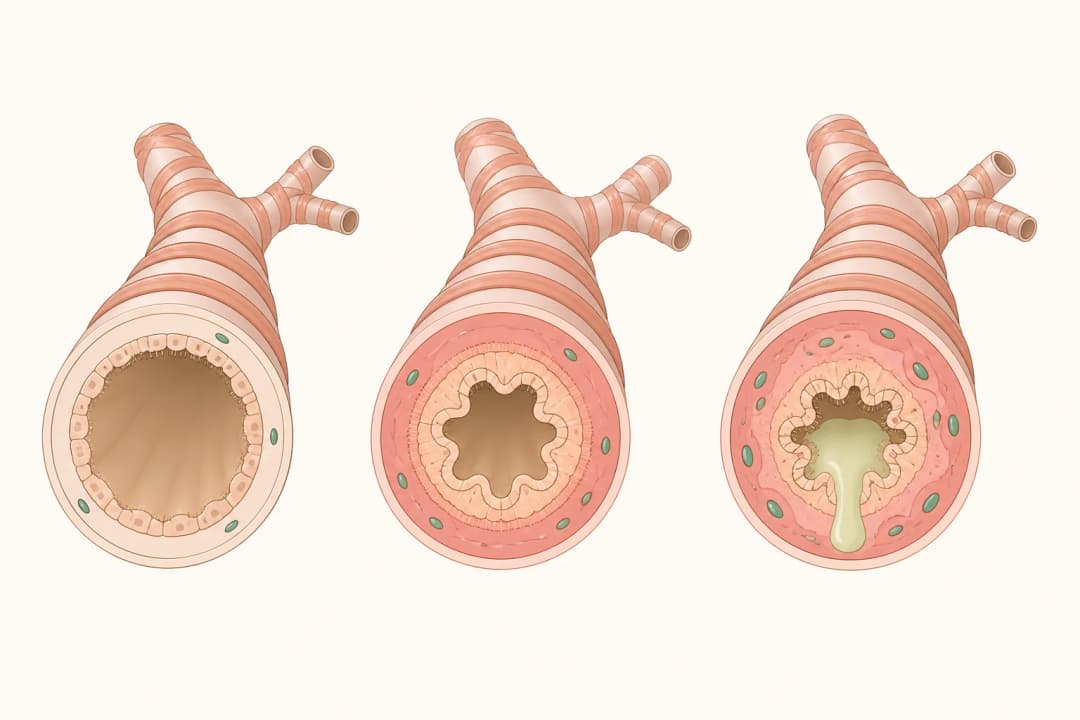
The lining of the breathing tubes becomes inflamed and reactive. During a flare, muscles around them tighten, the lining swells and mucus may increase, leaving less space for air to move. The narrowing is often variable, which is why a chest examination can sound normal between episodes.
Smoke, respiratory infections, exercise, cold air, dust, pollen, animals or workplace substances may provoke symptoms, although triggers differ. Diagnosis combines the symptom pattern with examination and breathing tests; no single symptom by itself confirms asthma.
How asthma is managed
Arrange an assessment for repeated wheeze, nighttime cough, breathlessness with activity or recurring chest tightness. Note when symptoms occur, possible exposures and what relieves them. A clinician may measure airflow before and after inhaled medicine or ask you to monitor it over time.
Treatment is tailored to symptom control and future flare risk. It can include an anti-inflammatory controller, a reliever strategy, trigger reduction, technique checks and a written action plan. Take inhalers as directed and bring every device to reviews so errors can be corrected.
Warning signs
Seek emergency care for severe or rapidly worsening breathlessness, trouble speaking full sentences, blue or grey lips, confusion, drowsiness, pronounced pulling in around the ribs, or little improvement after the rescue treatment in your action plan.
Book a prompt review when symptoms wake you, limit ordinary activity, return repeatedly, or require more reliever medicine than your plan allows. A change from your usual pattern can indicate deteriorating control even before a severe attack develops.
Questions that clarify the diagnosis
Ask which findings support asthma, whether breathing tests are needed, how to distinguish a controller from a reliever, and what your personal flare signs are. Request written instructions that explain medicine changes and when to obtain urgent help.
Find care
General Clinics & Polyclinics in Abu Dhabi
That answer is general. If you want it applied to your own case, these are licensed general clinics & polyclinics listed in Abu Dhabi.
27 Ar Ruwwad St - Shakhbout City - MSH4 - Abu Dhabi - United Arab Emirates
Accepts: Daman, Thiqa, Cigna, MetLife +20 more
Al Ruwais, Al Dhafrah
Accepts: Daman, Thiqa, AXA, Cigna +16 more
Al Bahyah - Al Bahyah Old - Abu Dhabi - United Arab Emirates
Accepts: Daman, Thiqa, Cigna, Allianz Care +18 more
Abu Dhabi
Accepts: Daman, Thiqa, AXA, Cigna +27 more
Ordered by verification status and how complete each clinic's public record is, then alphabetically. This is a directory listing, not a ranking — Zavis does not rate or recommend providers.
A factual listing drawn from the DHA, DOH and MOHAP licence registers. It is not a referral, an endorsement, or advice that any of these providers is right for you.
Questions people ask
Is asthma contagious?
No. Asthma cannot pass between people, although a contagious respiratory infection may trigger symptoms in someone who has asthma.
Can asthma begin in adulthood?
Yes. Asthma can first appear at different ages, and adult-onset breathing symptoms should be assessed because other conditions can look similar.
Can asthma symptoms disappear for a while?
Yes. Quiet intervals occur, but airway sensitivity can remain. Continue prescribed treatment and reviews instead of assuming the condition has resolved.
Related
Related reading
Keep reading
Medical disclaimer. This page is general health information, not medical advice, and it cannot diagnose you. Always consult a licensed healthcare provider about your own symptoms and treatment. In an emergency in the UAE, call 998 for an ambulance.