
What should you know about asthma therapy?
Short answer
Asthma therapy uses personalised inhaled medicines, trigger management, correct inhaler technique and a written action plan to control symptoms and reduce serious flare-ups.
This answers one question. It is not a diagnosis and does not replace an assessment by a licensed doctor.
At a glance
- Main goal
- Control symptoms while lowering the risk of asthma attacks
- Key skill
- Correct inhaler technique helps medicine reach the airways
- Safety tool
- A personal written action plan explains what to do as symptoms change
The short answer
Treatment is adjusted to your symptom pattern, risk of attacks, age, other health conditions and ability to use a particular device. Feeling well does not necessarily mean airway inflammation has settled, so continue prescribed controller treatment unless your clinician changes the plan.
How the treatment approach works
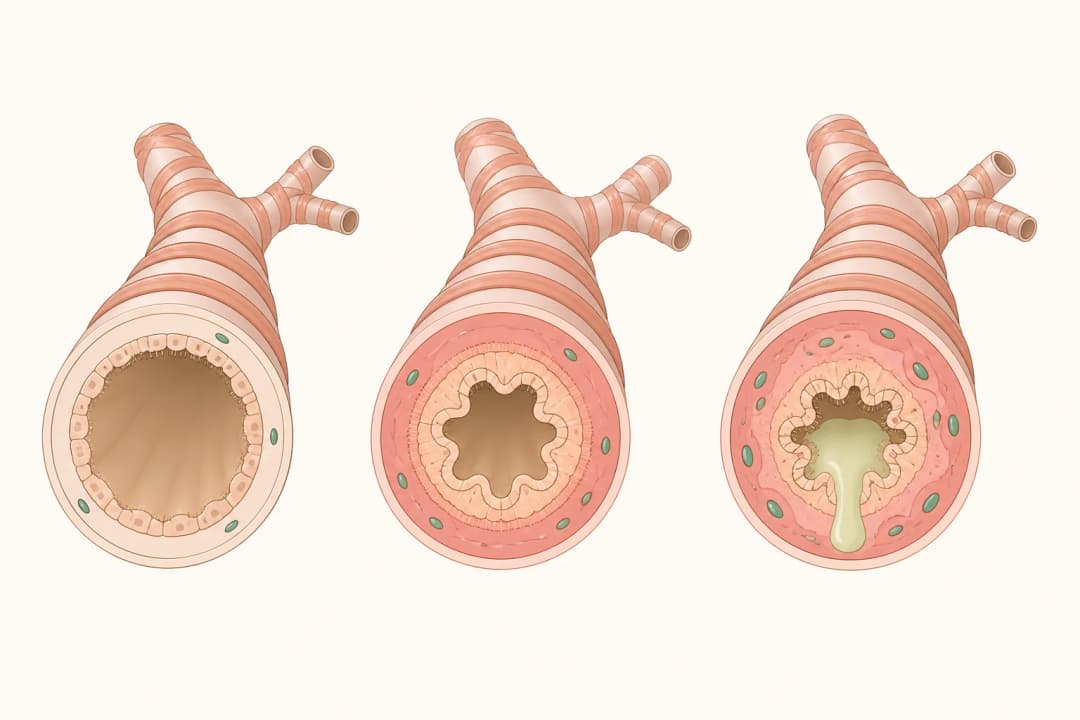
Asthma narrows sensitive airways through inflammation and tightening of the muscles around them. Controller medicines, commonly containing an inhaled corticosteroid, reduce that inflammation. Reliever medicines act more quickly when symptoms appear; some combination inhalers can serve as both maintenance and reliever treatment when prescribed that way.
Your clinician may step treatment up when control is poor and may consider stepping it down after a sustained period of good control. Before changing medicines, they will often check inhaler technique, regular use, exposure to smoke or allergens, and related problems such as nasal allergy. Tablets, injectable biological medicines or specialist assessment may be considered when inhaled therapy does not provide adequate control.
Using asthma treatment day to day
Use each inhaler exactly as labelled and ask a clinician or pharmacist to watch your technique. A spacer may help with certain pressurised inhalers. Know which device is your controller, which is your reliever and whether one prescribed combination inhaler has both roles; the instructions are not interchangeable.
Follow a written asthma action plan that reflects your own medicines. Track night waking, activity limits, wheezing, cough, chest tightness and reliever use, because a change can signal poorer control. Keep medicines available, check expiry dates and arrange a review if you are relying on the reliever more often, symptoms interrupt sleep, or usual activities become difficult.
Reduce exposure to triggers you have identified, including tobacco smoke, dust, strong fumes or workplace irritants. Do not stop a controller inhaler suddenly because you feel better. If side effects, cost, pregnancy, fasting or device handling make the plan difficult, discuss the specific barrier so the regimen can be adapted safely.
When breathing symptoms need medical care
Seek urgent clinical advice when symptoms are getting worse, treatment is helping less than usual, you need your reliever increasingly often, or breathlessness limits sleep or normal activity. An assessment can check for an asthma flare, infection, poor inhaler delivery or another cause of breathing difficulty.
Call local emergency services if breathing is rapidly worsening, the prescribed reliever is not helping, you cannot speak comfortably in full sentences, your lips or skin look blue or grey, or you become drowsy or confused. Sit upright and follow the emergency instructions in your personal action plan while help is coming. Do not drive yourself when breathing is severely impaired.
Questions for your doctor
Ask which inhaler treats inflammation, which one to use for sudden symptoms, and whether your regimen uses a single inhaler for both purposes. Request a demonstration with your actual device and confirm how to clean it, whether a spacer is suitable and what signs should trigger an urgent review.
It is also useful to ask how exercise, allergies, respiratory infections, pregnancy or other medicines affect your plan. Bring your inhalers and action plan to appointments so the clinician can compare the written instructions with how you are using them.
Find care
General Clinics & Polyclinics in Abu Dhabi
That answer is general. If you want it applied to your own case, these are licensed general clinics & polyclinics listed in Abu Dhabi.
27 Ar Ruwwad St - Shakhbout City - MSH4 - Abu Dhabi - United Arab Emirates
Accepts: Daman, Thiqa, Cigna, MetLife +20 more
Al Ruwais, Al Dhafrah
Accepts: Daman, Thiqa, AXA, Cigna +16 more
Al Bahyah - Al Bahyah Old - Abu Dhabi - United Arab Emirates
Accepts: Daman, Thiqa, Cigna, Allianz Care +18 more
Abu Dhabi
Accepts: Daman, Thiqa, AXA, Cigna +27 more
Ordered by verification status and how complete each clinic's public record is, then alphabetically. This is a directory listing, not a ranking — Zavis does not rate or recommend providers.
A factual listing drawn from the DHA, DOH and MOHAP licence registers. It is not a referral, an endorsement, or advice that any of these providers is right for you.
Questions people ask
Can I stop my controller inhaler when I feel well?
Do not stop or reduce prescribed controller treatment on your own. Good symptom control may show that the medicine is working, while airway inflammation can return after an unplanned change. Discuss any step-down with the clinician managing your asthma.
Why should someone check my inhaler technique?
Different devices require different preparation, breathing and breath-holding steps. A small technique error can reduce the medicine reaching your lungs, so a clinician or pharmacist should check you using your own device.
Is a nebuliser better than an inhaler?
A nebuliser is not automatically more effective for routine asthma care. The suitable delivery method depends on the medicine, severity of symptoms, age and ability to use the device; nebulised treatment may be used during some severe flare-ups.
Related
Related reading
Keep reading
Medical disclaimer. This page is general health information, not medical advice, and it cannot diagnose you. Always consult a licensed healthcare provider about your own symptoms and treatment. In an emergency in the UAE, call 998 for an ambulance.