
How asthma affects the lungs
Short answer
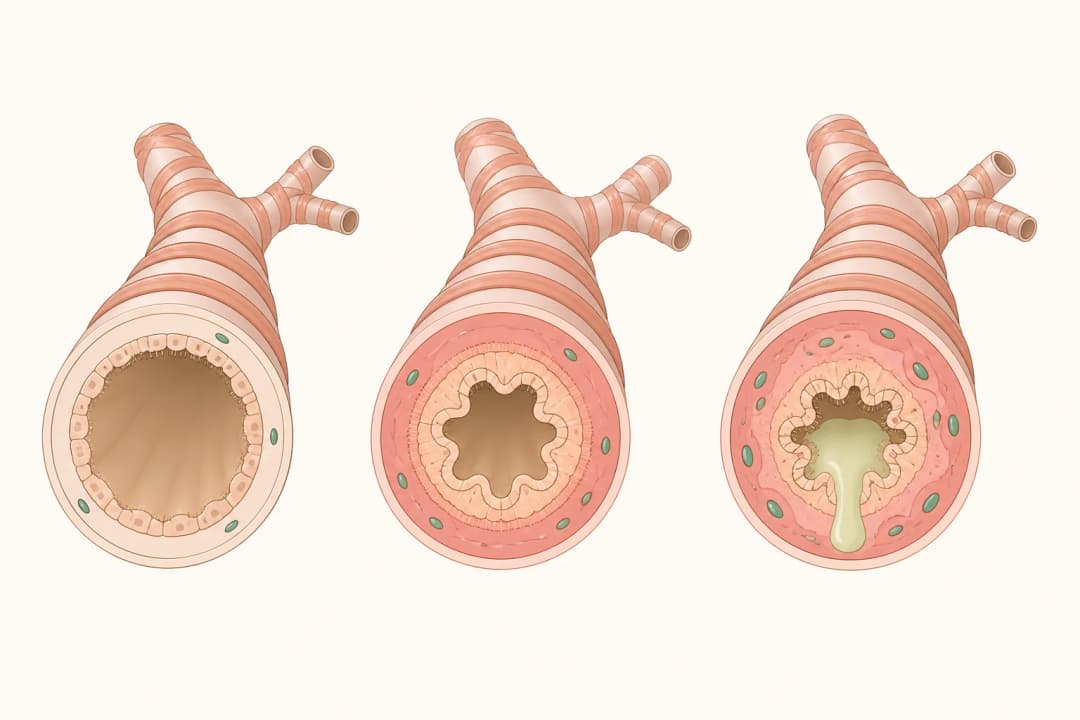
Asthma causes sensitive airways to become inflamed, tighten, and produce mucus, which can make moving air in and out difficult.
This answers one question. It is not a diagnosis and does not replace an assessment by a licensed doctor.
At a glance
- Main site
- The airways within the lungs
- Airflow changes
- Variable narrowing from muscle tightening, swelling, and mucus
- Useful tool
- A written asthma action plan
What happens to the lungs in asthma?
These changes can settle between episodes or persist when asthma is not well controlled. The condition affects the breathing tubes rather than destroying the whole lung at once, and symptoms may change from day to day.
How airway changes create symptoms
The muscle around an airway can contract, its lining can swell, and sticky mucus can narrow the space available for airflow. Narrowed airways may produce wheezing, cough, chest tightness, or shortness of breath. Asthma commonly presents with symptoms that vary over time and may be worse at night, with exercise, or after a trigger.
Triggers differ between people and can include viral illness, smoke, dust, strong scents, cold air, exertion, or allergens. Finding a trigger does not by itself show lung damage; it helps shape prevention and treatment choices.
Ways to protect your airways
Use controller and reliever medicines exactly as set out in your written asthma plan. Check inhaler technique with a clinician or pharmacist because poor timing, positioning, or device preparation can prevent medicine from reaching the airways.
Track symptoms, nighttime waking, activity limits, and how often you need reliever medicine. Reduce exposure to smoke and any confirmed personal triggers, but keep physically active within the limits agreed for you. Arrange a review when symptoms become more frequent or interfere with sleep or routine activity.
Signs of a severe asthma flare
Get urgent help if you are struggling to breathe, cannot finish sentences, become drowsy or confused, notice blue or grey lips, or do not improve after using prescribed reliever medicine according to your plan. Sit upright and follow the emergency instructions in that plan while help is arranged.
A chest that becomes unusually quiet despite intense breathing effort can also signal very restricted airflow. Do not drive yourself if you are severely breathless or becoming less alert.
What to discuss at an asthma review
Bring your inhalers and ask for a technique check, an explanation of your breathing-test results, and clear instructions for worsening symptoms. Mention nasal allergy symptoms, reflux, workplace exposures, or persistent cough because these can complicate assessment and control.
Find care
General Clinics & Polyclinics in Abu Dhabi
That answer is general. If you want it applied to your own case, these are licensed general clinics & polyclinics listed in Abu Dhabi.
27 Ar Ruwwad St - Shakhbout City - MSH4 - Abu Dhabi - United Arab Emirates
Accepts: Daman, Thiqa, Cigna, MetLife +20 more
Al Ruwais, Al Dhafrah
Accepts: Daman, Thiqa, AXA, Cigna +16 more
Al Bahyah - Al Bahyah Old - Abu Dhabi - United Arab Emirates
Accepts: Daman, Thiqa, Cigna, Allianz Care +18 more
Abu Dhabi
Accepts: Daman, Thiqa, AXA, Cigna +27 more
Ordered by verification status and how complete each clinic's public record is, then alphabetically. This is a directory listing, not a ranking — Zavis does not rate or recommend providers.
A factual listing drawn from the DHA, DOH and MOHAP licence registers. It is not a referral, an endorsement, or advice that any of these providers is right for you.
Questions people ask
Are lungs normal between asthma episodes?
Symptoms and airflow may return toward normal between episodes, although airway inflammation or sensitivity can remain. Control treatment aims to reduce that underlying activity.
Why can asthma be worse at night?
Airway behaviour, sleeping conditions, allergens, nasal symptoms, and medicine timing can all contribute. Night waking is a reason to review asthma control.
Can exercise harm lungs with asthma?
Appropriate activity is generally encouraged. If exercise repeatedly triggers symptoms, inhaler technique and the treatment plan should be reviewed rather than simply avoiding movement.
Keep reading
Medical disclaimer. This page is general health information, not medical advice, and it cannot diagnose you. Always consult a licensed healthcare provider about your own symptoms and treatment. In an emergency in the UAE, call 998 for an ambulance.