
Inspiratory wheeze and asthma
Short answer
Asthma commonly causes wheezing during breathing out, although sounds may occur in both phases when airflow is very limited; a mainly inspiratory noise can also come from the upper airway and needs clinical assessment.
This answers one question. It is not a diagnosis and does not replace an assessment by a licensed doctor.
At a glance
- Typical asthma sound
- Wheezing is often more noticeable while breathing out.
- Inspiratory clue
- A neck-predominant harsh sound may arise from the upper airway.
- Assessment
- Clinicians consider the phase, location, onset, triggers, and associated symptoms.
Where the sound may start
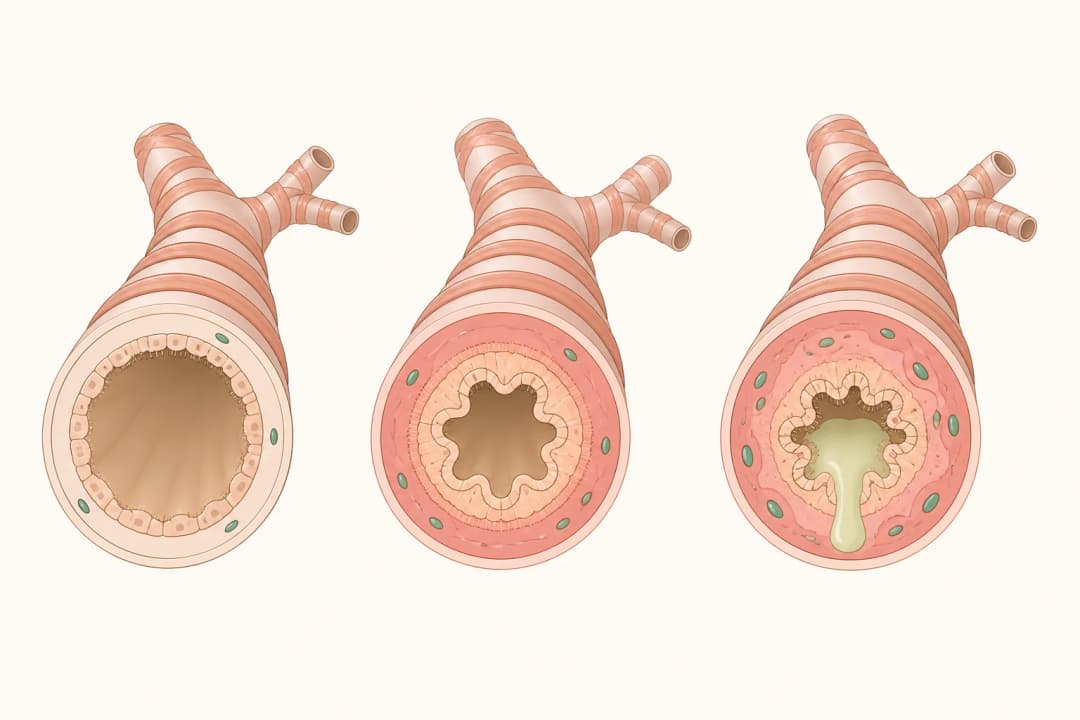
A wheeze is usually a musical sound created as air moves through narrowed lower airways. Asthma can present with expiratory wheeze, cough, breathlessness, and chest tightness, with symptoms that vary over time or after triggers.
A harsh, high-pitched sound that is loudest over the neck while breathing in may be stridor rather than a lower-airway wheeze. Upper-airway swelling, a foreign object, vocal-cord problems, or other causes may produce this pattern. The sound alone cannot establish its cause.
What to notice and do
Note whether the noise occurs on breathing in, breathing out, or both, and whether it began suddenly. Record accompanying voice change, throat swelling, fever, choking, cough, chest tightness, or exposure to a known trigger. A short recording may help if the sound stops before the appointment, but never delay care to make one.
If you have diagnosed asthma, follow your written action plan and use prescribed inhalers exactly as directed. Arrange assessment when a new inspiratory sound persists, recurs, or differs from your familiar asthma symptoms; examination may need to include both the chest and upper airway.
Emergency warning signs
Call emergency services for noisy breathing with severe breathlessness, rapidly worsening throat or facial swelling, inability to swallow saliva, blue or grey lips, confusion, collapse, choking, or inability to speak normally. These signs can reflect critical airway narrowing and need immediate assessment, regardless of whether asthma is already diagnosed.
Useful assessment questions
Ask whether the sound is wheeze or stridor, whether it seems to arise from the chest or throat, and whether breathing tests or an upper-airway examination are appropriate. Also clarify how your asthma action plan should change if the noise returns.
Find care
General Clinics & Polyclinics in Abu Dhabi
That answer is general. If you want it applied to your own case, these are licensed general clinics & polyclinics listed in Abu Dhabi.
27 Ar Ruwwad St - Shakhbout City - MSH4 - Abu Dhabi - United Arab Emirates
Accepts: Daman, Thiqa, Cigna, MetLife +20 more
Al Ruwais, Al Dhafrah
Accepts: Daman, Thiqa, AXA, Cigna +16 more
Al Bahyah - Al Bahyah Old - Abu Dhabi - United Arab Emirates
Accepts: Daman, Thiqa, Cigna, Allianz Care +18 more
Abu Dhabi
Accepts: Daman, Thiqa, AXA, Cigna +27 more
Ordered by verification status and how complete each clinic's public record is, then alphabetically. This is a directory listing, not a ranking — Zavis does not rate or recommend providers.
A factual listing drawn from the DHA, DOH and MOHAP licence registers. It is not a referral, an endorsement, or advice that any of these providers is right for you.
Questions people ask
Does an inspiratory wheeze confirm asthma?
No. Asthma may produce sounds during both breathing phases when obstruction is marked, but a mainly inspiratory noise can have an upper-airway source and should be assessed in context.
What is the difference between wheeze and stridor?
Wheeze is generally musical and arises from narrowed lower airways. Stridor is often harsher, most prominent during breathing in, and may be loudest over the neck.
Should I record the breathing sound?
A brief recording can help a clinician if it is safe and does not delay assessment. Do not record during severe breathing difficulty; call emergency services instead.
Keep reading
Medical disclaimer. This page is general health information, not medical advice, and it cannot diagnose you. Always consult a licensed healthcare provider about your own symptoms and treatment. In an emergency in the UAE, call 998 for an ambulance.