
Recognising and responding to an asthma flare-up
Short answer
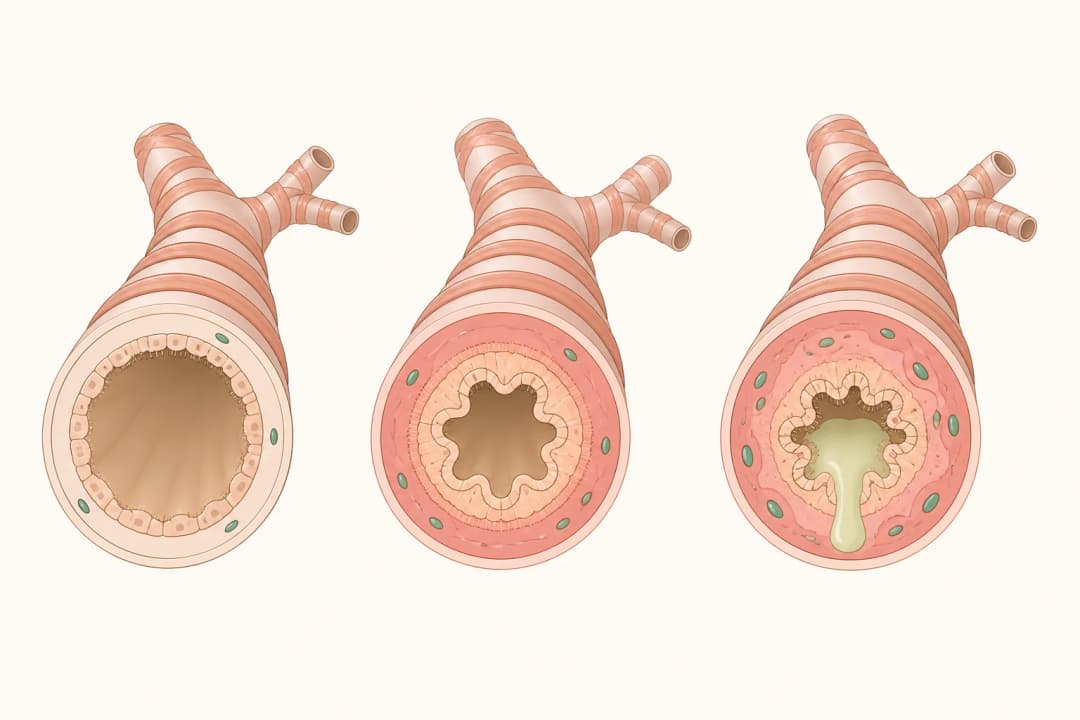
An asthma flare-up is a worsening of breathing symptoms caused by tightening, swelling, and mucus within sensitive airways.
This answers one question. It is not a diagnosis and does not replace an assessment by a licensed doctor.
At a glance
- Early change
- Night waking or increased reliever use may precede more obvious breathing trouble.
- Immediate step
- Sit upright and follow the prescribed asthma action plan.
- Review
- A flare should prompt a check of triggers, technique, and controller treatment.
Recognise the change
Asthma often presents with more cough, wheeze, chest tightness, or breathlessness during a flare. Waking at night, struggling with usual activity, or needing the reliever more often can be early signs that control is deteriorating.
Why flares happen
A viral illness, tobacco smoke, dust, pollen, animal allergens, strong fumes, weather changes, exercise, or missed controller doses may provoke worsening. Sometimes several factors overlap, and a clear trigger is not always found.
The severity can change over hours. A quiet chest in someone working hard to breathe is not reassuring because very little air may be moving. Response to the prescribed reliever and the person's ability to speak and move are more useful warning clues.
Follow your action plan
Stop strenuous activity, sit upright, leave an obvious smoky or dusty area, and take the prescribed reliever according to your written plan. Use the correct inhaler technique and a spacer if one forms part of the prescription.
Monitor whether breathing, speaking, and movement become easier. If improvement is incomplete or short-lived, seek urgent assessment rather than repeatedly improvising extra doses. Continue controller treatment unless the plan or a clinician gives different instructions.
Red flags for emergency help
Call emergency services if breathlessness is severe, talking becomes difficult, lips or face turn blue or grey, confusion or drowsiness develops, the person collapses, or the reliever has little effect. Someone with severe symptoms should not be left alone or drive.
Contact a clinician promptly when symptoms keep returning, disturb sleep, restrict everyday tasks, or require reliever treatment more often than the action plan allows. Early review can prevent further deterioration.
Planning after the flare
Discuss the likely trigger, inhaler technique, controller adherence, and whether the written plan needs updating. Ask how to recognise your earliest warning sign and exactly when to move from home treatment to urgent assessment.
Find care
General Clinics & Polyclinics in Abu Dhabi
That answer is general. If you want it applied to your own case, these are licensed general clinics & polyclinics listed in Abu Dhabi.
27 Ar Ruwwad St - Shakhbout City - MSH4 - Abu Dhabi - United Arab Emirates
Accepts: Daman, Thiqa, Cigna, MetLife +20 more
Al Ruwais, Al Dhafrah
Accepts: Daman, Thiqa, AXA, Cigna +16 more
Al Bahyah - Al Bahyah Old - Abu Dhabi - United Arab Emirates
Accepts: Daman, Thiqa, Cigna, Allianz Care +18 more
Abu Dhabi
Accepts: Daman, Thiqa, AXA, Cigna +27 more
Ordered by verification status and how complete each clinic's public record is, then alphabetically. This is a directory listing, not a ranking — Zavis does not rate or recommend providers.
A factual listing drawn from the DHA, DOH and MOHAP licence registers. It is not a referral, an endorsement, or advice that any of these providers is right for you.
Questions people ask
Is an asthma flare-up the same as an asthma attack?
The terms are often used for worsening asthma, although people may use “attack” for a sudden or severe episode. Treatment urgency depends on symptoms and response to the reliever.
Can stress trigger an asthma flare-up?
Strong emotions can change breathing and may worsen symptoms in some people, but persistent breathing trouble should still be assessed for asthma control and other triggers.
Related
Related reading
Keep reading
Medical disclaimer. This page is general health information, not medical advice, and it cannot diagnose you. Always consult a licensed healthcare provider about your own symptoms and treatment. In an emergency in the UAE, call 998 for an ambulance.