
Asthma flare-up symptoms: what to notice and when to act
Short answer
An asthma flare-up can cause increasing wheeze, cough, chest tightness, breathlessness, or reduced response to reliever medicine.
This answers one question. It is not a diagnosis and does not replace an assessment by a licensed doctor.
At a glance
- Early clues
- More cough, wheeze, tightness, night waking, or reliever use than usual
- Immediate step
- Follow your personal asthma action plan and prescribed reliever instructions
- Emergency signs
- Severe breathlessness, trouble speaking, blue or grey colour, faintness, or confusion
How a flare-up may feel
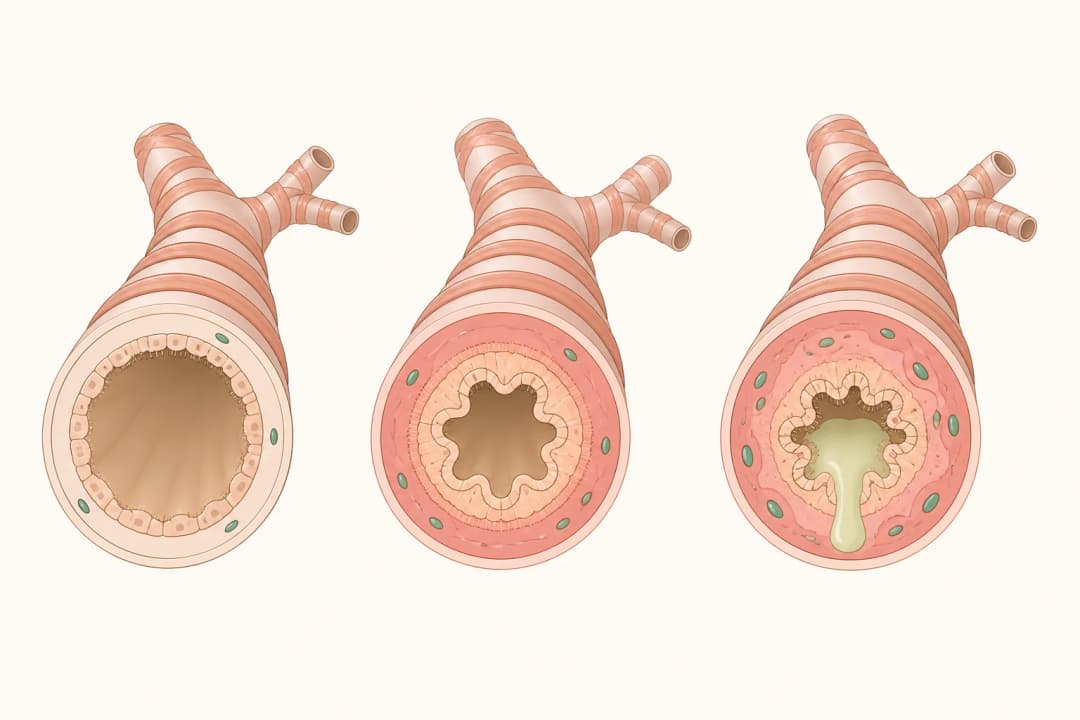
During a flare-up, airway muscles tighten and the lining becomes swollen, narrowing the space available for air to move. Symptoms may build gradually or start suddenly. You might wake at night coughing, become breathless with an activity that is normally comfortable, hear a whistling sound, or struggle to finish a sentence without pausing.
A change from your personal baseline matters. Needing your reliever more often than your asthma plan allows, getting less relief from it, or noticing that symptoms return quickly can indicate loss of control even if the wheeze is quiet.
What to do when symptoms increase
Sit upright, try to stay calm, and follow the flare-up instructions in your written asthma action plan. Use your reliever exactly as the plan or prescribing clinician directs, with a spacer if one was prescribed. Move away from smoke, dust, strong fragrance, or another obvious trigger when you can do so safely.
Arrange a clinical review after a flare-up, even if you improve. Bring your inhalers and spacer so the clinician can check technique, medicine use, possible triggers, and whether your prevention plan needs adjustment.
When breathing needs urgent care
Call emergency services now if breathing is very difficult, you cannot speak comfortably, your lips or face look blue or grey, you feel faint or confused, or your reliever is not helping as your action plan says it should. Do not drive yourself when severe breathlessness, drowsiness, or confusion is present.
Seek prompt medical advice for worsening night symptoms, repeated reliever use, or breathlessness that limits usual tasks. These changes warrant assessment based on severity, not on whether flare-ups are common.
Useful questions for your appointment
Ask which changes should activate each part of your asthma action plan, how to tell whether your inhaler is empty, and whether your technique is delivering medicine effectively. It is also useful to discuss night waking, exercise limits, workplace exposures, allergies, and every medicine or supplement you use.
Find care
General Clinics & Polyclinics in Abu Dhabi
That answer is general. If you want it applied to your own case, these are licensed general clinics & polyclinics listed in Abu Dhabi.
27 Ar Ruwwad St - Shakhbout City - MSH4 - Abu Dhabi - United Arab Emirates
Accepts: Daman, Thiqa, Cigna, MetLife +20 more
Al Ruwais, Al Dhafrah
Accepts: Daman, Thiqa, AXA, Cigna +16 more
Al Bahyah - Al Bahyah Old - Abu Dhabi - United Arab Emirates
Accepts: Daman, Thiqa, Cigna, Allianz Care +18 more
Abu Dhabi
Accepts: Daman, Thiqa, AXA, Cigna +27 more
Ordered by verification status and how complete each clinic's public record is, then alphabetically. This is a directory listing, not a ranking — Zavis does not rate or recommend providers.
A factual listing drawn from the DHA, DOH and MOHAP licence registers. It is not a referral, an endorsement, or advice that any of these providers is right for you.
Questions people ask
Can an asthma flare-up happen without wheezing?
Yes. Some flare-ups mainly cause cough, chest tightness, shortness of breath, night waking, or reduced exercise tolerance. A quiet chest alongside severe breathing difficulty can be particularly concerning and needs emergency assessment.
Should I wait to see whether severe symptoms settle?
No. Use the emergency steps in your asthma action plan and call emergency services when breathing is very difficult, speech is affected, colour changes occur, or prescribed reliever treatment is not helping.
Keep reading
Medical disclaimer. This page is general health information, not medical advice, and it cannot diagnose you. Always consult a licensed healthcare provider about your own symptoms and treatment. In an emergency in the UAE, call 998 for an ambulance.