
Asthma and difficulty breathing
Short answer
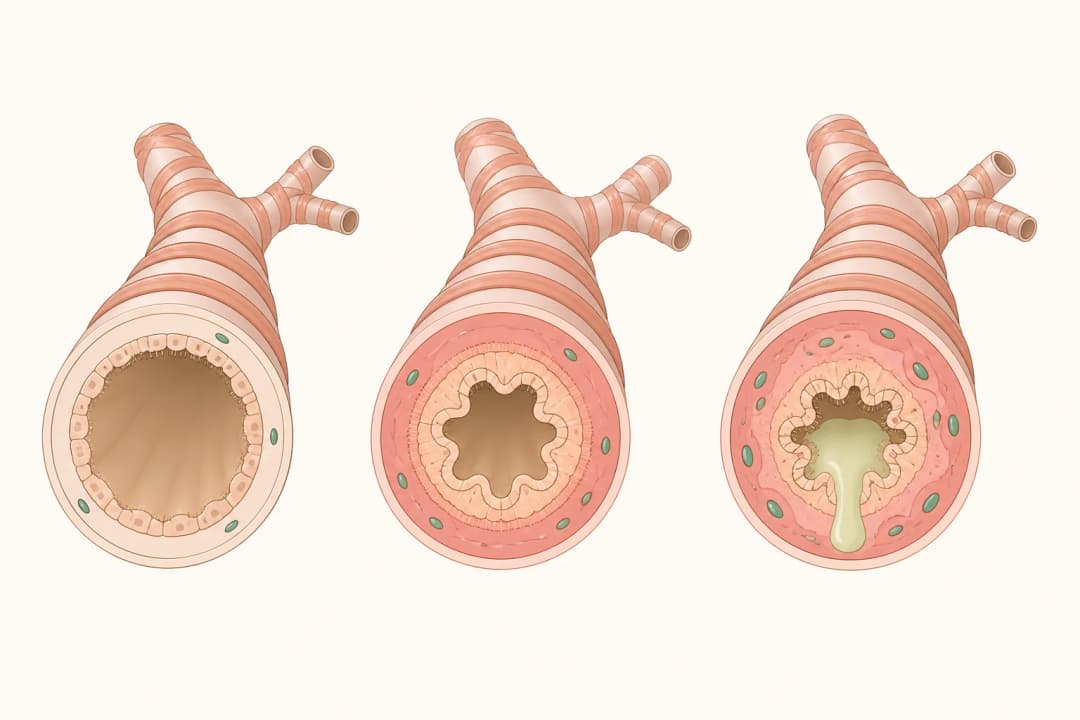
Asthma can cause difficulty breathing when inflamed, narrowed airways restrict airflow, particularly during a flare.
This answers one question. It is not a diagnosis and does not replace an assessment by a licensed doctor.
At a glance
- Possible asthma symptoms
- Breathlessness, wheeze, cough and chest tightness
- Immediate posture
- Sit upright
- Treatment guide
- Your written asthma action plan
What is happening
Breathlessness may occur with wheeze, cough or chest tightness, although the pattern differs between people. Other heart and lung problems can also make breathing difficult, so new or unexplained symptoms need clinical assessment.
How asthma-related breathlessness may behave
Asthma symptoms can vary over the day and may follow exercise, smoke, dust, allergens, cold air or a respiratory infection. Some people notice trouble breathing out, a tight chest, noisy breathing or a cough that interrupts sleep.
Difficulty breathing is a presentation of asthma, but its presence alone cannot identify the cause. A clinician may consider the timing, triggers, examination, oxygen level and breathing tests. Sudden breathlessness can have causes other than asthma and should not automatically be treated as a familiar flare.
Respond according to your asthma plan
Stop the activity, sit upright and try to remain calm. Follow the worsening-symptom steps in your written action plan and use the prescribed reliever with the technique your clinician demonstrated. A spacer may help with a compatible inhaler if it forms part of your plan.
Monitor whether speaking, walking and breathing become easier. Seek prompt medical advice when symptoms keep returning, wake you at night, restrict usual activity or require more reliever than your plan specifies. Arrange an asthma review after a significant flare even if you feel better.
Recognise a breathing emergency
Call emergency services for severe or rapidly worsening difficulty breathing, inability to speak in full sentences, blue or grey lips or face, confusion, collapse, marked drowsiness, or no meaningful improvement after following your emergency asthma instructions. Continue the prescribed emergency steps while help is coming, and do not lie flat or drive yourself.
Clarify your personal response plan
Ask how to distinguish a mild change from a serious flare, which inhaler to use for rapid relief, and how to check that your technique is effective. Confirm what should happen after an attack and whether persistent cough, nasal allergy symptoms or exercise-related difficulty needs separate evaluation.
Find care
General Clinics & Polyclinics in Abu Dhabi
That answer is general. If you want it applied to your own case, these are licensed general clinics & polyclinics listed in Abu Dhabi.
27 Ar Ruwwad St - Shakhbout City - MSH4 - Abu Dhabi - United Arab Emirates
Accepts: Daman, Thiqa, Cigna, MetLife +20 more
Al Ruwais, Al Dhafrah
Accepts: Daman, Thiqa, AXA, Cigna +16 more
Al Bahyah - Al Bahyah Old - Abu Dhabi - United Arab Emirates
Accepts: Daman, Thiqa, Cigna, Allianz Care +18 more
Abu Dhabi
Accepts: Daman, Thiqa, AXA, Cigna +27 more
Ordered by verification status and how complete each clinic's public record is, then alphabetically. This is a directory listing, not a ranking — Zavis does not rate or recommend providers.
A factual listing drawn from the DHA, DOH and MOHAP licence registers. It is not a referral, an endorsement, or advice that any of these providers is right for you.
Questions people ask
Can asthma cause difficulty breathing without wheezing?
Yes. Asthma can present with breathlessness, cough or chest tightness even when wheezing is not obvious. A clinician should assess new, persistent or unexplained breathing difficulty.
Should I use a nebuliser whenever breathing feels difficult?
Use only the medicine and delivery method specified in your personal treatment plan. Nebulised treatment is not automatically required for every flare, and severe symptoms still require urgent assessment.
Related
Related reading
Keep reading
Medical disclaimer. This page is general health information, not medical advice, and it cannot diagnose you. Always consult a licensed healthcare provider about your own symptoms and treatment. In an emergency in the UAE, call 998 for an ambulance.