
Asthma cough treatment: what you should know
Short answer
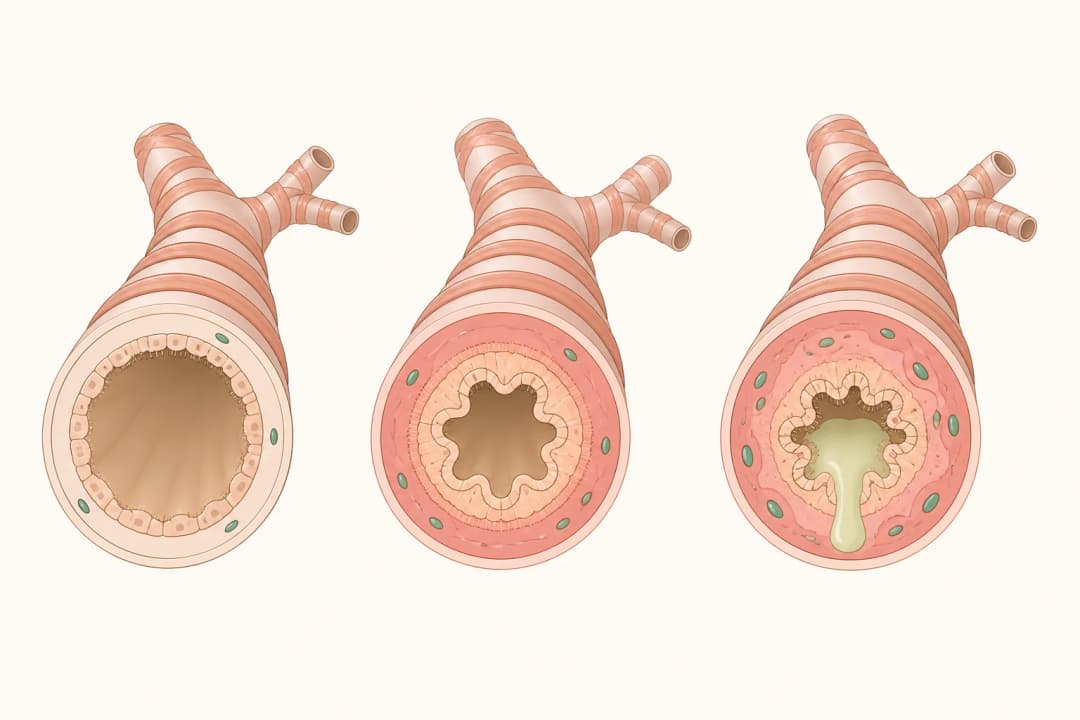
Asthma cough treatment aims to open narrowed airways, reduce airway inflammation, limit triggers and prevent future flare-ups.
This answers one question. It is not a diagnosis and does not replace an assessment by a licensed doctor.
At a glance
- Treatment focus
- Relieve airway narrowing, control inflammation and reduce trigger exposure.
- Technique matters
- Incorrect inhaler use can prevent enough medicine from reaching the lungs.
- Review signal
- Night waking, activity limitation or rising reliever use should prompt reassessment.
The short answer
A clinician may use a reliever inhaler for rapid symptom relief and a controller inhaler for ongoing inflammation, depending on the pattern and severity of symptoms. Follow the written asthma action plan and the prescribed inhaler schedule rather than changing doses on your own.
What an asthma cough means
Asthma can present with a dry or mucus-producing cough, sometimes alongside wheezing, chest tightness or shortness of breath. Cough may become more noticeable at night, during exercise, after a respiratory infection, or following exposure to smoke, dust, fragrances, cold air or allergens.
Cough alone does not establish asthma because reflux, nasal drainage, infection and other airway conditions can produce a similar symptom. Assessment may include the symptom pattern, chest examination, breathing tests and the response to appropriate treatment.
Practical treatment steps
Use each inhaler exactly as prescribed and have a clinician or pharmacist check your technique. A spacer may help medicine from a suitable metered-dose inhaler reach the lungs. Rinse your mouth after an inhaled corticosteroid if instructed.
Track when the cough occurs, what seems to trigger it and how often reliever medicine is needed. Reduce avoidable exposure to tobacco smoke, vaping aerosols, dust and strong scents. Treating associated nasal allergy may also reduce upper-airway irritation. If symptoms keep returning, request a review of the diagnosis, inhaler technique, adherence and treatment plan.
When to seek care
Arrange a prompt medical review if the cough disrupts sleep or normal activity, keeps recurring, is accompanied by wheezing or chest tightness, or is not responding as expected to the prescribed plan. Increasing reliance on a reliever inhaler also warrants review.
Seek emergency help for severe breathlessness, difficulty speaking in full sentences, bluish or grey lips, confusion, drowsiness, marked chest pulling with each breath, or symptoms that continue to worsen after using prescribed reliever medicine. Follow the emergency steps in the asthma action plan while help is being arranged.
Questions for your doctor
Ask whether the cough pattern fits asthma, whether breathing tests are appropriate, and which inhaler is intended for immediate relief versus daily control. Confirm how to recognise worsening symptoms, when to use a spacer, what to do after a missed dose, and when the action plan says to seek urgent help.
Find care
General Clinics & Polyclinics in Abu Dhabi
That answer is general. If you want it applied to your own case, these are licensed general clinics & polyclinics listed in Abu Dhabi.
27 Ar Ruwwad St - Shakhbout City - MSH4 - Abu Dhabi - United Arab Emirates
Accepts: Daman, Thiqa, Cigna, MetLife +20 more
Al Ruwais, Al Dhafrah
Accepts: Daman, Thiqa, AXA, Cigna +16 more
Al Bahyah - Al Bahyah Old - Abu Dhabi - United Arab Emirates
Accepts: Daman, Thiqa, Cigna, Allianz Care +18 more
Abu Dhabi
Accepts: Daman, Thiqa, AXA, Cigna +27 more
Ordered by verification status and how complete each clinic's public record is, then alphabetically. This is a directory listing, not a ranking — Zavis does not rate or recommend providers.
A factual listing drawn from the DHA, DOH and MOHAP licence registers. It is not a referral, an endorsement, or advice that any of these providers is right for you.
Questions people ask
Can asthma cause a cough without wheezing?
Yes. Asthma can present mainly with cough, although other causes can look similar. A clinician may assess the symptom pattern and use breathing tests before confirming the diagnosis.
Why is my asthma cough worse at night?
Airway sensitivity can vary overnight, and bedroom allergens, cooler air, reflux or nasal drainage may add irritation. Repeated night waking suggests that asthma control and possible triggers need review.
Should I stop my controller inhaler when the cough improves?
Do not stop or reduce prescribed controller medicine without discussing the plan with the prescribing clinician. Feeling better may reflect controlled inflammation rather than the condition having resolved.
Related
Related reading
Keep reading
Medical disclaimer. This page is general health information, not medical advice, and it cannot diagnose you. Always consult a licensed healthcare provider about your own symptoms and treatment. In an emergency in the UAE, call 998 for an ambulance.