
Asthma and feeling unable to breathe
Short answer
Severe trouble breathing during asthma can be an emergency: use your prescribed reliever now and seek urgent help if it is not working.
This answers one question. It is not a diagnosis and does not replace an assessment by a licensed doctor.
At a glance
- Immediate position
- Sit upright rather than lying flat.
- First treatment
- Use the quick-relief inhaler according to your personal asthma action plan.
- Emergency warning
- Gasping, difficulty speaking, confusion, drowsiness or blue-grey colour needs emergency help.
What the feeling can mean
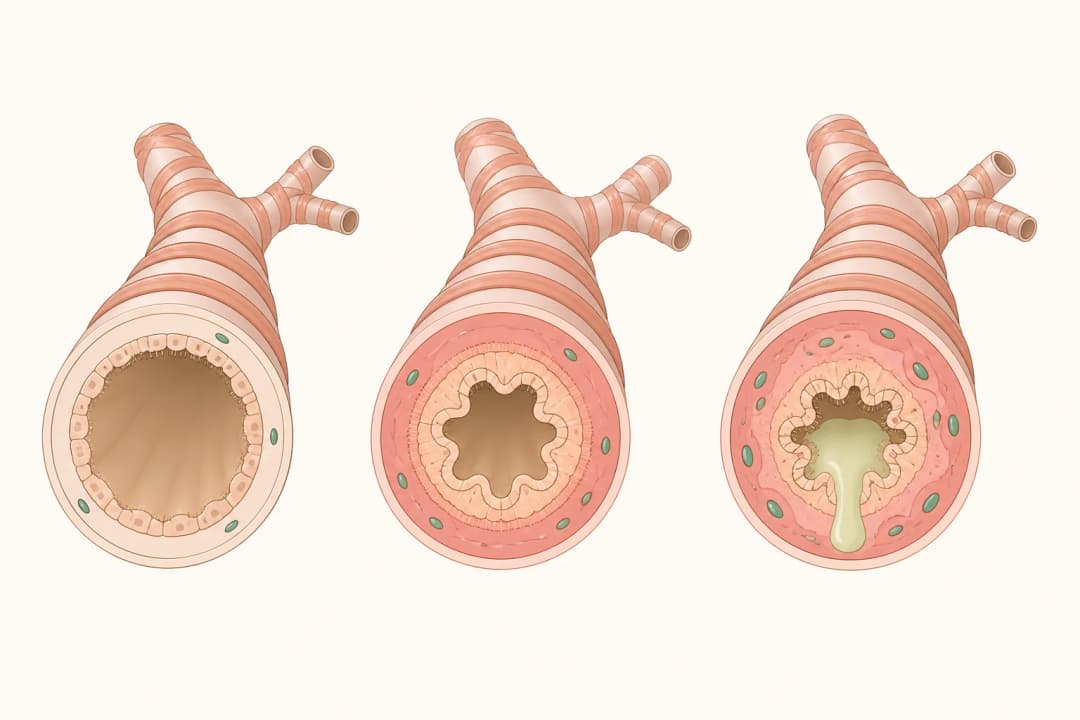
Asthma can present with breathlessness, chest tightness, wheezing or cough because the airways become narrowed and inflamed. During a flare, breathing may feel harder than usual, especially when breathing out. Symptoms may follow a respiratory infection, smoke, dust, strong scents, exercise or another personal trigger. A quiet chest in someone who is struggling to breathe is not reassuring; it can mean too little air is moving to produce a wheeze.
What to do now
Sit upright, stay with someone if possible and move away from smoke or any obvious trigger. Follow your written asthma action plan and take your prescribed quick-relief inhaler exactly as directed, using a spacer if your plan includes one. Do not lie flat, exercise, or delay care while trying home remedies. If you do not have a reliever, cannot use it, or it gives little or short-lived relief, arrange urgent medical assessment.
When to get emergency help
Call local emergency services now if breathing is rapidly worsening, you are gasping, cannot speak comfortably in full sentences, feel faint or confused, become unusually drowsy, or notice blue or grey lips or skin. Get emergency help if the reliever is not helping as expected or you are too breathless to use it. Do not drive yourself when breathing is severely impaired. Even after symptoms settle, prompt clinical review is sensible after a significant flare so treatment and inhaler technique can be checked.
Questions for your clinician
Ask which reliever dose belongs in your action plan, what change in symptoms should trigger urgent care, and whether your preventer treatment needs adjustment. Request a demonstration of inhaler and spacer technique, and discuss patterns such as night waking, repeated reliever use, exercise symptoms, nasal allergy or exposure to dust. Knowing your personal triggers and having an updated written plan can make the next flare easier to recognise and manage.
Find care
General Clinics & Polyclinics in Abu Dhabi
That answer is general. If you want it applied to your own case, these are licensed general clinics & polyclinics listed in Abu Dhabi.
27 Ar Ruwwad St - Shakhbout City - MSH4 - Abu Dhabi - United Arab Emirates
Accepts: Daman, Thiqa, Cigna, MetLife +20 more
Al Ruwais, Al Dhafrah
Accepts: Daman, Thiqa, AXA, Cigna +16 more
Al Bahyah - Al Bahyah Old - Abu Dhabi - United Arab Emirates
Accepts: Daman, Thiqa, Cigna, Allianz Care +18 more
Abu Dhabi
Accepts: Daman, Thiqa, AXA, Cigna +27 more
Ordered by verification status and how complete each clinic's public record is, then alphabetically. This is a directory listing, not a ranking — Zavis does not rate or recommend providers.
A factual listing drawn from the DHA, DOH and MOHAP licence registers. It is not a referral, an endorsement, or advice that any of these providers is right for you.
Questions people ask
Should I wait for wheezing before treating an asthma flare?
No. Breathlessness, cough or chest tightness may occur without an obvious wheeze. Follow your action plan based on the symptoms you have, and seek urgent help for severe breathing difficulty.
What if my reliever helps only briefly?
Brief or inadequate relief can signal that the flare needs urgent medical treatment. Continue following your action plan while arranging urgent assessment, and call emergency services if severe warning signs develop.
Why should inhaler technique be checked after a flare?
Small technique errors can prevent medicine from reaching the airways effectively. A clinician or pharmacist can watch how you use the device and correct the specific steps that are causing difficulty.
Related
Related reading
Keep reading
Medical disclaimer. This page is general health information, not medical advice, and it cannot diagnose you. Always consult a licensed healthcare provider about your own symptoms and treatment. In an emergency in the UAE, call 998 for an ambulance.