
Asthma and coughing up blood
Short answer
Coughing up blood is not a typical asthma symptom and needs prompt medical assessment, even when the amount appears small.
This answers one question. It is not a diagnosis and does not replace an assessment by a licensed doctor.
At a glance
- Core message
- Visible blood is not part of the usual asthma symptom pattern.
- Safe position
- Sit upright while arranging the appropriate medical help.
- Helpful information
- Describe the amount, colour, mucus and accompanying symptoms.
What you need to know now
Blood may appear as streaks mixed with mucus or as a larger amount. It can come from irritated airways, infection or another chest problem, while blood from the nose, mouth or stomach can sometimes be mistaken for blood coughed from the lungs.
Why asthma does not explain it by itself
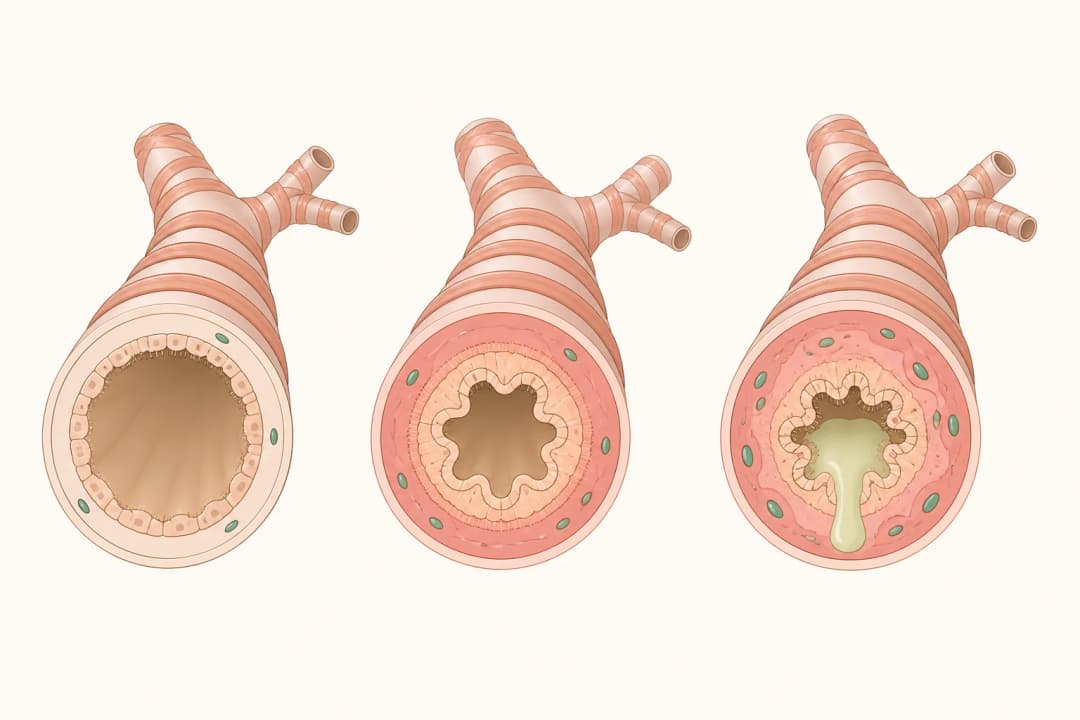
Asthma commonly presents with wheezing, chest tightness, cough and variable breathlessness. Visible blood is outside that usual pattern, so it should not be attributed to a forceful cough without clinical assessment.
A clinician may ask about the blood’s colour and amount, whether it was mixed with phlegm, and whether fever, chest pain, breathlessness, leg swelling, weight loss or a recent nosebleed occurred. Medicines, including those that affect clotting, are also relevant.
What to do if you notice blood
Sit upright and note what happened, including the appearance of the blood and accompanying symptoms. If safe, a photograph of the sputum can help the clinician. Do not delay care to collect a sample, and do not drive yourself if you feel faint or significantly short of breath.
Use prescribed asthma medicine according to your action plan for simultaneous wheeze or tightness, but do not rely on an inhaler to assess or treat the bleeding. Avoid taking extra medicine unless a healthcare professional directs it, and take your medication list to the assessment.
When to get emergency help
Call emergency services if there is more than a small streak of blood, bleeding continues or returns, breathing is difficult, chest pain is present, you feel faint, your heart is racing, or your lips or face look blue or grey. Severe asthma symptoms or a reliever that is not helping also require emergency care.
If it was only a small streak and you otherwise feel stable, seek prompt medical advice rather than waiting for it to happen again. The urgency comes from the bleeding and associated warning signs, not from assumptions about how commonly a cause occurs.
Questions for the assessment
Ask where the blood is likely to have come from, which examination or tests are appropriate, and whether any medicine needs adjustment. Explain your asthma pattern separately, including recent attacks, night waking, infections, reliever response and changes in exercise tolerance.
Find care
General Clinics & Polyclinics in Abu Dhabi
That answer is general. If you want it applied to your own case, these are licensed general clinics & polyclinics listed in Abu Dhabi.
27 Ar Ruwwad St - Shakhbout City - MSH4 - Abu Dhabi - United Arab Emirates
Accepts: Daman, Thiqa, Cigna, MetLife +20 more
Al Ruwais, Al Dhafrah
Accepts: Daman, Thiqa, AXA, Cigna +16 more
Al Bahyah - Al Bahyah Old - Abu Dhabi - United Arab Emirates
Accepts: Daman, Thiqa, Cigna, Allianz Care +18 more
Abu Dhabi
Accepts: Daman, Thiqa, AXA, Cigna +27 more
Ordered by verification status and how complete each clinic's public record is, then alphabetically. This is a directory listing, not a ranking — Zavis does not rate or recommend providers.
A factual listing drawn from the DHA, DOH and MOHAP licence registers. It is not a referral, an endorsement, or advice that any of these providers is right for you.
Questions people ask
Can hard coughing cause a blood streak?
Forceful coughing can irritate tissue, but it is not safe to assume that irritation is the source. A new episode still needs prompt medical advice.
Can I wait if my asthma inhaler settles the wheeze?
No. Improvement in wheeze does not explain visible blood. Seek assessment for the bleeding, and use emergency services if it is more than a small streak or comes with warning signs.
Related
Related reading
Keep reading
Medical disclaimer. This page is general health information, not medical advice, and it cannot diagnose you. Always consult a licensed healthcare provider about your own symptoms and treatment. In an emergency in the UAE, call 998 for an ambulance.