
Asthma attacks at night: what to know
Short answer
Night-time asthma symptoms can signal poor asthma control and deserve a prompt review of triggers, inhaler technique, and treatment.
This answers one question. It is not a diagnosis and does not replace an assessment by a licensed doctor.
At a glance
- Key clue
- Asthma symptoms that interrupt sleep suggest control should be reviewed.
- Immediate position
- Sit upright rather than lying flat during breathing difficulty.
- Useful record
- Note symptoms, triggers, inhaler use and any peak-flow reading.
The short answer
Coughing, wheezing, chest tightness or breathlessness that wakes you should not become an accepted part of sleep. Follow your written asthma action plan and arrange a clinical review, even if a reliever inhaler settles the episode.
Why symptoms may worsen overnight
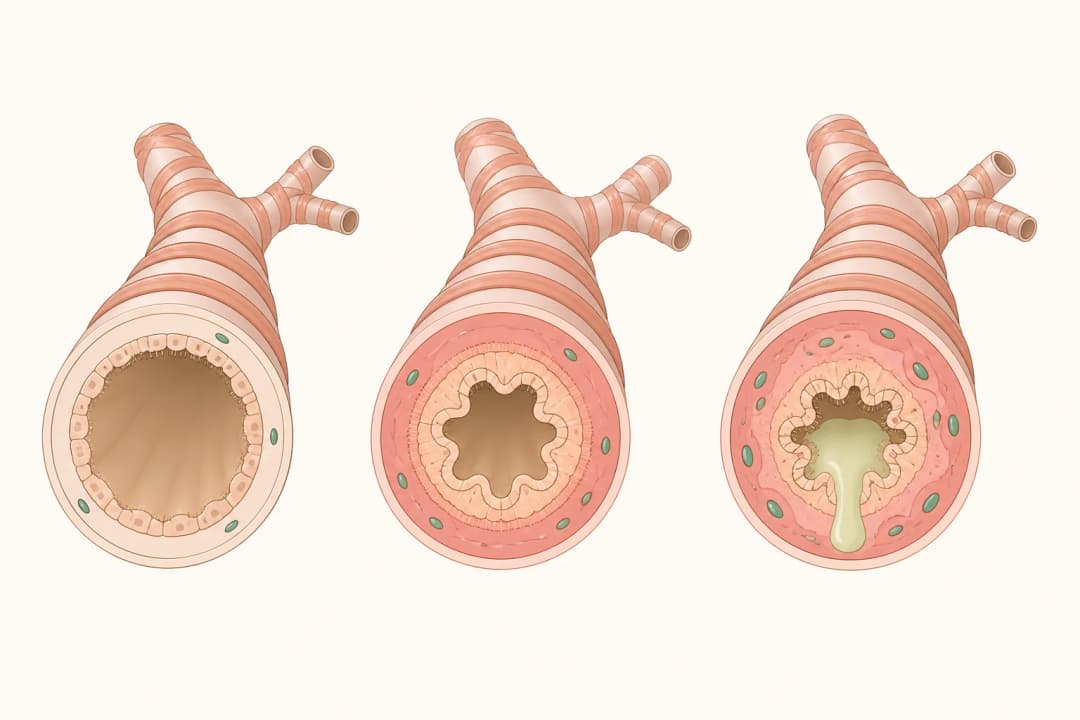
Airways naturally change during sleep, and asthma-related narrowing may become more noticeable then. A cool room, smoke, fragrance, dust mites, pet allergens, mould, or an infection can add irritation. Lying down may also expose symptoms linked with nasal inflammation or reflux.
Asthma commonly presents with wheezing, cough, breathlessness and chest tightness, but the pattern varies. Keeping a note of bedtime, possible exposures, symptoms and inhaler use can help a clinician identify the pattern.
What to do during and after an episode
Sit upright, stay as calm as possible and use your reliever exactly as your personal action plan or prescription directs. Do not lie flat while struggling to breathe. If the plan tells you to check peak flow, compare the reading with your own action-plan zones.
After symptoms settle, check that the inhaler is available, in date and used with the technique demonstrated by your clinician. Reduce identifiable bedroom triggers without stopping prescribed preventer medicine. Repeated night waking, extra reliever use or morning symptoms warrant an asthma review.
When night breathing needs urgent care
Seek emergency help if breathing is rapidly worsening, you cannot speak comfortably in full sentences, your lips or face look blue or grey, you become drowsy or confused, or your reliever is not helping as expected. Continue following the emergency steps in your action plan while help is arranged.
Contact a clinician promptly after a night attack, particularly if it was more severe than usual or symptoms returned. Treatment may need adjustment, and technique, triggers and other causes of disturbed breathing can be assessed.
Questions for your doctor
Ask whether your current symptoms show that control has changed, whether your preventer and reliever technique is correct, and which action-plan step applies at night. Also discuss nasal symptoms, reflux, snoring, bedroom allergens, recent infections and any medicine that may affect breathing.
Find care
General Clinics & Polyclinics in Abu Dhabi
That answer is general. If you want it applied to your own case, these are licensed general clinics & polyclinics listed in Abu Dhabi.
27 Ar Ruwwad St - Shakhbout City - MSH4 - Abu Dhabi - United Arab Emirates
Accepts: Daman, Thiqa, Cigna, MetLife +20 more
Al Ruwais, Al Dhafrah
Accepts: Daman, Thiqa, AXA, Cigna +16 more
Al Bahyah - Al Bahyah Old - Abu Dhabi - United Arab Emirates
Accepts: Daman, Thiqa, Cigna, Allianz Care +18 more
Abu Dhabi
Accepts: Daman, Thiqa, AXA, Cigna +27 more
Ordered by verification status and how complete each clinic's public record is, then alphabetically. This is a directory listing, not a ranking — Zavis does not rate or recommend providers.
A factual listing drawn from the DHA, DOH and MOHAP licence registers. It is not a referral, an endorsement, or advice that any of these providers is right for you.
Questions people ask
Why does my reliever help at night but symptoms return?
A reliever can temporarily open narrowed airways without addressing all underlying inflammation or ongoing triggers. Recurring symptoms need a treatment and technique review.
Should I sleep through mild wheezing?
Wheezing that wakes you or recurs overnight should be managed according to your action plan and discussed with a clinician; worsening breathing or poor reliever response needs urgent help.
Related
Related reading
Keep reading
Medical disclaimer. This page is general health information, not medical advice, and it cannot diagnose you. Always consult a licensed healthcare provider about your own symptoms and treatment. In an emergency in the UAE, call 998 for an ambulance.