
Asthma attack treatment: what to do
Short answer
Treat an asthma attack promptly with the prescribed reliever and action plan, while watching closely for signs that emergency care is needed.
This answers one question. It is not a diagnosis and does not replace an assessment by a licensed doctor.
At a glance
- First response
- Sit upright and follow the prescribed asthma action plan.
- Reliever role
- Quick-relief medicine relaxes tightened airway muscles.
- After recovery
- A clinical review can improve technique and update the plan.
How asthma attack treatment works
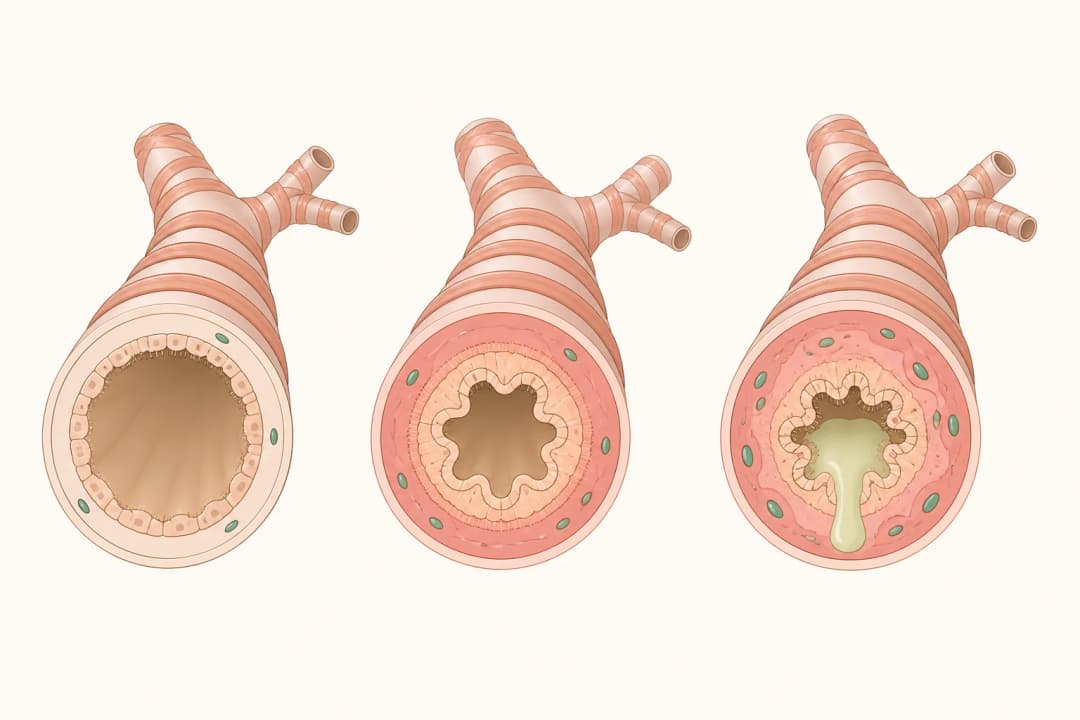
During an attack, muscles around the airways tighten and the airway lining may swell, making it harder to move air. A prescribed quick-relief inhaler helps relax tightened airway muscles. Some people use a spacer with an inhaler so the medicine is easier to breathe into the lungs. More serious attacks may require oxygen, repeated inhaled medicine, or anti-inflammatory medicine in an urgent-care setting.
A nebuliser turns liquid medicine into a mist, but it is not automatically stronger than correctly delivered inhaler treatment. The suitable device and medicine depend on the person's action plan, symptoms, and ability to use the device.
What to do during an attack
Sit upright, stay as calm as possible, and move away from smoke, dust, strong fragrances, or another obvious trigger. Use the prescribed reliever exactly as the personal asthma action plan directs. A caregiver can help assemble the inhaler and spacer, count doses according to that plan, and monitor whether breathing and speech improve.
Do not lie flat or rely on steam, caffeine, or someone else's inhaler. If there is no action plan, symptoms are worsening, or the reliever is unavailable, seek urgent medical help rather than improvising a dose. Continue prescribed controller treatment unless a clinician gives different instructions.
When emergency care is needed
Call emergency services now if the person is struggling to breathe, cannot speak comfortably in sentences, becomes drowsy or confused, develops blue or grey lips, has marked pulling-in around the ribs or neck, collapses, or is getting worse despite following the action plan. Very quiet breathing in someone working hard to breathe can mean too little air is moving and is also an emergency sign.
Arrange prompt clinical review after an attack even when symptoms settle. A clinician can check inhaler technique, identify triggers, assess whether controller treatment needs adjustment, and update written instructions for a future episode.
Questions for your doctor
Ask which changes in cough, chest tightness, sleep, activity, or reliever use should activate each part of your written plan. Confirm the correct inhaler and spacer technique, how to recognise an empty or expired device, which triggers may be relevant, and where to seek help if treatment does not work as expected.
Find care
General Clinics & Polyclinics in Abu Dhabi
That answer is general. If you want it applied to your own case, these are licensed general clinics & polyclinics listed in Abu Dhabi.
27 Ar Ruwwad St - Shakhbout City - MSH4 - Abu Dhabi - United Arab Emirates
Accepts: Daman, Thiqa, Cigna, MetLife +20 more
Al Ruwais, Al Dhafrah
Accepts: Daman, Thiqa, AXA, Cigna +16 more
Al Bahyah - Al Bahyah Old - Abu Dhabi - United Arab Emirates
Accepts: Daman, Thiqa, Cigna, Allianz Care +18 more
Abu Dhabi
Accepts: Daman, Thiqa, AXA, Cigna +27 more
Ordered by verification status and how complete each clinic's public record is, then alphabetically. This is a directory listing, not a ranking — Zavis does not rate or recommend providers.
A factual listing drawn from the DHA, DOH and MOHAP licence registers. It is not a referral, an endorsement, or advice that any of these providers is right for you.
Questions people ask
Should I use a nebuliser for every asthma attack?
Not necessarily. Many attacks can be managed with a prescribed reliever inhaler and spacer when used correctly. A clinician should determine when nebulised treatment is appropriate.
Can I wait if the reliever gives only brief improvement?
Brief or incomplete improvement can signal that the attack is not controlled. Follow the escalation instructions in the written action plan and seek urgent care if symptoms persist or return quickly.
Why is follow-up needed after I feel better?
The episode may reveal a trigger, an inhaler-technique problem, or a need to adjust preventive care. Follow-up also provides an opportunity to replace used or expired medicines.
Related
Related reading
Keep reading
Medical disclaimer. This page is general health information, not medical advice, and it cannot diagnose you. Always consult a licensed healthcare provider about your own symptoms and treatment. In an emergency in the UAE, call 998 for an ambulance.