
Caring for Skin After Milia Removal
Short answer
After milia removal, keep the area clean, avoid picking, and follow the clinician's wound-care instructions.
This answers one question. It is not a diagnosis and does not replace an assessment by a licensed doctor.
At a glance
- Early appearance
- A pinpoint crust, mild redness or tenderness may follow extraction.
- Avoid
- Picking, squeezing and strong active products on healing skin.
- Near the eye
- Eye pain, vision change or marked eyelid swelling needs urgent assessment.
Care after removal
After milia removal, keep the area clean, avoid picking, and follow the clinician's wound-care instructions. Mild redness, tenderness or a tiny superficial crust can occur where the skin was opened. Use only products approved for the treated area, especially near the eyelids, and protect healing skin from sunlight.
What normal healing can look like
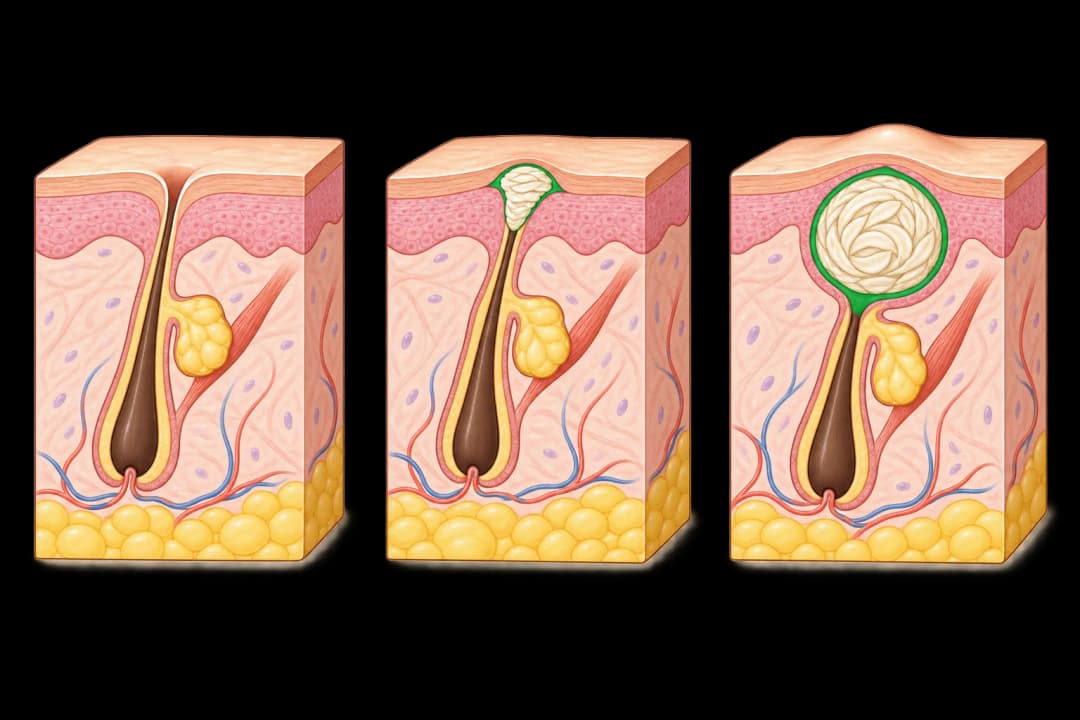
Milia are small keratin-filled cysts rather than acne that needs squeezing. During professional extraction, the surface is gently opened so the contents can be released. The treated point may therefore look pink or slightly darker while the skin barrier repairs itself. A small mark immediately after treatment does not necessarily mean that the milium remains. New milia can form later in the same general area.
How to protect the treated area
Wash with clean hands and a gentle cleanser, then pat rather than rub. Do not lift a crust or attempt another extraction, because additional trauma can delay healing and leave pigment change. Pause scrubs, exfoliating acids and retinoids on broken or irritated skin until the surface has recovered and your clinician says they can be restarted. Apply suitable broad-spectrum sunscreen once the area can tolerate it.
Changes that need medical review
Contact the treating clinic if pain, redness or swelling is increasing instead of easing, or if you notice pus, spreading warmth, persistent bleeding or fever. Urgent care is appropriate for marked eyelid swelling, eye pain or a change in vision after treatment near the eye. Arrange a routine review if the bump persists, repeatedly returns or looks different from the milia previously diagnosed.
Useful questions at follow-up
Check when makeup, active skin-care products and contact lenses can be used again if the eyelid was treated. Ask whether your current creams could be contributing to recurrent bumps, whether the lesion's appearance fits milia, and whether a prescription retinoid is appropriate for prevention. Retinoids require individual guidance and should not be placed on freshly opened skin.
Find care
General Clinics & Polyclinics in Abu Dhabi
That answer is general. If you want it applied to your own case, these are licensed general clinics & polyclinics listed in Abu Dhabi.
27 Ar Ruwwad St - Shakhbout City - MSH4 - Abu Dhabi - United Arab Emirates
Accepts: Daman, Thiqa, Cigna, MetLife +20 more
Al Ruwais, Al Dhafrah
Accepts: Daman, Thiqa, AXA, Cigna +16 more
Al Bahyah - Al Bahyah Old - Abu Dhabi - United Arab Emirates
Accepts: Daman, Thiqa, Cigna, Allianz Care +18 more
Abu Dhabi
Accepts: Daman, Thiqa, AXA, Cigna +27 more
Ordered by verification status and how complete each clinic's public record is, then alphabetically. This is a directory listing, not a ranking — Zavis does not rate or recommend providers.
A factual listing drawn from the DHA, DOH and MOHAP licence registers. It is not a referral, an endorsement, or advice that any of these providers is right for you.
Questions people ask
Can I wear makeup after milia removal?
Wait until the surface has closed and is no longer raw, then follow the treating clinician's timing and use clean applicators.
Should I remove a crust after extraction?
No. Let it separate on its own; picking can reopen the spot and increase irritation or pigment change.
Why did a white bump come back?
A new milium may develop near a previously treated site. A persistent or changing bump should be examined rather than repeatedly squeezed at home.
Related
Related reading
Keep reading
Medical disclaimer. This page is general health information, not medical advice, and it cannot diagnose you. Always consult a licensed healthcare provider about your own symptoms and treatment. In an emergency in the UAE, call 998 for an ambulance.