
Adult asthma: symptoms, control, and warning signs
Short answer
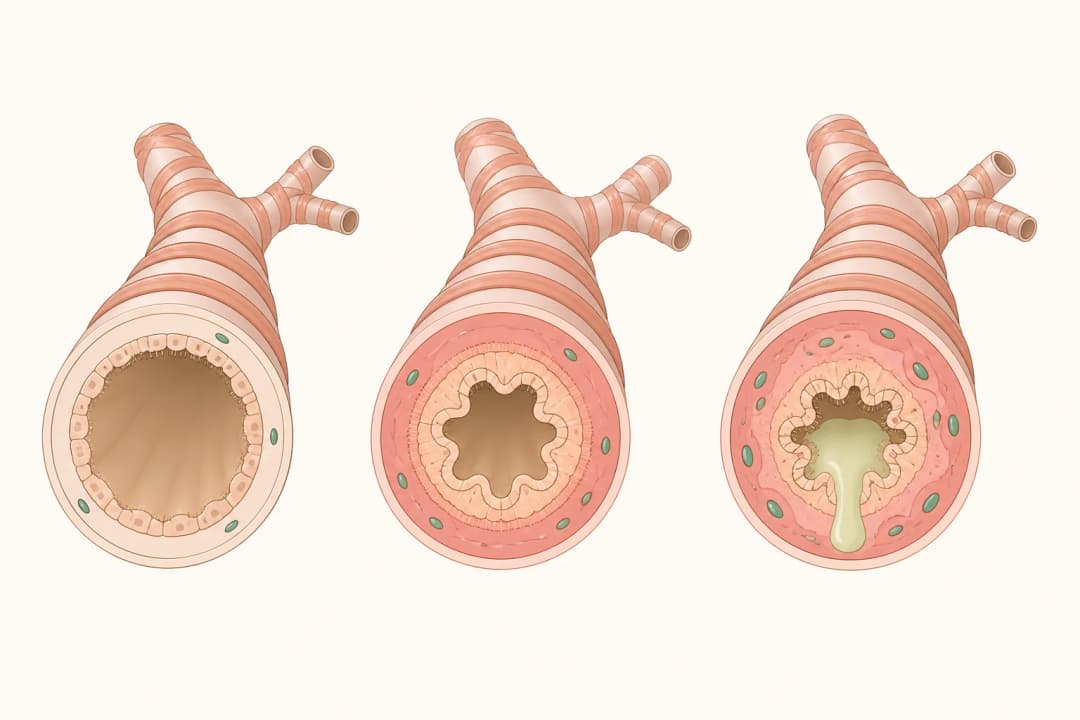
Adult asthma causes variable airway narrowing and inflammation, leading to episodes of wheeze, cough, chest tightness, or breathlessness.
This answers one question. It is not a diagnosis and does not replace an assessment by a licensed doctor.
At a glance
- Typical pattern
- Symptoms vary over time and with triggers
- Routine care
- Correct inhaler technique and a written action plan
- Emergency clue
- Severe breathing difficulty or rescue treatment not helping
Recognising the pattern
Symptoms may come and go, worsen at night or early morning, or appear with exercise, respiratory infections, smoke, dust, pollen, animals, strong fumes, or cold air. Asthma often presents with wheezing and breathlessness, but cough or chest tightness can be prominent. Similar symptoms can arise from other conditions, so clinical assessment is needed.
A clinician may review the timing of symptoms, listen to the chest, and use breathing tests to look for variable airflow limitation. They will also consider nasal allergy, reflux, workplace exposures, smoking, heart problems, and other lung conditions when choosing the next step.
Keeping symptoms controlled
Take inhalers exactly as prescribed and ask a clinician or pharmacist to check your technique, since small handling errors can reduce delivery to the lungs. Keep your reliever accessible, follow your written asthma action plan, and attend reviews even when breathing feels settled.
Note symptom patterns, nighttime waking, activity limitation, and how often relief medicine is needed. Avoid tobacco smoke and address triggers that consistently provoke symptoms without unnecessarily restricting normal activity. Do not stop a preventer inhaler simply because symptoms improve.
Breathing warning signs
Seek urgent medical help if breathlessness is severe or rapidly worsening, you cannot speak comfortably in full sentences, lips or face look blue or grey, you feel faint or confused, or your reliever is not helping as directed in your action plan. Sit upright, use prescribed rescue treatment according to that plan, and do not drive yourself if severely unwell.
Points for your asthma review
Ask what your breathing tests show, whether your inhaler technique is effective, how to recognise worsening control, and exactly what your action plan tells you to do. Mention nighttime symptoms, exercise limits, nasal symptoms, possible work triggers, smoking or vaping, and every medicine or supplement you use.
Find care
General Clinics & Polyclinics in Abu Dhabi
That answer is general. If you want it applied to your own case, these are licensed general clinics & polyclinics listed in Abu Dhabi.
27 Ar Ruwwad St - Shakhbout City - MSH4 - Abu Dhabi - United Arab Emirates
Accepts: Daman, Thiqa, Cigna, MetLife +20 more
Al Ruwais, Al Dhafrah
Accepts: Daman, Thiqa, AXA, Cigna +16 more
Al Bahyah - Al Bahyah Old - Abu Dhabi - United Arab Emirates
Accepts: Daman, Thiqa, Cigna, Allianz Care +18 more
Abu Dhabi
Accepts: Daman, Thiqa, AXA, Cigna +27 more
Ordered by verification status and how complete each clinic's public record is, then alphabetically. This is a directory listing, not a ranking — Zavis does not rate or recommend providers.
A factual listing drawn from the DHA, DOH and MOHAP licence registers. It is not a referral, an endorsement, or advice that any of these providers is right for you.
Questions people ask
Can asthma begin in adulthood?
Yes. Asthma can first become apparent during adult life, although a clinician should check for other causes of new breathing symptoms.
Should I exercise if I have asthma?
Regular activity is generally encouraged when asthma is controlled. If exercise triggers symptoms, discuss inhaler use and control with your clinician rather than abandoning activity.
Why does inhaler technique matter?
The correct sequence and seal help medicine reach the airways; technique should be demonstrated and rechecked during follow-up.
Related
Related reading
Keep reading
Medical disclaimer. This page is general health information, not medical advice, and it cannot diagnose you. Always consult a licensed healthcare provider about your own symptoms and treatment. In an emergency in the UAE, call 998 for an ambulance.