
Treatment for an acute asthma flare
Short answer
Treatment for an acute asthma flare rapidly opens narrowed airways, supports oxygen levels and controls airway inflammation.
This answers one question. It is not a diagnosis and does not replace an assessment by a licensed doctor.
At a glance
- First response
- Follow the prescribed reliever steps in your asthma action plan
- Treatment goal
- Restore airflow and reduce airway inflammation
- Follow-up focus
- Inhaler technique, controller medicine, triggers and action plan
The short answer
Use your prescribed reliever exactly as your written asthma action plan directs and sit upright. If breathing is severely difficult, symptoms worsen quickly, or the reliever is not helping as expected, call emergency services without delay.
What an acute asthma flare does
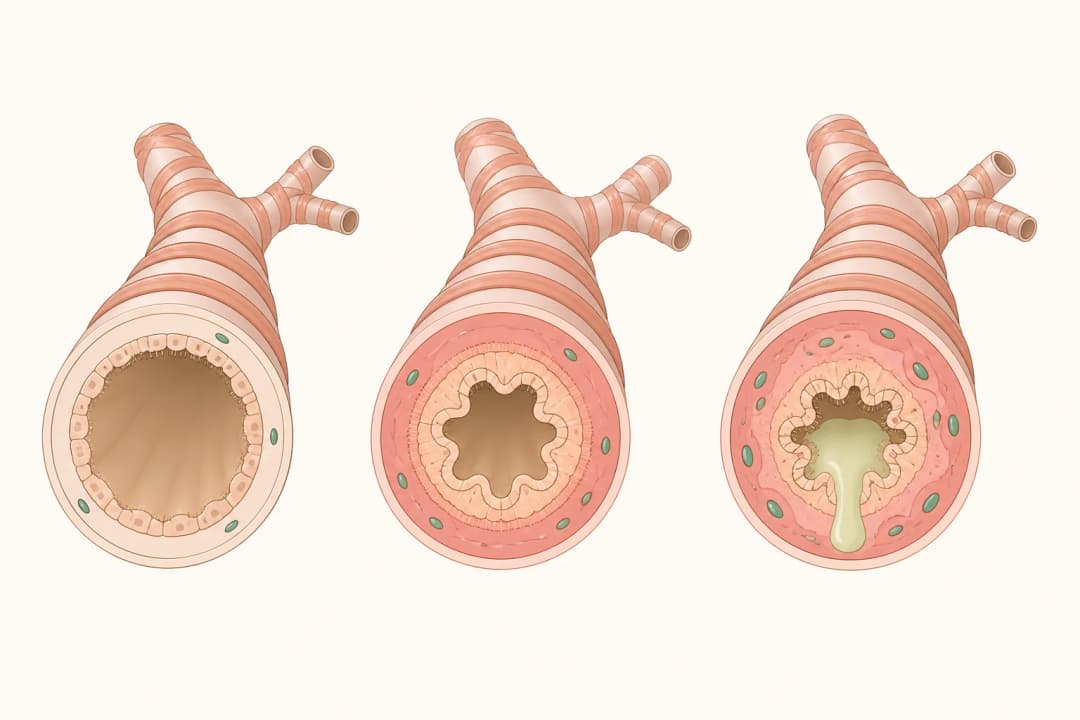
During a flare, muscles around the breathing tubes tighten while the lining becomes inflamed and may produce extra mucus. This reduces airflow and can cause wheezing, cough, chest tightness and shortness of breath. Symptoms can follow a respiratory infection, smoke, dust, allergens, exercise, weather changes or missed controller medicine, although a trigger is not always obvious.
A clinician assesses how hard you are working to breathe, your ability to speak, oxygen level and response to reliever treatment. Peak-flow measurement may help when you can perform it reliably, but it should not delay emergency care.
Treatment during and after the flare
A fast-acting inhaled bronchodilator is commonly given through an inhaler with a spacer or through a nebuliser when clinically appropriate. Medical teams may add oxygen and a short course of corticosteroid for a more significant attack. The exact medicines and doses must follow your personal plan or the treating clinician's instructions.
After symptoms settle, arrange follow-up to review inhaler technique, controller treatment, likely triggers and the written action plan. Continue prescribed controller medicine; feeling better after reliever treatment does not resolve the underlying tendency toward airway inflammation. Keep the reliever accessible and check that the device is usable before it is urgently needed.
Breathing signs that are an emergency
Call emergency services if you are gasping, cannot finish a sentence, become exhausted or confused, develop blue or grey lips, or have marked pulling-in of the skin around the ribs or neck. A very quiet chest despite severe breathlessness is also dangerous because too little air may be moving to create a wheeze.
Do not drive yourself during a severe attack. Keep using emergency medicine according to your action plan while help is on the way, and do not lie flat if sitting upright makes breathing easier.
Plan for the next flare
Request a written plan that explains your everyday medicines, how to recognise deterioration, what reliever instructions apply to you and when to seek emergency help. Ask the clinician to watch your inhaler and spacer technique, discuss whether allergy symptoms are affecting control, and explain when follow-up is needed after this episode.
Find care
General Clinics & Polyclinics in Abu Dhabi
That answer is general. If you want it applied to your own case, these are licensed general clinics & polyclinics listed in Abu Dhabi.
27 Ar Ruwwad St - Shakhbout City - MSH4 - Abu Dhabi - United Arab Emirates
Accepts: Daman, Thiqa, Cigna, MetLife +20 more
Al Ruwais, Al Dhafrah
Accepts: Daman, Thiqa, AXA, Cigna +16 more
Al Bahyah - Al Bahyah Old - Abu Dhabi - United Arab Emirates
Accepts: Daman, Thiqa, Cigna, Allianz Care +18 more
Abu Dhabi
Accepts: Daman, Thiqa, AXA, Cigna +27 more
Ordered by verification status and how complete each clinic's public record is, then alphabetically. This is a directory listing, not a ranking — Zavis does not rate or recommend providers.
A factual listing drawn from the DHA, DOH and MOHAP licence registers. It is not a referral, an endorsement, or advice that any of these providers is right for you.
Questions people ask
Is a nebuliser always stronger than an inhaler with a spacer?
Not necessarily. An inhaler with a spacer can deliver reliever medicine effectively in many flares; clinicians choose the delivery method according to severity, technique and response.
Should I stop my controller inhaler once the attack has eased?
Continue it as prescribed unless the treating clinician changes the plan. Controller medicine addresses airway inflammation and has a different role from rapid symptom relief.
Can an asthma attack happen without wheezing?
Yes. An acute flare may present with cough, tightness or breathlessness, and a severe attack can produce little wheeze when airflow is very limited.
Keep reading
Medical disclaimer. This page is general health information, not medical advice, and it cannot diagnose you. Always consult a licensed healthcare provider about your own symptoms and treatment. In an emergency in the UAE, call 998 for an ambulance.