
Loop Excision of the Cervix (LLETZ or LEEP)
At a glance
- Also called
- LLETZ or LEEP
- Main purpose
- Remove and examine abnormal cervical cells
- Typical setting
- Outpatient clinic
Find care
Hospitals & Medical Centers in Abu Dhabi
Licensed hospitals & medical centers listed in Abu Dhabi. Appearing here means a provider holds a UAE licence in this category — not that it offers loop excision of the cervix (LLETZ or LEEP), which is worth confirming with the clinic before you book.
Ahalia Hospital Musaffah Building - Musaffah - Musaffah Industrial - Abu Dhabi - United Arab Emirates
Accepts: Daman, Thiqa, AXA, Cigna +26 more
Al Ruwais Industrial City - Abu Dhabi - United Arab Emirates
Accepts: Daman, Thiqa, AXA, Cigna +30 more
Abu Dhabi, Abu Dhabi
Accepts: Daman, Thiqa, AXA, Cigna +30 more
Plot No. 11-12, SE 44 Khalifa City A - مدينة خليفة - جنوب شرق 44 - أبو ظبي - United Arab Emirates
Accepts: Daman, Thiqa, AXA, Cigna +26 more
7 Al Kawadir 2 St - Khalifa City - SE44 - Abu Dhabi - United Arab Emirates
Accepts: Daman, Thiqa, AXA, Cigna +25 more
Mohammed Bin Khalif Street 669, Al Mussala, Abu Dhabi, Abu Dhai - 35453 - 669 Mohammed Bin Khalifa St - Al Manhal - W15 02 - Abu Dhabi - United Arab Emirates
Accepts: Daman, Thiqa, AXA, Cigna +22 more
Ordered by verification status and how complete each clinic's public record is, then alphabetically. This is a directory listing, not a ranking — Zavis does not rate or recommend providers.
A factual listing drawn from the DHA, DOH and MOHAP licence registers. It is not a referral, an endorsement, or advice that any of these providers is right for you.
What is loop excision of the cervix?
Loop excision removes abnormal cells from the cervix with a thin heated wire so they can be examined and treated.
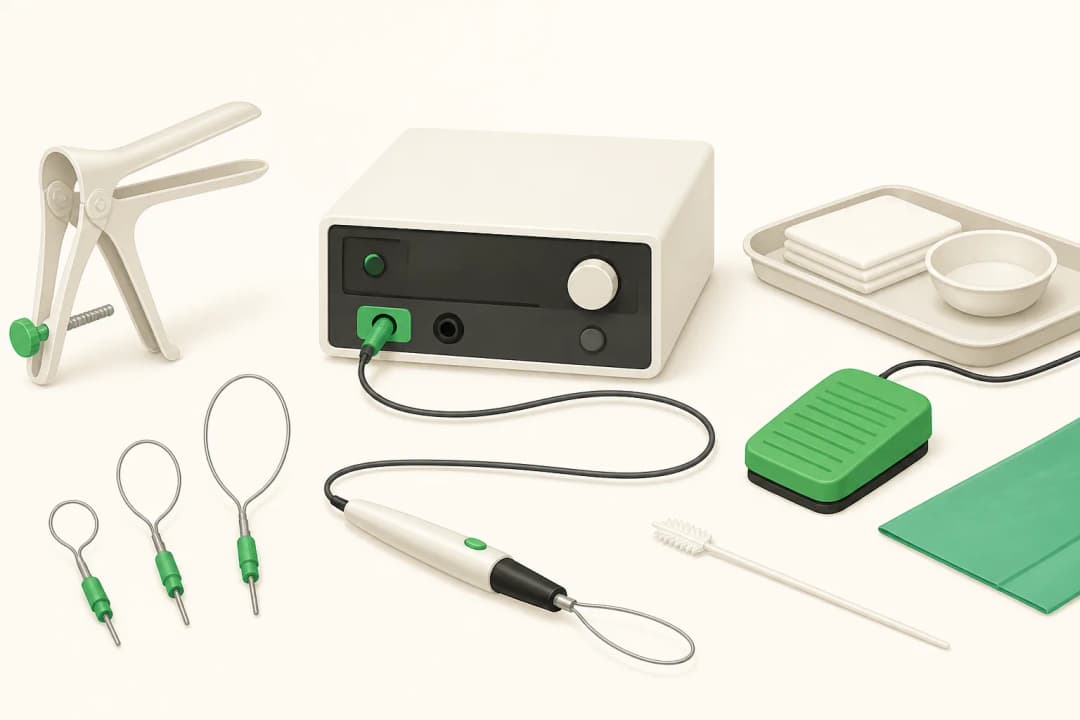
Loop excision, also called LLETZ or LEEP, removes a small area of abnormal cervical tissue using a thin electrically heated wire. A clinician usually works through a speculum while viewing the cervix with a colposcope. The removed tissue is sent for laboratory examination, which confirms the cell changes and whether the edges of the sample are clear.
What does recovery actually involve?
Mild cramping and watery, brown, or lightly bloody discharge can occur after the procedure. Use sanitary pads while the cervix heals, and follow the clinic’s instructions about avoiding tampons, vaginal sex, and swimming. Arrange help if sedation was used. Contact your care team promptly for heavy bleeding, fever, worsening pain, or discharge with an unpleasant smell.
What can go wrong, and how often?
Bleeding, infection, and discomfort are recognised complications. Bleeding can happen immediately or when the healing surface separates later. Rarely, a deeper or repeated excision can affect the cervix in a future pregnancy, including a possible link with cervical insufficiency. Your clinician can explain how the depth and amount of tissue planned affect your individual risk.
Will it fix the problem, and for how long?
The treatment removes the area of cervical dysplasia that was identified, but it does not prevent every future cell change. Follow-up testing checks whether abnormal cells have returned or remain. The laboratory result guides the next appointment and may show that further surveillance or treatment is needed.
Key facts
The procedure is commonly performed as an outpatient treatment with local anaesthetic. Tell the team if you may be pregnant, take medicines that affect bleeding, or have an allergy to local anaesthetic. Bring any questions about the pathology result and the timing of follow-up.
Who may need loop excision?
It may be offered when colposcopy and cervical samples show cell changes that need removal or a clearer diagnosis. The decision depends on the grade and location of the abnormal area, previous results, pregnancy plans, and whether the entire area can be treated safely.
What happens during the procedure?
You change in private and lie on an examination couch. The clinician inserts a speculum, applies solutions that highlight the area, numbs the cervix, and removes the tissue with the loop. Bleeding is controlled, and the sample is labelled for laboratory review. The appointment includes time to discuss aftercare before you leave.
Recovery timeline
Plan a quieter day after treatment. Discharge may continue for several weeks as the cervix heals, while cramps usually settle sooner. Wait for the clinician’s clearance before resuming activities that place anything in the vagina. Attend the scheduled result review even if symptoms have settled.
Risks and warning signs
Seek urgent medical advice for bleeding that rapidly soaks pads, severe or increasing pelvic pain, faintness, fever, or feeling acutely unwell. Ask before taking medicines if you use anticoagulants or have a bleeding disorder.
Possible alternatives
Depending on the findings, options can include monitoring with repeat colposcopy, a diagnostic colposcopy, or cone biopsy when a larger or deeper sample is needed. The right choice depends on the examination and laboratory findings.
Finding care
Choose a gynaecology service that can perform colposcopy, provide cervical treatment, and arrange laboratory follow-up. Ask who will give you the result, when it will arrive, and whom to call if bleeding or pain increases.
Questions people ask
Can I have loop excision during pregnancy?
Tell the clinician if pregnancy is possible; timing and alternatives require individual assessment.
Will I feel the wire?
Local anaesthetic numbs the cervix, although pressure, warmth, or cramping may be noticeable.
When will I receive the result?
The clinic will tell you when the laboratory result is expected and how follow-up will be arranged.
Related
Related reading
Keep reading
Medical disclaimer. This page is general health information, not medical advice, and it cannot diagnose you. Always consult a licensed healthcare provider about your own symptoms and treatment. In an emergency in the UAE, call 998 for an ambulance.