
Urine Test
At a glance
- Also called
- Urinalysis
- Sample
- Usually a clean-catch urine sample
- Follow-up
- May include culture, repeat testing, or imaging
Find care
General Clinics & Polyclinics in Abu Dhabi
Licensed general clinics & polyclinics listed in Abu Dhabi. Appearing here means a provider holds a UAE licence in this category — not that it offers urine test, which is worth confirming with the clinic before you book.
27 Ar Ruwwad St - Shakhbout City - MSH4 - Abu Dhabi - United Arab Emirates
Accepts: Daman, Thiqa, Cigna, MetLife +20 more
Al Ruwais, Al Dhafrah
Accepts: Daman, Thiqa, AXA, Cigna +16 more
Al Bahyah - Al Bahyah Old - Abu Dhabi - United Arab Emirates
Accepts: Daman, Thiqa, Cigna, Allianz Care +18 more
Abu Dhabi
Accepts: Daman, Thiqa, AXA, Cigna +27 more
The New EMI State Tower - 3rd Floor 303 Kan’ad Street - Hamdan Bin Mohammed St - Al Danah - Zone 1 - Abu Dhabi - United Arab Emirates
Accepts: Daman, Thiqa, Cigna, MetLife +22 more
Taj Resorts RV-1, Al Nasser Properties - Mafraq-2 - Mafraq Industrial Area - Abu Dhabi - United Arab Emirates
Accepts: Daman, Thiqa, AXA, Cigna +14 more
Ordered by verification status and how complete each clinic's public record is, then alphabetically. This is a directory listing, not a ranking — Zavis does not rate or recommend providers.
A factual listing drawn from the DHA, DOH and MOHAP licence registers. It is not a referral, an endorsement, or advice that any of these providers is right for you.
Why clinicians request a urine test
A urine test examines a sample for substances or cells that can help a clinician assess urinary and general health concerns.
The sample may be checked at the clinic with a dipstick, examined under a microscope, or sent to a laboratory. Results can help investigate burning when passing urine, frequent urination, blood in urine, flank discomfort, pregnancy-related checks, or monitoring of some long-term conditions. A test result is one part of the clinical picture.
What does the test involve?
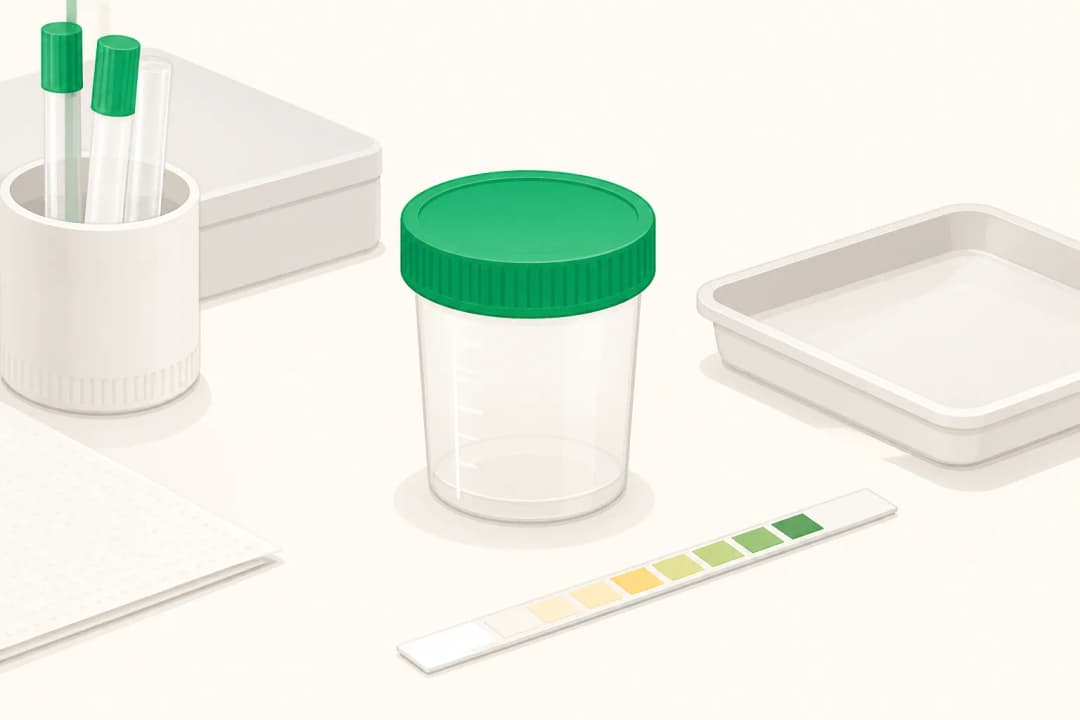
You are given a clean container and instructions for collecting urine. A midstream sample is often requested: start passing urine, then collect the sample without touching the inside of the container or lid. Label it as instructed and return it promptly. For certain questions, the clinician may request an early-morning sample or collection over a longer period.
Is it safe, and how accurate is it?
Providing a urine sample is non-invasive and has no physical recovery time. Accuracy depends on correct collection, storage, timing, and the reason for testing. Menstrual blood, vaginal discharge, dehydration, strenuous exercise, and some medicines or supplements can affect a result. A clinician may repeat a test or request a culture, blood test, or scan when the finding does not fit your symptoms.
What happens if the result is abnormal?
An abnormal result does not name a diagnosis by itself. The clinician may ask about symptoms, examine you, repeat the sample, or send it for culture to look for bacteria. Depending on the finding, follow-up can assess a urinary tract infection, kidney infection, stones, blood in the urine, or causes of urinary obstruction. Treatment is chosen after the cause and your overall health are considered.
Details that improve interpretation
Tell the clinician about urinary symptoms, recent antibiotics, pregnancy, diabetes, kidney disease, and any medicines or supplements. Mention whether you have had a catheter, a recent urinary procedure, or difficulty emptying your bladder. These details help distinguish a meaningful result from sample contamination or a temporary change.
When it may be requested
A urine test may be requested for urinary symptoms, during some routine health checks, when monitoring a known condition, or before selected procedures. Urinary tract infection commonly presents with burning, urgency, or frequent urination, while kidney infection can present with fever, flank pain, nausea, or feeling markedly unwell. Seek prompt medical care for fever with flank pain, visible blood in urine, inability to pass urine, confusion, or rapidly worsening symptoms.
Preparing and collecting
Check whether you need to avoid any medicines, foods, or supplements beforehand; do not stop prescribed treatment unless told to do so. Collect the sample exactly as instructed, including any midstream technique. If you cannot provide a sample at the appointment, tell the staff rather than diluting it with excessive fluid or using an old sample.
After you provide the sample
You can return to usual activities immediately. Some checks are available during the visit, while laboratory testing may take longer. The clinic should tell you how results will be communicated and what symptoms should prompt earlier contact.
Limits and practical issues
The main risk is an unrepresentative or contaminated sample leading to uncertainty and repeat testing. Follow collection instructions carefully and disclose factors that might affect the sample. If you have severe pain, fever, vomiting, or cannot keep fluids down, do not delay urgent assessment while waiting to collect a sample.
Other investigations
Depending on symptoms, a clinician may use a urine culture, blood tests, ultrasound, or other imaging alongside urine testing. These tests answer different questions, such as whether bacteria are present, whether kidney function is affected, or whether there is blockage in the urinary tract.
Where to arrange testing
Primary care clinics, urgent-care services, and laboratories can arrange urine testing. Choose a service that can assess symptoms as well as collect the sample, particularly if you are pregnant, have kidney disease, or feel systemically unwell.
Questions people ask
Do I need to fast before a urine test?
Usually not, but follow the instructions for your particular test and tell the clinician about medicines and supplements.
Can menstruation affect my sample?
Yes. Tell the clinic, as they may advise on timing or collection technique.
Will I need antibiotics if the test is abnormal?
Not necessarily. Antibiotic treatment is considered when a clinician identifies a bacterial infection and judges it appropriate.
Related
Related reading
Keep reading
Medical disclaimer. This page is general health information, not medical advice, and it cannot diagnose you. Always consult a licensed healthcare provider about your own symptoms and treatment. In an emergency in the UAE, call 998 for an ambulance.