
Surgical Mesh
At a glance
- Form
- Sheet, strip, or shaped support material
- Use
- Reinforcement or structural support during selected operations
- Products
- May be synthetic or biologic, absorbable or permanent
What surgical mesh is
Surgical mesh is a flexible medical material that can reinforce tissue or create support during selected gynaecological operations.
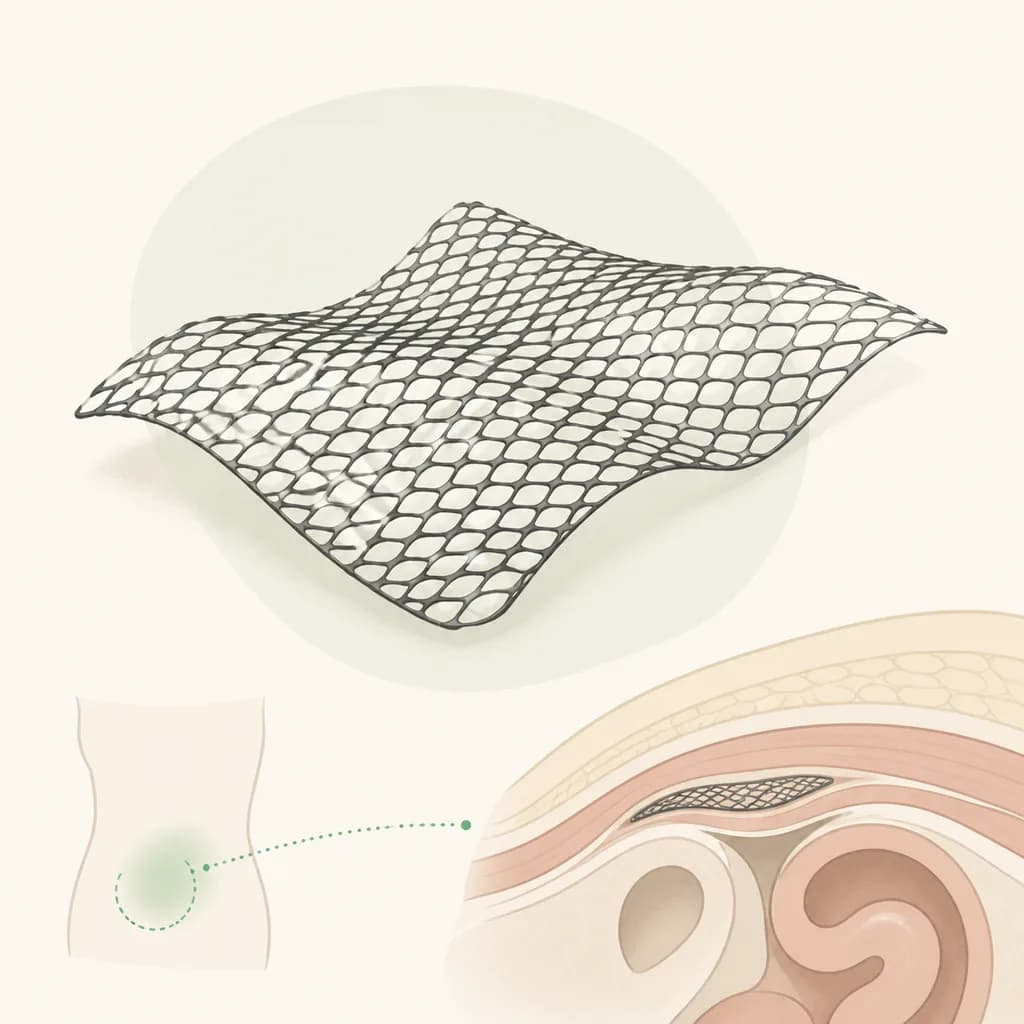
Surgical mesh is a sheet, strip, or shaped piece of material placed during an operation to reinforce tissue or provide structural support. Depending on the product, it may be made from synthetic material or biologic tissue. Mesh is not a standalone cure; it becomes part of a surgical plan intended for a specific anatomical problem. The surgeon explains where it will sit, how it will be fixed, and whether it is intended to remain in the body.
How mesh is designed
Mesh products differ in thickness, flexibility, pore size, coating, and whether the material is absorbable, permanent, or partly absorbable. These properties affect handling during surgery and how tissue interacts with the implant. The name “mesh” does not describe one single product, so ask for the exact material and its intended location in your operation.
Where surgical mesh is used
In gynaecological surgery, mesh may be used as part of a mid-urethral sling to support the urethra in selected cases of stress urinary leakage. It may also be used during sacrocolpopexy to support the top of the vagina or cervix by attaching it to strong tissue in the pelvis. The route, position, and purpose are different in each procedure.
Possible alternatives
Alternatives depend on the condition being treated. They can include pelvic floor rehabilitation, a vaginal pessary, medicines for selected symptoms, native-tissue repair, or observation. Each option has different effects on recovery, durability, and the chance of needing another procedure. Your surgical discussion should cover why mesh is being considered and what non-mesh choices apply to your anatomy.
What this means for you
If mesh is proposed, ask the surgeon to identify the exact procedure, implant location, expected recovery, and symptoms that should prompt review. New or persistent pelvic pain, bleeding, unusual discharge, painful sex, difficulty passing urine, or return of the original symptoms deserves assessment. The [Mid-Urethral Sling](/treatments/gynaecological-surgery/mid-urethral-sling/) and [Sacrocolpopexy](/treatments/gynaecological-surgery/sacrocolpopexy/) pages describe the relevant operations.
Follow-up and long-term care
Some mesh is designed to stay in place, while other products change as the body absorbs part of the material. Follow-up allows the team to assess healing, urinary or bowel function, pain, and recurrence of symptoms. Keep your implant details with your medical records. Seek care promptly for worsening pain, fever, heavy bleeding, inability to urinate, or a visible or exposed implant.
Find care
General Clinics & Polyclinics in Abu Dhabi
Licensed general clinics & polyclinics listed in Abu Dhabi, for the reader who wants this looked at in person.
27 Ar Ruwwad St - Shakhbout City - MSH4 - Abu Dhabi - United Arab Emirates
Accepts: Daman, Thiqa, Cigna, MetLife +20 more
Al Ruwais, Al Dhafrah
Accepts: Daman, Thiqa, AXA, Cigna +16 more
Al Bahyah - Al Bahyah Old - Abu Dhabi - United Arab Emirates
Accepts: Daman, Thiqa, Cigna, Allianz Care +18 more
Abu Dhabi
Accepts: Daman, Thiqa, AXA, Cigna +27 more
Ordered by verification status and how complete each clinic's public record is, then alphabetically. This is a directory listing, not a ranking — Zavis does not rate or recommend providers.
A factual listing drawn from the DHA, DOH and MOHAP licence registers. It is not a referral, an endorsement, or advice that any of these providers is right for you.
Questions people ask
Is all surgical mesh the same?
No. Products vary in material, design, absorption profile, and intended location, so request the specific implant information for your procedure.
What symptoms should be checked after mesh surgery?
Contact your surgical team about persistent or worsening pain, bleeding, unusual discharge, urinary difficulty, painful sex, or a returning bulge or leakage.
Related
Related reading
Keep reading
Medical disclaimer. This page is general health information, not medical advice, and it cannot diagnose you. Always consult a licensed healthcare provider about your own symptoms and treatment. In an emergency in the UAE, call 998 for an ambulance.