
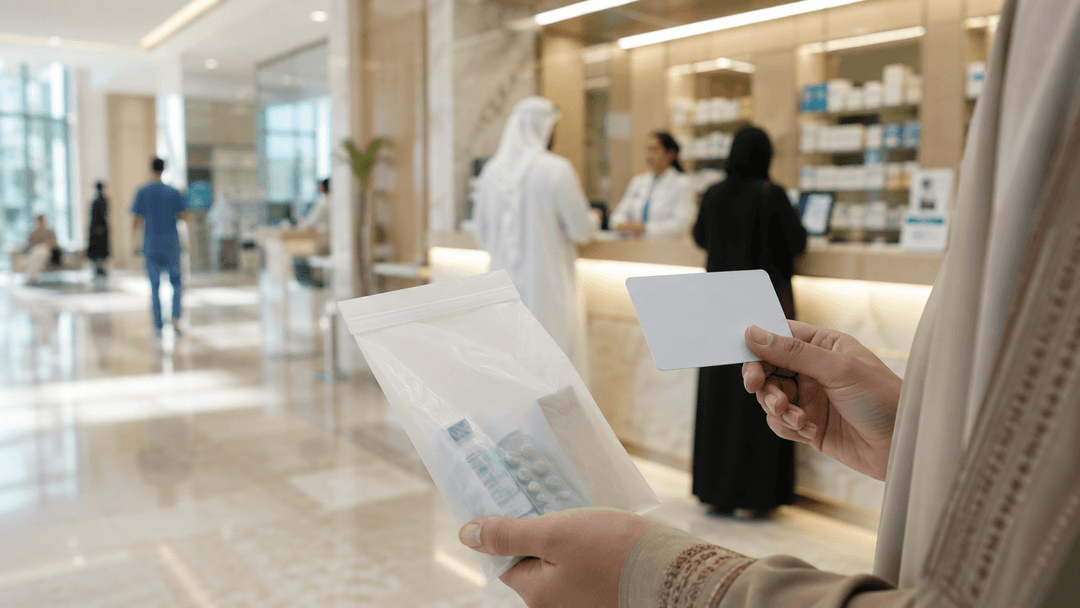
Dubai prescriptions are insured, but EBP patients face a 30% medicine co-pay
A Dubai-first guide to when UAE insurance pays for prescription medicine, where co-pays apply and what pharmacies must check before dispensing.
How Zavis verifies this coverage
Editorial standards, source rules, methodology, and review provenance are public.
Prescription medicine is covered by health insurance in Dubai when the medicine is prescribed by a licensed doctor, falls within the insurer's formulary and is dispensed through an approved pharmacy network.
For operators, the practical risk sits at the pharmacy counter. A valid prescription does not guarantee payment. The claim still depends on the patient's plan, diagnosis code, network status, prior authorisation and any annual pharmacy limit. The highest-stakes readers are COOs, CFOs and pharmacy revenue-cycle teams because a rejected medicine claim becomes either a patient dispute or a write-off.
What Dubai patients should expect
Dubai is regulated by the Dubai Health Authority (DHA). Under Dubai's mandatory insurance system, employers must provide health insurance for employees, and sponsors usually arrange cover for dependants. The minimum product for lower-salary workers is the Essential Benefits Plan (EBP).
For EBP-style cover, prescription medicine is commonly subject to a 30% co-insurance and an annual medicine benefit limit of about AED 1,500 per person. Higher-tier employer or individual plans can have lower co-pays, wider pharmacy networks or larger drug benefits. The only reliable number is the figure printed in the member's schedule of benefits.
A Dubai pharmacy should check four items before dispensing an insured medicine:
- Network status: whether the pharmacy is accepted by the insurer or TPA for direct billing.
- Formulary status: whether the medicine is covered, restricted or excluded.
- Prior authorisation: whether approval is required before dispensing, especially for high-cost medicines.
- Patient share: the co-pay, deductible or annual pharmacy cap left on the policy.
For patients, the difference is immediate. A covered antibiotic may be billed directly with a small co-pay. A branded chronic medicine may need approval. A cosmetic, fertility, lifestyle or non-formulary item may be paid in cash unless the plan states otherwise.
Abu Dhabi uses different rules
Abu Dhabi and Al Ain are regulated by the Department of Health Abu Dhabi (DOH). Daman remains the name most patients associate with Abu Dhabi basic and Thiqa-related cover. Daman's public information on the Abu Dhabi Basic Health Insurance Plan says medicines and pharmaceutical products are covered at 70% within the network, with a 30% deductible and a total medicine coverage value of AED 1,500.
"The flexible health insurance costs AED 750," Department of Health Abu Dhabi FAQ
DOH's flexible health insurance FAQ also states that the flexible policy provides AED 150,000 in annual treatment coverage, 100% emergency coverage, a 20% co-pay for outpatient treatment and 30% for medicines. That makes pharmacy benefit design a direct P&L issue for employers choosing between basic, flexible and broader cover.
For Thiqa members, operators should avoid assuming universal medicine coverage. Thiqa is a government-funded programme for eligible UAE nationals in Abu Dhabi, administered by Daman and regulated by DOH. Coverage can vary by place of treatment, referral route and policy update. Pharmacy teams should verify Thiqa eligibility and approval rules in the current Daman or DOH channel before dispensing expensive medicines.
Northern emirates and medicine pricing
In Sharjah, Ajman, Umm Al Quwain, Ras Al Khaimah and Fujairah, the relevant federal regulator is the Ministry of Health and Prevention (MOHAP). MOHAP regulates registered medicines and healthcare licensing in the northern emirates. Insurance coverage still depends on the policy bought by the employer, sponsor or individual.
The federal basic insurance package promoted through the UAE Government portal and MOHRE guidance includes medicine coverage with a 30% patient share and a medicine cap of up to AED 1,500. The useful operating point is simple: MOHAP registration supports legal sale in the UAE, but it does not by itself make a medicine reimbursable under every plan.
For pharmacy operators, three checks reduce disputes:
- Train staff to ask for the insurance card, Emirates ID and prescription before quoting a patient share.
- Keep insurer formularies and TPA portals current, with version dates recorded.
- Separate cash prices, insured patient share and rejected-claim workflows in the pharmacy system.
- Escalate high-cost chronic, oncology, biologic and specialty medicines before stock is committed.
For patients in Dubai, the answer is yes, prescription medicine is usually insured. The better question is whether that medicine is covered on that card, at that pharmacy, on that date. To find licensed pharmacy providers, use the UAE Open Healthcare Directory, then confirm the pharmacy's insurance acceptance before dispensing or visiting.
Zavis Intelligence
Healthcare Industry Desk
Contributing to UAE healthcare industry coverage
Related coverage




FAQ
What is happening in UAE healthcare industry?
A Dubai-first guide to when UAE insurance pays for prescription medicine, where co-pays apply and what pharmacies must check before dispensing.