

King's Dubai expansion to 200 beds puts 2028 pressure on oncology referrals
King's is doubling Dubai Hills capacity by 2028. The numbers matter for referral leakage, insurer tariffs and specialist recruitment.
How Zavis verifies this coverage
Editorial standards, source rules, methodology, and review provenance are public.
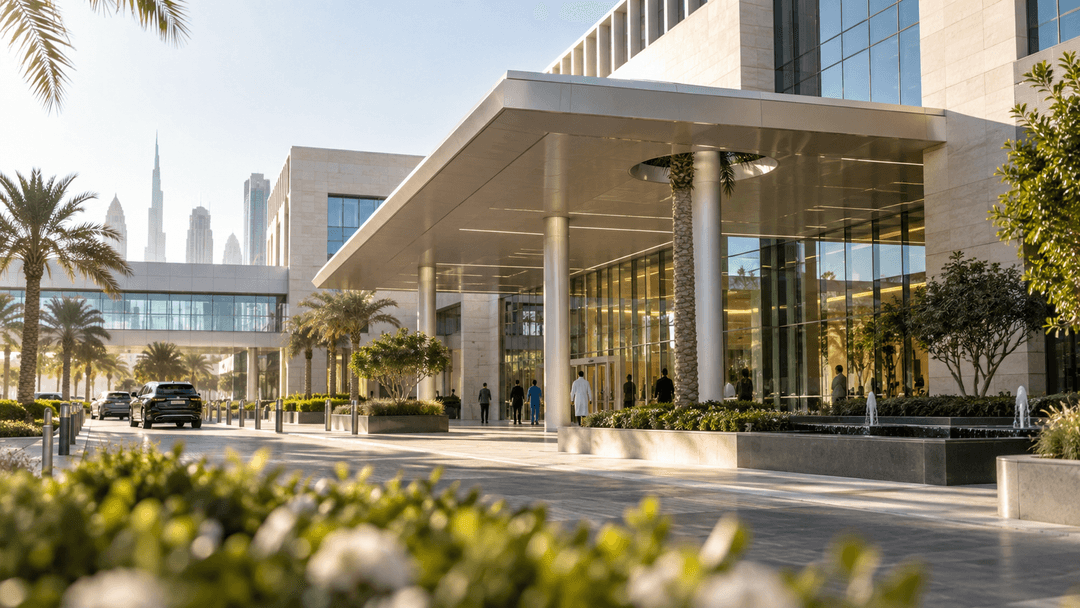
King's College Hospital London - Dubai is turning its Dubai Hills site into a 200-bed hospital by 2028, a capacity move that matters most for CEOs, CFOs and COOs watching specialist referrals, insurer negotiations and consultant hiring in Dubai.
The announcement is less useful as a construction story than as a market signal. King's is adding medical, surgical, critical care and radiation oncology capacity in a DHA-regulated market where premium hospitals compete for complex cases that can otherwise move to Abu Dhabi, Europe or home-country systems. For Dubai operators, the question is whether more beds at King's shift high-value oncology, neurology and surgical volumes away from existing private hospitals.
The numbers behind the deal
The ground-breaking took place on 23 September 2026 at King's College Hospital London - Dubai Hills Hospital, according to Emirates 24|7, which carried the Gulf News-linked item. The reported completion date is 2028. The disclosed capacity target is 200 beds.
The expansion budget was not disclosed. The useful benchmark is the original entry plan: the UK government announced in 2015 a $200 million project for an 80-100 bed Dubai hospital and several clinics, with Ashmore Group as investment manager and Al Tayer Group and Dubai Investments PJSC as local equity partners. That number should not be treated as the Phase 2 price tag because it covered the first hospital and clinics.
- Capacity: 200 beds by 2028, compared with the original 100-bed Dubai Hills hospital.
- Services named: medical, surgical, critical care, neurology, oncology and radiation oncology.
- Contractors named: DCIB Construction LLC and Menasco Mechanical Contracting LLC.
- Regulator to watch: Dubai Health Authority (DHA), through facility licensing, clinical service approvals and professional licensing.
What CFOs and COOs should price now
The first P&L issue is oncology leakage. King's CEO Kimberley Pierce said the expansion will add radiation oncology so cancer patients can move from diagnosis through treatment within one hospital. Operators should pull 2025 and 2026 referral logs for oncology patients by diagnosis, payor and destination, then identify cases sent outside the group for radiotherapy or tertiary review.
"With the addition of radiation oncology, we will be able to provide an even more complete cancer care pathway at King's College Hospital Dubai, supporting patients from diagnosis through treatment and ongoing care within one hospital."
Kimberley Pierce, CEO, King's College Hospital London - Dubai
The second issue is insurer positioning. King's lists Daman, Sukoon / Bupa, ADNIC, Aetna, MedNet, NAS, Neuron and Nextcare on its insurance page, and states that reimbursement depends on policy terms and schedules of benefits. CFOs should request current inpatient, ICU, radiology, chemotherapy administration and radiotherapy pre-authorisation rules from each insurer or TPA, then compare them with their own contracted rates and denial patterns.
The third issue is workforce. A 100-bed increase by 2028 means King's will need licensed physicians, nurses, allied health staff and revenue-cycle capacity before the physical beds are filled. DHA licensing lead times vary by profession and documentation quality. COOs should work back from the 2028 opening window and build hiring plans around DHA professional licensing, privileging, insurer empanelment and service-line commissioning.
The Dubai signal for competitors
For CEOs, the strategic message is that Dubai's premium private market is still drawing capital into complex care as well as ambulatory access. Abu Dhabi operators regulated by the Department of Health - Abu Dhabi (DOH) already compete in tertiary oncology, transplant-adjacent services and advanced diagnostics. Northern Emirates operators regulated by the Ministry of Health and Prevention (MOHAP) face a different question: whether to invest in local complex care or formalise referral pathways into Dubai and Abu Dhabi.
Medical directors should watch scope and governance. New radiation oncology capacity changes tumour-board design, referral criteria, adverse-event review and consent documentation. CIOs should ask whether new capacity will require tighter interoperability with external imaging, pathology, insurer pre-authorisation and patient app workflows. King's own expansion page says services will remain operational during construction, with patients asked to arrive 15 minutes early and use valet or off-site self-parking during the works.
The next useful disclosure will be the service licence mix, equipment scope and commissioning timetable. Dubai operators should monitor DHA facility records, insurer network bulletins and King's published service pages through 2027. For licensed hospital providers and competitors, start with the UAE Open Healthcare Directory / Dubai Medical Registry to verify active facilities, licences and provider listings before making referral, partnership or hiring decisions.
Zavis Intelligence
Healthcare Industry Desk
Contributing to UAE healthcare industry coverage
Related coverage



FAQ
What is happening in UAE healthcare industry?
King's is doubling Dubai Hills capacity by 2028. The numbers matter for referral leakage, insurer tariffs and specialist recruitment.