
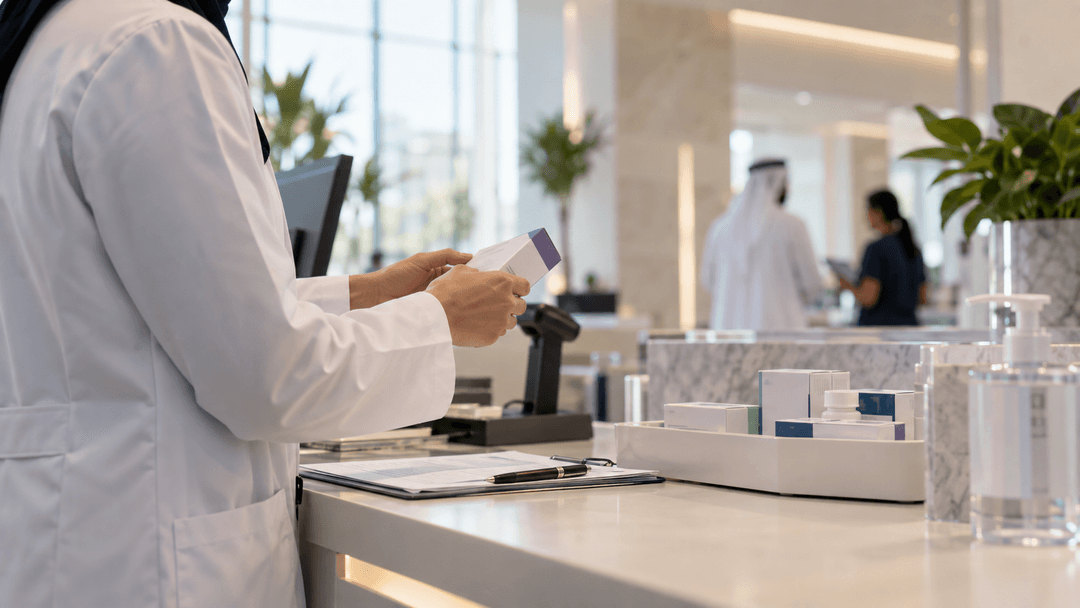
India fake GLP-1 surge puts UAE clinics on notice as Mounjaro lists at AED 1,734
India’s counterfeit weight-loss drug cases create a UAE compliance risk. Clinics should tighten sourcing, consent and patient screening.
How Zavis verifies this coverage
Editorial standards, source rules, methodology, and review provenance are public.
India’s counterfeit weight-loss drug trade, reported by Livemint on 29 September 2026, is now a practical risk for UAE clinics treating patients who arrive with cheap GLP-1 injections bought through informal channels.
The highest-stakes readers are COOs, medical directors and CFOs. Dubai clinics need auditable medicine sourcing. Doctors need to screen for self-injected products before prescribing diet plans or obesity drugs. Finance teams need to price safe treatment against black-market alternatives.
What India’s case shows
Livemint, citing Bloomberg, reported that Haryana drug-control officer Amandeep Chauhan began an investigation after Mounjaro was advertised on IndiaMART at about 20% below its usual Indian retail price of ₹13,125 for a month’s treatment. At current exchange levels, that is roughly AED 550, before shipping, cold-chain risk or UAE import approval.
Investigators found three cartons of Mounjaro pens in a car in Gurugram, then traced the operation to a rented apartment containing injector pens, syringes, labels, Eli Lilly-branded packaging and refrigerated peptide vials. Eli Lilly testing found counterfeit products. Several doses contained 30% or less of the labelled tirzepatide concentration.
India’s market is becoming harder for patients to assess. Livemint reported that nearly three dozen generic semaglutide brands have entered India after the semaglutide patent expired there on 20 March 2026. Mounjaro remains patent-protected in India. Retatrutide is still investigational and has no approval for sale by any regulator.
"Retatrutide is an investigational medicine, available in Lilly's clinical trials, and has not been approved by any regulator anywhere in the world. No one can legally sell it for human use."
Eli Lilly, quoted by Bloomberg and reported by Livemint
Why this matters in Dubai
The Dubai risk is simple: patients can compare an informal import price against a regulated UAE pharmacy price. The Emirates Drug Establishment drug directory lists Mounjaro 7.5 mg as an active registered medicine, with registration dated 18 May 2022. A UAE pharmacy listing shows Mounjaro 5 mg KwikPen x4 at AED 1,734 and marked prescription-required.
That price gap can change patient behaviour. Dubai clinics should assume some obesity, nutrition and aesthetic patients have seen cheaper offers on WhatsApp, Telegram, IndiaMART-style marketplaces or travel networks. The operating question is whether intake forms, prescribing workflows and pharmacy purchasing checks are good enough to catch it.
Dubai Health Authority (DHA) rules give operators little room for casual handling. Executive Council Resolution No. 49 of 2024 lists violations including use of medicines not registered in the UAE without authorisation, unauthorised trading, illegal import of counterfeit medical products and promotion without DHA approval. The same resolution sets Dubai healthcare-facility fines of AED 2,000 for unauthorised promotion of medicines and AED 10,000 for selling medical products at an unauthorised healthcare facility.
Controls UAE operators should tighten now
Department of Health Abu Dhabi (DOH) has already treated fake weight-loss injections as a live safety issue. DOH Circular 2026/48 alerted healthcare and pharmaceutical facilities to counterfeit weight-loss products claiming to contain GLP-1 medicines, and stated that semaglutide, tirzepatide and liraglutide are prescription-only medicines that should be used under medical supervision. In a separate 2025 alert, DOH warned about counterfeit Ozempic and Mounjaro sold through Instagram and a website.
Ministry of Health and Prevention (MOHAP) and the federal drug system matter for Dubai, Abu Dhabi and the northern emirates because product legitimacy is a national supply-chain issue. Tatmeen, the UAE pharmaceutical track-and-trace platform, became operational on 13 December 2022 and uses serialised 2D barcodes to verify medicine status. The Emirates Drug Establishment (EDE) drug directory had a last dataset refresh on 10 September 2026.
Clinics, insurers and patients should treat cheap GLP-1 offers as a documented risk. The practical controls are short:
- Ask every weight-management patient to disclose GLP-1 use, source, dose, batch and start date before nutrition or drug advice.
- Buy only through authorised UAE suppliers and keep invoices, cold-chain records and batch documentation.
- Check active registration in the EDE drug directory and verify serialisation through Tatmeen where available.
- Report suspected counterfeit medicines through DHA in Dubai, DOH pharmacovigilance in Abu Dhabi or MOHAP/EDE channels in the northern emirates.
Insurers such as Daman, Thiqa and Sukoon should watch claims leakage from complications linked to self-sourced drugs, even where the medicine itself was paid out of pocket. Patients looking for supervised weight management should start with licensed providers, not online sellers. Zavis readers can use the UAE Open Healthcare Directory to find licensed nutrition and dietetics providers before starting any GLP-1 or weight-loss programme.
Zavis Intelligence
Healthcare Industry Desk
Contributing to UAE healthcare industry coverage
Related coverage



FAQ
What is happening in UAE healthcare industry?
India’s counterfeit weight-loss drug cases create a UAE compliance risk. Clinics should tighten sourcing, consent and patient screening.