
Type 1 diabetes: symptoms, care and daily management
At a glance
- What changes
- The pancreas makes too little insulin
- Core treatment
- Insulin replacement with glucose monitoring
- Urgent warning signs
- Vomiting, deep breathing, drowsiness, or confusion
Overview
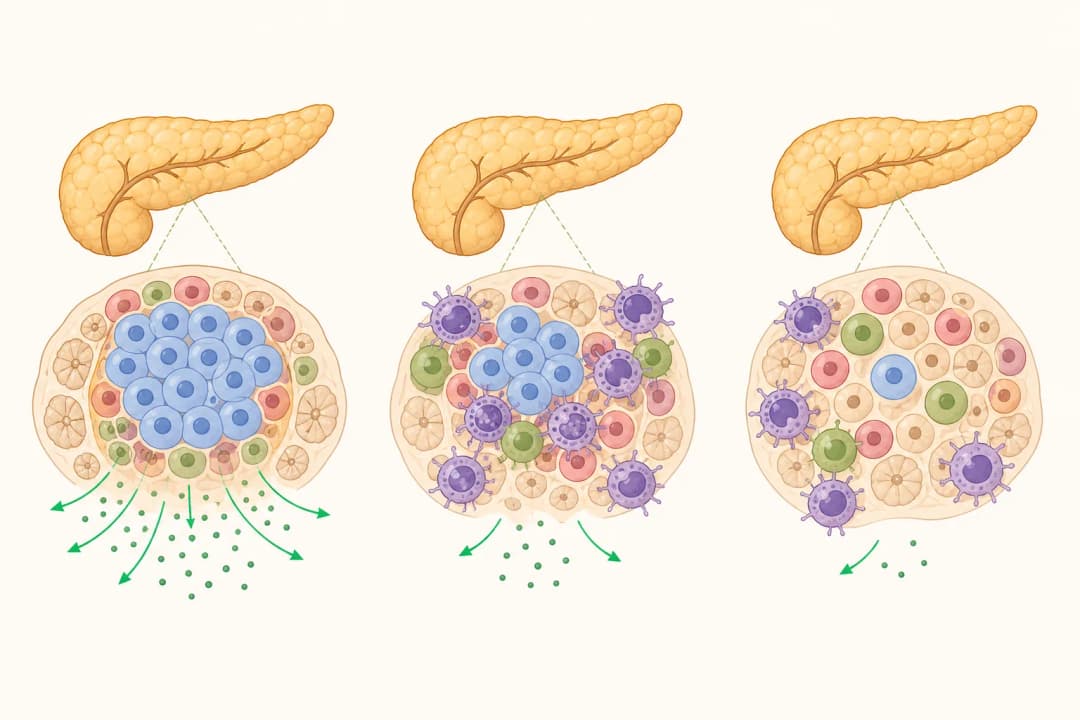
Type 1 diabetes is an autoimmune condition in which the body stops making enough insulin, so blood glucose needs lifelong monitoring and insulin replacement.
Insulin moves glucose from the bloodstream into cells for energy. Without enough insulin, glucose rises in the blood while the body cannot use it properly. Type 1 diabetes can begin in childhood or adulthood and is different from diabetes caused primarily by insulin resistance.
Symptoms
Excessive thirst, frequent urination, unintentional weight loss, fatigue, blurred vision, and increased hunger can develop as glucose rises. Excessive thirst, frequent urination and unintentional weight loss are very common presentations of type 1 diabetes; bedwetting is a common presentation in a child who had previously been dry at night. Symptoms can progress quickly, especially in children and young people.
Urgent assessment is needed for vomiting, abdominal pain, deep or rapid breathing, drowsiness, confusion, or a fruity-smelling breath, particularly alongside thirst and frequent urination.
Causes
The immune system mistakenly attacks the insulin-producing cells in the pancreas. The exact trigger is not clear, and nothing a person did caused the condition. Family history can contribute to susceptibility, but many people with type 1 diabetes have no close relative with it.
Course and progression
As insulin production falls, blood glucose rises and symptoms become more noticeable. At diagnosis, some people temporarily make a small amount of insulin, but ongoing insulin replacement remains necessary. Illness, changes in routine, food intake, activity, and stress can alter glucose needs, so treatment plans need regular review.
Risk factors
Having a close family member with type 1 diabetes may increase susceptibility. Autoimmune conditions can occur together, so clinicians may consider symptoms that suggest another autoimmune problem. Type 1 diabetes is not caused by eating sugar, body size, or a lack of exercise.
Diagnosis
A clinician diagnoses diabetes with blood glucose testing and may use urine testing for glucose or ketones. Further blood tests can help distinguish type 1 diabetes from other forms. If ketones are present or the person is unwell, assessment is urgent because the body may be short of usable insulin.
Treatment options
Treatment replaces the insulin the body no longer makes. Your diabetes team will agree an insulin regimen, explain glucose monitoring, and adjust doses around meals, activity, and illness. Insulin must not be stopped because of reduced appetite or vomiting; use the sick-day plan and contact the team urgently when glucose or ketones are difficult to manage.
Living with type 1 diabetes
Daily care includes taking insulin, checking glucose as advised, and recognising patterns in food, activity, sleep, and illness. Carry a fast-acting glucose source and tell people close to you how to help if you become confused or unable to treat a low glucose episode. A written plan can make school, work, exercise, travel, and fasting discussions safer and more practical.
Complications
Low blood glucose can happen when insulin, food, activity, or alcohol are out of balance. It may cause sweating, shaking, hunger, palpitations, irritability, or confusion and needs prompt treatment with glucose if the person is awake and able to swallow. Persistently high glucose can lead to dehydration and ketones; over time it can affect blood vessels, eyes, kidneys, nerves, and feet, which is why routine review matters.
Prevention
There is no established way to prevent type 1 diabetes. What can be prevented is some harm from delayed recognition: take thirst, frequent urination, weight loss, and new bedwetting seriously, and seek prompt testing. Once diagnosed, an individualised plan, monitoring, and regular reviews support safer day-to-day management.
Finding the right care
A GP, paediatrician, or urgent care clinician can arrange immediate testing when symptoms suggest diabetes. Ongoing care is usually led by a diabetes team that may include an endocrinologist, diabetes nurse, dietitian, and educator. Contact details for urgent advice should be part of every diabetes care plan.
Prescribing reference
Medications used for type 1 diabetes
- Insulin AspartRapid-acting mealtime insulin (NovoRapid) for post-meal glucose control · Prescription only
- Insulin DegludecUltra-long-acting basal insulin (Tresiba) with flexible dosing · Prescription only
- Insulin GlargineLong-acting basal insulin (Lantus, Toujeo) for once-daily blood sugar control · Prescription only
- Insulin LisproRapid-acting mealtime insulin (Humalog) taken before meals · Prescription only
- Full prescribing referenceRx status, monitoring and specialties for type 1 diabetes.
Questions people ask
Is type 1 diabetes caused by eating sugar?
No. Type 1 diabetes is an autoimmune condition and is not caused by sugar intake, body size, or exercise habits.
What should I do if I suspect low blood glucose?
If the person is awake and can swallow, take fast-acting glucose and recheck as directed in their care plan. Seek urgent help if they are confused, unconscious, having a seizure, or unable to swallow.
Related
Related reading
Keep reading
Find care
General Clinics & Polyclinics in Abu Dhabi
Where type 1 diabetes: symptoms, care and daily management is assessed depends on what is causing it. These are licensed general clinics & polyclinics listed in Abu Dhabi.
27 Ar Ruwwad St - Shakhbout City - MSH4 - Abu Dhabi - United Arab Emirates
Accepts: Daman, Thiqa, Cigna, MetLife +20 more
Al Ruwais, Al Dhafrah
Accepts: Daman, Thiqa, AXA, Cigna +16 more
Al Bahyah - Al Bahyah Old - Abu Dhabi - United Arab Emirates
Accepts: Daman, Thiqa, Cigna, Allianz Care +18 more
Abu Dhabi
Accepts: Daman, Thiqa, AXA, Cigna +27 more
Ordered by verification status and how complete each clinic's public record is, then alphabetically. This is a directory listing, not a ranking — Zavis does not rate or recommend providers.
A factual listing drawn from the DHA, DOH and MOHAP licence registers. It is not a referral, an endorsement, or advice that any of these providers is right for you.
Medical disclaimer. This page is general health information, not medical advice, and it cannot diagnose you. Always consult a licensed healthcare provider about your own symptoms and treatment. In an emergency in the UAE, call 998 for an ambulance.