
COPD: symptoms, causes and ongoing care
At a glance
- Full name
- Chronic obstructive pulmonary disease
- Main body system
- Lungs and airways
- Key review
- Symptoms, inhaler use and breathing tests
What COPD means
COPD is a long-term lung condition that narrows airflow and can make breathing, activity and clearing mucus more difficult.
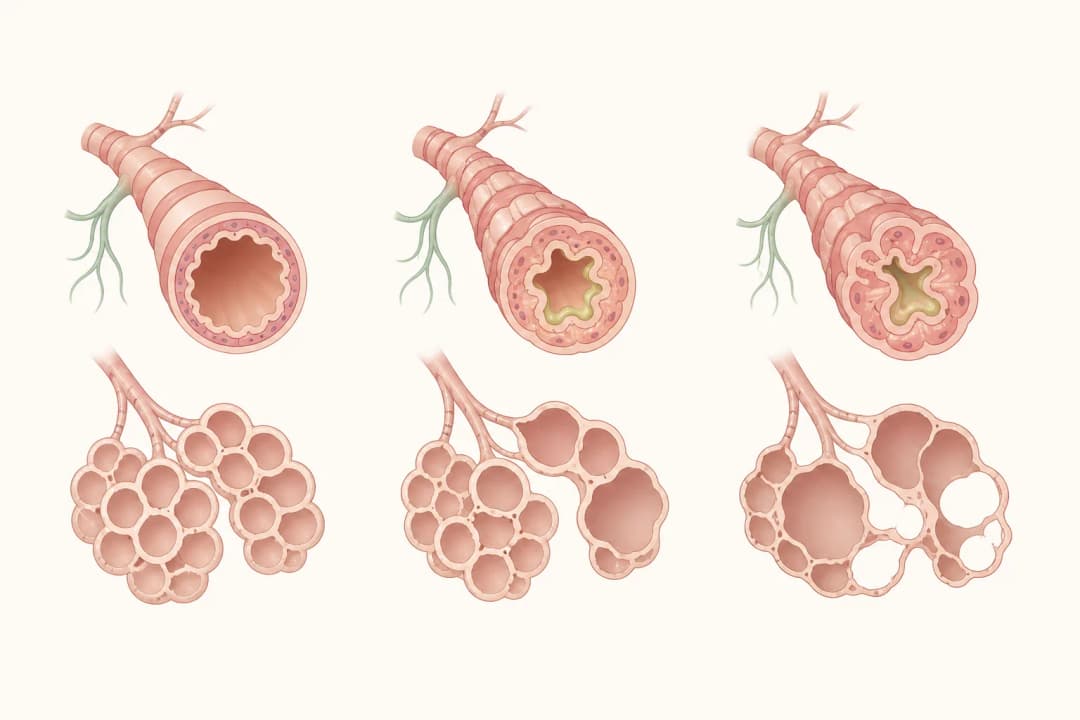
COPD is short for chronic obstructive pulmonary disease. It includes airway and lung changes that develop over time, commonly after exposure to tobacco smoke or other inhaled irritants. Symptoms can vary from day to day, and support aims to ease breathlessness, reduce flare-ups and help a person stay active.
Breathing symptoms and changes
Most people with COPD notice a persistent cough, bringing up phlegm, shortness of breath or wheezing. Chest tightness can also occur. Breathlessness may first be noticed during walking, stairs or household tasks, then become more limiting. A sudden increase in breathlessness, cough or the amount or colour of phlegm can be a flare-up and deserves medical advice, particularly if it disrupts usual activity.
Causes and lung irritation
Smoking is a major cause of COPD because repeated smoke exposure damages airways and lung tissue. Second-hand smoke, workplace dusts, fumes and indoor air pollution may also contribute. Some people have inherited factors that affect lung protection. These influences do not cause identical symptoms in everyone, and a clinical assessment is needed to identify the reason for ongoing breathing problems.
How COPD changes over time
COPD tends to be ongoing, with periods of relative stability and episodes when symptoms worsen. Respiratory infections, smoke exposure and missed regular treatment can trigger a flare-up. Noticing a personal change early can help a clinician adjust the care plan. New confusion, blue or grey lips, severe breathlessness at rest, or difficulty speaking in full sentences requires emergency help.
Factors linked with COPD
Current or past smoking, regular exposure to dust or fumes, and long-term exposure to poor-quality air can raise the likelihood of COPD. A family history of certain lung conditions may be relevant. People with repeated chest infections or a long-standing cough should have their symptoms reviewed rather than accepting a gradual loss of exercise tolerance as unavoidable.
Tests and assessment
A clinician will discuss symptoms, smoking history, workplace exposures, medicines and previous chest illnesses. They listen to the chest and may arrange spirometry, a breathing test that measures how air moves out of the lungs. Other tests can help rule out or identify conditions that can overlap with COPD. The results are interpreted alongside the full clinical picture, not in isolation.
Treatment and support
Inhaler therapy may relax airway muscles, reduce inflammation or provide both effects, depending on the prescription. Correct technique matters, so bring inhalers to reviews. Stopping smoking is one of the most meaningful steps for protecting lung health; a structured smoking cessation programme can provide behavioural support and discuss suitable aids. A clinician may also advise vaccinations, activity guidance, breathing rehabilitation or treatment for flare-ups.
Living well with COPD
Pace activities by planning rests before you become very breathless, and use positions that support comfortable breathing. Regular movement within your ability can preserve strength and confidence. Keep an up-to-date list of medicines and a written action plan if your clinician provides one. Attend chronic disease reviews so symptoms, inhaler technique and flare-up history can be discussed together.
Flare-ups and complications
A flare-up is a worsening of usual respiratory symptoms that may need extra treatment. Infection can be a trigger, and severe flare-ups can reduce oxygen levels or place strain on the body. Seek urgent assessment for rapidly worsening breathlessness, chest pain, coughing blood, drowsiness, confusion or a change in lip or skin colour.
Protecting lung health
Avoid smoking and exposure to second-hand smoke. Use appropriate workplace protection where dust, chemicals or fumes are present, and follow safety procedures. Keeping prescribed treatment available, learning correct inhaler use and seeking early advice for a change in symptoms can help reduce the impact of flare-ups.
Getting the right care
A GP can investigate ongoing cough or breathlessness, arrange initial testing and coordinate continuing care. A respiratory specialist may be involved when diagnosis is uncertain, symptoms remain difficult to control, or there are frequent flare-ups. Bring your inhalers and a note of recent symptoms to appointments.
Prescribing reference
Medications used for copd
- BudesonideInhaled corticosteroid for daily asthma and COPD control · Prescription only
- Salbutamol (Albuterol)Fast-acting rescue inhaler that opens airways during asthma attacks · Prescription only
- TiotropiumLong-acting inhaler for daily COPD maintenance (Spiriva) · Prescription only
- Full prescribing referenceRx status, monitoring and specialties for copd.
Questions people ask
Is COPD the same as asthma?
They are different conditions, though both can cause wheeze and breathlessness and can sometimes occur together. Breathing tests and clinical history help distinguish them.
Why is inhaler technique checked?
The way an inhaler is used affects how much medicine reaches the lungs. A clinician or pharmacist can watch your technique and suggest adjustments.
When should I seek urgent help for COPD?
Get urgent help for severe or rapidly worsening breathlessness, chest pain, confusion, blue or grey lips, coughing blood, or trouble speaking in full sentences.
Related
Related reading
Keep reading
Find care
General Clinics & Polyclinics in Abu Dhabi
Where COPD: symptoms, causes and ongoing care is assessed depends on what is causing it. These are licensed general clinics & polyclinics listed in Abu Dhabi.
27 Ar Ruwwad St - Shakhbout City - MSH4 - Abu Dhabi - United Arab Emirates
Accepts: Daman, Thiqa, Cigna, MetLife +20 more
Al Ruwais, Al Dhafrah
Accepts: Daman, Thiqa, AXA, Cigna +16 more
Al Bahyah - Al Bahyah Old - Abu Dhabi - United Arab Emirates
Accepts: Daman, Thiqa, Cigna, Allianz Care +18 more
Abu Dhabi
Accepts: Daman, Thiqa, AXA, Cigna +27 more
Ordered by verification status and how complete each clinic's public record is, then alphabetically. This is a directory listing, not a ranking — Zavis does not rate or recommend providers.
A factual listing drawn from the DHA, DOH and MOHAP licence registers. It is not a referral, an endorsement, or advice that any of these providers is right for you.
Medical disclaimer. This page is general health information, not medical advice, and it cannot diagnose you. Always consult a licensed healthcare provider about your own symptoms and treatment. In an emergency in the UAE, call 998 for an ambulance.