
Kyphoplasty vs Vertebroplasty: How Are They Different?
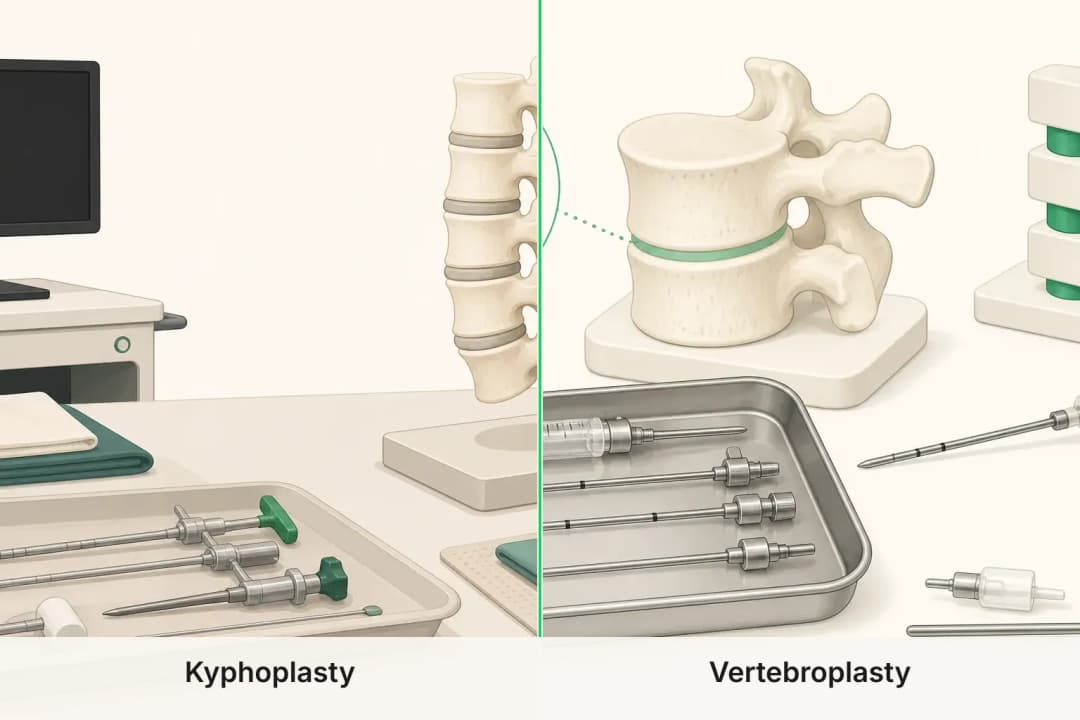
At a glance
- Kyphoplasty
- Balloon first, then cement placement.
- Vertebroplasty
- Direct cement injection into the vertebra.
- Decision basis
- Fracture pattern, pain source, stability and overall health.
Find care
Radiology & Imaging in Dubai
Licensed radiology & imaging listed in Dubai. Appearing here means a provider holds a UAE licence in this category — not that it offers kyphoplasty vs vertebroplasty: how are they different?, which is worth confirming with the clinic before you book.
First Gulf Real Estate Building, Amman Street, AL NAHDA FIRST, Dubai
Accepts: Daman, Thiqa, AXA, Cigna +28 more
LEADER, 3 Street 99, DUBAI INVESTMENT PARK FIRST, Dubai
Accepts: Daman, Thiqa, AXA, Cigna +29 more
villa, Al Wasl Road, JUMEIRAH FIRST, Dubai
Accepts: Daman, Thiqa, AXA, Cigna +16 more
Aletihad Diagnostic Center, Alwasl Road, AL SAFFA SECOND, Dubai
Accepts: AXA, Cigna, MetLife, Allianz Care +17 more
Moza Suwaidan Saeed Building, 45b Street 27, AL MURQABAT, Dubai
Accepts: Thiqa, AXA, Cigna, MetLife +25 more
Rdk1, 70 Street, DUBAI INVESTMENT PARK FIRST, Dubai
Accepts: Daman, AXA, Cigna, MetLife +20 more
Ordered by verification status and how complete each clinic's public record is, then alphabetically. This is a directory listing, not a ranking — Zavis does not rate or recommend providers.
A factual listing drawn from the DHA, DOH and MOHAP licence registers. It is not a referral, an endorsement, or advice that any of these providers is right for you.
Kyphoplasty and vertebroplasty at a glance
Kyphoplasty uses a small balloon to create a cavity within the compressed vertebra before bone cement is placed. Vertebroplasty places cement directly into the vertebral body through a needle. Both are considered only after an examination and imaging have connected the pain with a suitable fracture.
Kyphoplasty uses a balloon before cement placement, while vertebroplasty injects cement directly into the fractured vertebra.
When kyphoplasty may be considered
A clinician may discuss kyphoplasty when a painful compression fracture is recent or still active, the vertebra has collapsed, and restoring some height is part of the treatment aim. The balloon is inflated carefully inside the vertebra and then removed before cement is introduced. This approach is not suitable for every fracture; stability, bone quality, spinal alignment and the location of the fracture all matter.
Kyphoplasty can also be considered when the team wants a contained space for cement rather than direct filling of the fractured bone. The final choice depends on imaging and the balance between expected benefit and procedural risk.
When vertebroplasty may be considered
Vertebroplasty may be discussed when the main aim is to reinforce a painful vertebral compression fracture without using a balloon. Cement is delivered through a needle into the vertebral body, with imaging used to guide placement. It may be a practical option when the vertebra's shape and fracture pattern do not make balloon expansion the priority.
The procedure still requires careful review of the fracture's age, pain pattern, cement pathway and nearby nerves. Direct cement injection is not a shortcut around diagnosis: pain from discs, muscles, infection or another spinal problem may need a different treatment.
Risks and recovery considerations
Both procedures can cause soreness at the needle site and may not relieve pain if the fracture is not the true pain source. Cement can rarely move outside the vertebra; its position is monitored during the procedure because leakage near nerves, the spinal canal or blood vessels can be serious. Infection, bleeding, allergic reaction and new nerve symptoms are also possible considerations.
Kyphoplasty adds balloon-related steps, while vertebroplasty avoids balloon inflation but relies on controlled direct injection. Tell the treating team about blood-thinning medicines, fever, infection, allergies and new weakness or bladder or bowel changes. New leg weakness, loss of sensation or difficulty controlling urine or stool needs urgent medical assessment.
When neither procedure is the right fit
Observation, pain management, activity guidance and physiotherapy may be preferred when pain is manageable, the fracture is healing, or imaging does not show an appropriate target. A brace may be discussed for selected people. Severe collapse, an unstable injury, infection, cancer-related bone disease or pressure on neural structures can require a different spinal plan.
The safest next step is a diagnosis-led review rather than choosing by procedure name. Seek prompt care for worsening weakness, numbness around the groin, loss of bladder or bowel control, fever with severe back pain, or pain after major trauma.
How clinicians make the recommendation
The recommendation usually combines the pain history, physical examination, imaging and general health. Clinicians consider whether the fracture is active, how much the vertebra has collapsed, spinal alignment, bone strength, symptoms affecting nerves, and whether medicines or rehabilitation have been reasonable options. They also review medicines that affect bleeding and whether sedation or a procedure is appropriate.
Ask which finding on the scan identifies the painful fracture, what improvement is realistic, what non-procedural options remain, and which symptoms should trigger urgent review. A second opinion can be useful when the proposed procedure, diagnosis or goals are unclear.
Questions people ask
Do both procedures use bone cement?
Yes. Both use medical bone cement to support a selected fractured vertebra, but kyphoplasty creates a cavity with a balloon first and vertebroplasty injects cement directly.
Can either procedure treat every back fracture?
No. The fracture's location, age, stability, collapse, cause and relationship to nerves must be assessed before either procedure is considered.
What should I ask before deciding?
Ask what confirms the fracture as the pain source, why one technique fits the scan, what alternatives exist, and which warning symptoms require urgent care.
Related
Related reading
Keep reading
Medical disclaimer. This page is general health information, not medical advice, and it cannot diagnose you. Always consult a licensed healthcare provider about your own symptoms and treatment. In an emergency in the UAE, call 998 for an ambulance.