
What to know about trigger finger with diabetes
Short answer
People with diabetes and trigger finger should have the catching finger assessed while discussing glucose management, hand function and suitable treatment options.
This answers one question. It is not a diagnosis and does not replace an assessment by a licensed doctor.
At a glance
- Typical features
- Palm tenderness, clicking, catching or limited straightening
- Discuss
- Diabetes medicines, glucose readings, sensation and healing history
- Avoid
- Forceful repeated straightening of a locked finger
How trigger finger affects movement
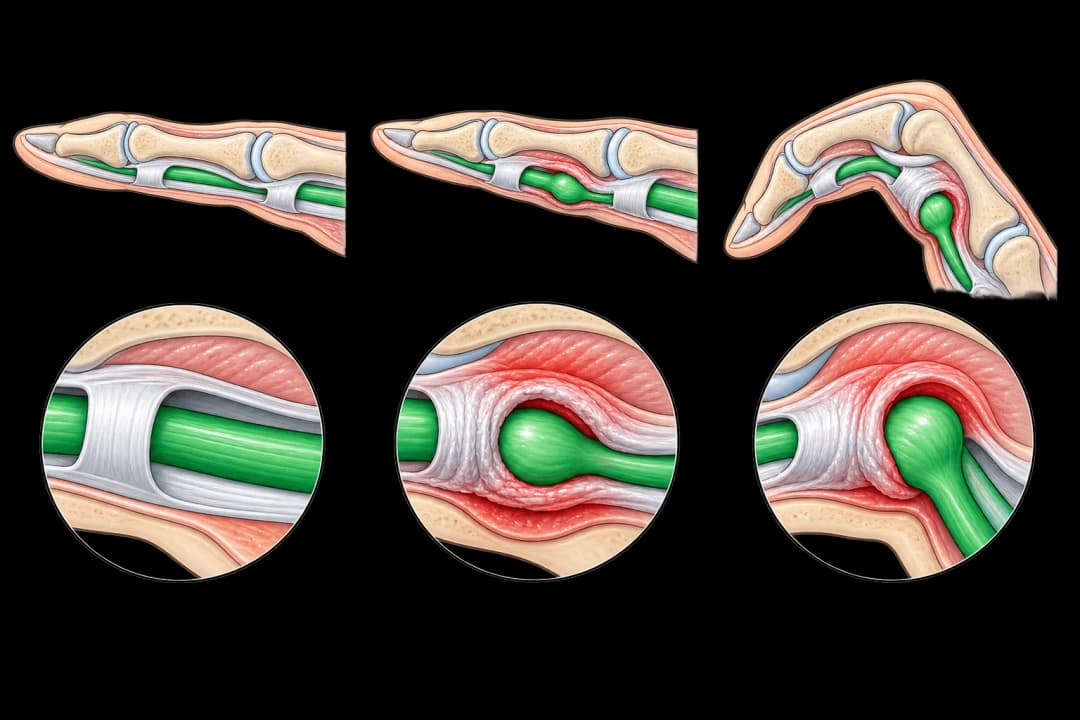
Trigger finger is narrowing and irritation around a tendon as it passes through a pulley in the finger. The result can be tenderness in the palm, clicking, catching or a finger that becomes difficult to straighten. Symptoms may be more noticeable after rest or when gripping objects.
Diabetes is relevant to the consultation because it can influence hand problems, healing and the choice or timing of treatment. The clinician may examine tendon movement, finger locking, sensation and circulation, then discuss observation, activity changes, a splint, an injection or a procedure according to your findings.
Practical next steps
Record when catching occurs, which finger is affected and whether it interferes with dressing, writing, cooking or work. Avoid repeatedly forcing a locked finger straight or gripping tools tightly for long periods. Keep diabetes medicines and glucose records available, and tell the clinician about numbness, skin problems, previous injections and any difficulty healing.
If a splint or exercises are recommended, use them as directed and monitor the skin for pressure or irritation. Discuss injection effects on glucose readings before treatment so you know what to watch for and whom to contact. A hand specialist can explain procedural options if symptoms continue or the finger remains locked.
When hand symptoms need prompt review
Arrange prompt assessment for a finger that stays locked, rapidly increasing swelling, marked redness, drainage, fever, a new wound, colour change or loss of sensation. Seek urgent help after an injury if the finger looks deformed or cannot move. Diabetes-related concerns should not be managed by waiting for the next routine check.
Questions for your clinician
Ask whether the catching is typical of trigger finger, whether sensation or circulation is affected, how your diabetes changes treatment planning, what glucose monitoring is needed after an injection, and when a procedure should be considered.
Find care
General Clinics & Polyclinics in Abu Dhabi
That answer is general. If you want it applied to your own case, these are licensed general clinics & polyclinics listed in Abu Dhabi.
27 Ar Ruwwad St - Shakhbout City - MSH4 - Abu Dhabi - United Arab Emirates
Accepts: Daman, Thiqa, Cigna, MetLife +20 more
Al Ruwais, Al Dhafrah
Accepts: Daman, Thiqa, AXA, Cigna +16 more
Al Bahyah - Al Bahyah Old - Abu Dhabi - United Arab Emirates
Accepts: Daman, Thiqa, Cigna, Allianz Care +18 more
Abu Dhabi
Accepts: Daman, Thiqa, AXA, Cigna +27 more
Ordered by verification status and how complete each clinic's public record is, then alphabetically. This is a directory listing, not a ranking — Zavis does not rate or recommend providers.
A factual listing drawn from the DHA, DOH and MOHAP licence registers. It is not a referral, an endorsement, or advice that any of these providers is right for you.
Questions people ask
Can diabetes affect trigger finger treatment?
It may affect planning, monitoring and healing considerations. Your clinician should review your health and medicines before recommending an option.
Should I force the finger open when it catches?
No. Repeated force can aggravate the irritated tissues; arrange an assessment for tailored advice, especially if the finger stays locked.
Related
Related reading
Keep reading
Medical disclaimer. This page is general health information, not medical advice, and it cannot diagnose you. Always consult a licensed healthcare provider about your own symptoms and treatment. In an emergency in the UAE, call 998 for an ambulance.