
What to expect from spirometry for asthma
Short answer
Expect breathing manoeuvres into a spirometer that measure how much air you move and how quickly you can blow it out.
This answers one question. It is not a diagnosis and does not replace an assessment by a licensed doctor.
At a glance
- Test setting
- Seated breathing through a mouthpiece
- What it measures
- Air volume and speed of exhalation
- Possible sensation
- Brief cough or light-headedness
What happens during the test
Expect breathing manoeuvres into a spirometer that measure how much air you move and how quickly you can blow it out. You will sit upright, wear a nose clip if needed, seal your lips around a mouthpiece and follow the technician's instructions. You take a full breath, then blow out as hard and as long as you can. The manoeuvre is repeated so the team can obtain reliable readings.
What the result can mean
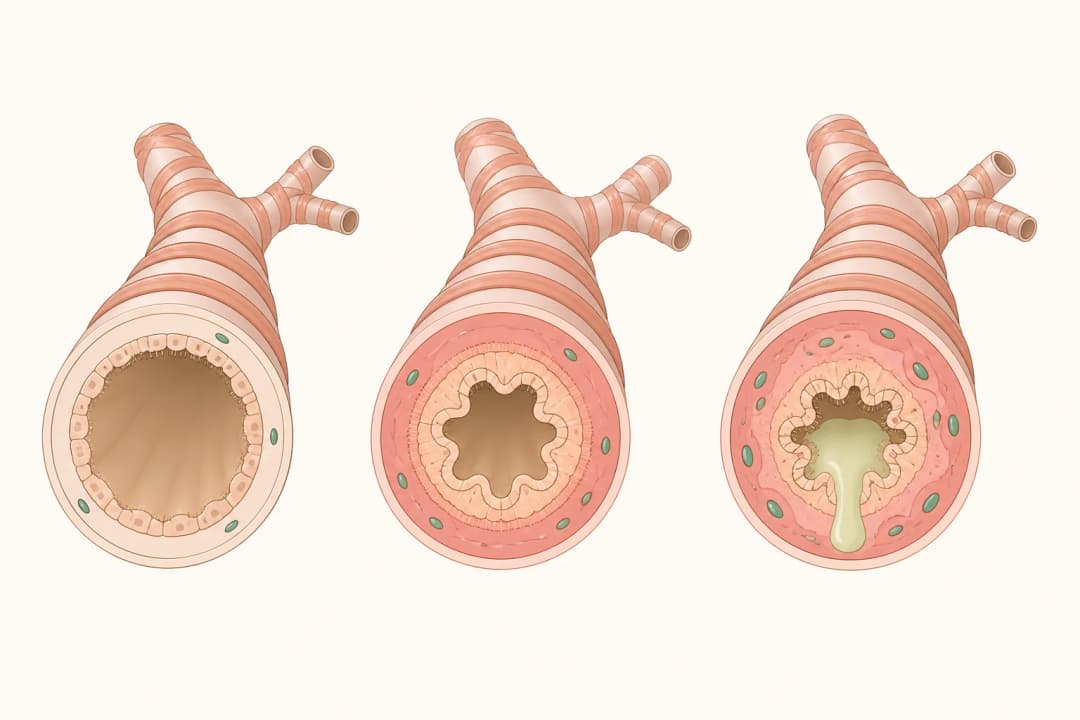
Asthma can narrow the airways and make it harder to empty the lungs quickly. Spirometry may show an obstructive breathing pattern, and the test may be repeated after an inhaled reliever. Improvement after the medicine can support an asthma diagnosis, although a normal result does not always exclude asthma when symptoms come and go. Your clinician combines the readings with your symptoms, examination and medical history.
How to prepare and recover
Follow the appointment instructions about inhalers, because some medicines may need to be paused while others should be taken as usual. Wear comfortable clothing and tell the team if you feel unwell, dizzy or unusually breathless. Strong blowing can briefly cause coughing or light-headedness; resting normally helps it settle. Bring your inhalers and a list of medicines, and ask when the result will be reviewed.
When to get urgent help
Seek urgent medical help if breathing becomes severely difficult, you cannot speak comfortably because of breathlessness, your lips look blue or grey, or your reliever is not easing a severe asthma flare. These symptoms need prompt assessment rather than waiting for a test appointment. For ongoing wheeze, night waking or reduced activity, contact your clinician to review your asthma plan.
Questions to ask
Ask whether you should change any inhaler before testing, whether a reliever response will be checked, and what each reading means for your asthma plan. You can also ask whether another breathing test is needed if symptoms continue despite a normal spirometry result.
Find care
General Clinics & Polyclinics in Abu Dhabi
That answer is general. If you want it applied to your own case, these are licensed general clinics & polyclinics listed in Abu Dhabi.
27 Ar Ruwwad St - Shakhbout City - MSH4 - Abu Dhabi - United Arab Emirates
Accepts: Daman, Thiqa, Cigna, MetLife +20 more
Al Ruwais, Al Dhafrah
Accepts: Daman, Thiqa, AXA, Cigna +16 more
Al Bahyah - Al Bahyah Old - Abu Dhabi - United Arab Emirates
Accepts: Daman, Thiqa, Cigna, Allianz Care +18 more
Abu Dhabi
Accepts: Daman, Thiqa, AXA, Cigna +27 more
Ordered by verification status and how complete each clinic's public record is, then alphabetically. This is a directory listing, not a ranking — Zavis does not rate or recommend providers.
A factual listing drawn from the DHA, DOH and MOHAP licence registers. It is not a referral, an endorsement, or advice that any of these providers is right for you.
Questions people ask
Can spirometry confirm asthma?
It can provide supporting evidence, especially when airflow improves after a reliever, but diagnosis also uses symptoms and clinical history.
Can I use my inhaler before spirometry?
Use or pause medicines only as instructed by the testing team, since the timing can affect the readings.
Related
Related reading
Keep reading
Medical disclaimer. This page is general health information, not medical advice, and it cannot diagnose you. Always consult a licensed healthcare provider about your own symptoms and treatment. In an emergency in the UAE, call 998 for an ambulance.