
What to expect from premarital screening for sickle cell disease
Short answer
Premarital screening for sickle cell disease usually involves blood tests, result counselling, and guidance about inherited risk before marriage or pregnancy.
This answers one question. It is not a diagnosis and does not replace an assessment by a licensed doctor.
At a glance
- Test type
- Blood-based haemoglobin screening
- Main purpose
- Identify disease or carrier status before marriage or pregnancy
- Follow-up
- Result explanation and confirmatory testing when needed
What the screening can show
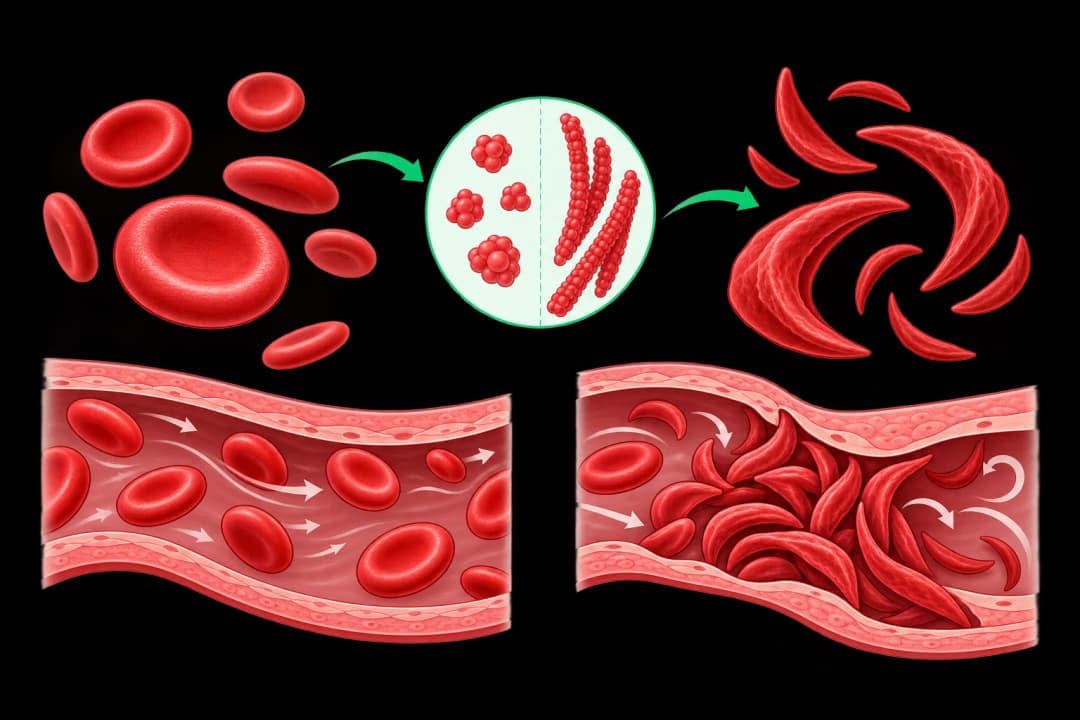
Testing looks for haemoglobin patterns associated with sickle cell disease and for carrier status. A carrier may feel well and does not have the disease, but can pass the altered gene to a child. A result suggesting sickle cell disease or another haemoglobin condition needs clinical confirmation and an explanation in plain language.
If both partners carry a relevant gene change, a clinician or genetic counsellor can explain possible outcomes for future children. Screening does not predict a child's exact health or replace an assessment of current symptoms.
What to do after testing
Attend the appointment together when possible, bring previous blood reports, and tell the clinician about known family haemoglobin disorders. Ask when results will be ready and how they will be delivered. If a result is unclear, arrange the recommended confirmatory test rather than interpreting a screening label alone.
Use the consultation to discuss reproductive choices, pregnancy planning, and whether relatives may benefit from information. Results are personal medical information; ask how they are recorded and shared.
When to seek medical care
Screening itself is not an emergency. Seek prompt medical care for severe pain, trouble breathing, fainting, marked weakness, or fever, especially if you already have a haemoglobin disorder. Contact the screening service if you develop a reaction after blood collection or cannot access a result that needs follow-up.
Questions for your doctor
Ask which tests are being performed, whether you are a carrier, whether confirmation is needed, and what the findings could mean for children. You can also ask who will provide genetic counselling and what information your partner should receive.
Find care
General Clinics & Polyclinics in Abu Dhabi
That answer is general. If you want it applied to your own case, these are licensed general clinics & polyclinics listed in Abu Dhabi.
27 Ar Ruwwad St - Shakhbout City - MSH4 - Abu Dhabi - United Arab Emirates
Accepts: Daman, Thiqa, Cigna, MetLife +20 more
Al Ruwais, Al Dhafrah
Accepts: Daman, Thiqa, AXA, Cigna +16 more
Al Bahyah - Al Bahyah Old - Abu Dhabi - United Arab Emirates
Accepts: Daman, Thiqa, Cigna, Allianz Care +18 more
Abu Dhabi
Accepts: Daman, Thiqa, AXA, Cigna +27 more
Ordered by verification status and how complete each clinic's public record is, then alphabetically. This is a directory listing, not a ranking — Zavis does not rate or recommend providers.
A factual listing drawn from the DHA, DOH and MOHAP licence registers. It is not a referral, an endorsement, or advice that any of these providers is right for you.
Questions people ask
Can a carrier have no symptoms?
Yes. A person with sickle cell trait may feel well, so screening can identify carrier status even without symptoms.
What happens if both partners are carriers?
A clinician or genetic counsellor explains inherited possibilities and available reproductive options.
Related
Related reading
Keep reading
Medical disclaimer. This page is general health information, not medical advice, and it cannot diagnose you. Always consult a licensed healthcare provider about your own symptoms and treatment. In an emergency in the UAE, call 998 for an ambulance.