
What to expect from oral corticosteroid treatment for alopecia areata
Short answer
Oral corticosteroid treatment for alopecia areata may reduce active hair loss, but regrowth and relapse vary, and the medicine requires careful monitoring.
This answers one question. It is not a diagnosis and does not replace an assessment by a licensed doctor.
At a glance
- Main purpose
- Calm immune activity affecting hair follicles
- What to monitor
- Hair shedding, regrowth, mood, sleep, blood pressure, and infection symptoms
- Stopping treatment
- Follow the prescribed taper; do not stop suddenly without advice
What this treatment means
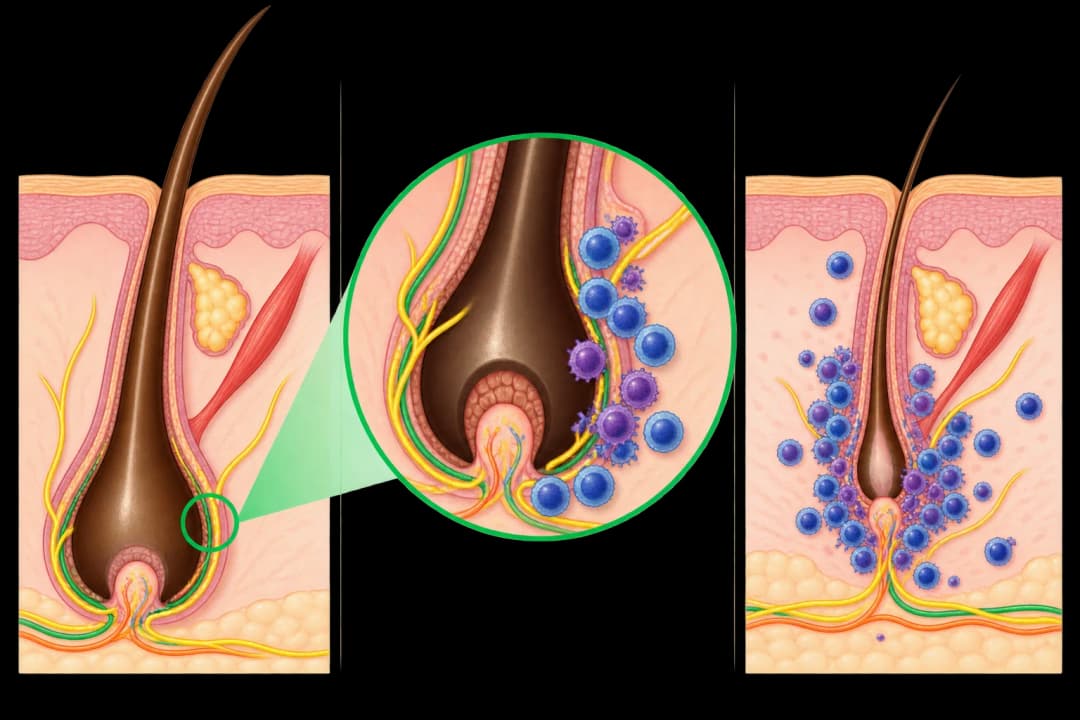
Alopecia areata is an immune-related condition in which the body's defenses affect hair follicles. An oral corticosteroid works throughout the body to dampen that inflammation. Your clinician may consider it when hair loss is extensive, rapidly progressing, or affecting several areas. Some people notice less shedding before visible regrowth. New hair may first appear as fine or lighter strands, and treatment does not remove the possibility of future patches.
The plan may involve a short course or a schedule that gradually reduces the dose. The choice depends on the pattern of hair loss, other health conditions, and how your skin and hair respond.
How to use treatment safely
Take the medicine exactly as prescribed and at the scheduled time. Do not stop suddenly or change the dose without instructions, especially after more than a brief course. Keep follow-up appointments so your clinician can review hair shedding, scalp changes, mood, sleep, blood pressure, and other possible effects. Tell them about diabetes, stomach problems, infections, bone concerns, or medicines that may interact.
Protect exposed scalp from sun and cold, and use gentle hair care while follicles are vulnerable. A simple record of new patches and regrowth can make changes easier to discuss.
When to seek care
Contact your care team promptly for fever, a worsening infection, severe mood changes, marked swelling, black stools, severe stomach pain, or vision changes. Seek urgent help for trouble breathing, facial swelling, confusion, or fainting. New rapid hair loss also deserves review, because the treatment plan may need adjustment.
Questions for your doctor
Ask how long the proposed course will last, what tapering schedule you will follow, how regrowth will be assessed, and which symptoms should trigger a call. Ask whether another hair-loss treatment can support the plan or reduce the need for repeated steroid courses.
Find care
General Clinics & Polyclinics in Abu Dhabi
That answer is general. If you want it applied to your own case, these are licensed general clinics & polyclinics listed in Abu Dhabi.
27 Ar Ruwwad St - Shakhbout City - MSH4 - Abu Dhabi - United Arab Emirates
Accepts: Daman, Thiqa, Cigna, MetLife +20 more
Al Ruwais, Al Dhafrah
Accepts: Daman, Thiqa, AXA, Cigna +16 more
Al Bahyah - Al Bahyah Old - Abu Dhabi - United Arab Emirates
Accepts: Daman, Thiqa, Cigna, Allianz Care +18 more
Abu Dhabi
Accepts: Daman, Thiqa, AXA, Cigna +27 more
Ordered by verification status and how complete each clinic's public record is, then alphabetically. This is a directory listing, not a ranking — Zavis does not rate or recommend providers.
A factual listing drawn from the DHA, DOH and MOHAP licence registers. It is not a referral, an endorsement, or advice that any of these providers is right for you.
Questions people ask
Will oral corticosteroids restore all lost hair?
They may slow active loss and support regrowth, but the response differs between people and new patches can occur.
Can you stop oral corticosteroids when shedding improves?
No. Use the taper or stopping plan given by your clinician, because sudden changes can be unsafe after ongoing treatment.
Related
Related reading
Keep reading
Medical disclaimer. This page is general health information, not medical advice, and it cannot diagnose you. Always consult a licensed healthcare provider about your own symptoms and treatment. In an emergency in the UAE, call 998 for an ambulance.