
What to expect from JAK inhibitor therapy for alopecia areata
Short answer
JAK inhibitor treatment for alopecia areata may reduce immune activity around hair follicles, but regrowth takes time and requires medical monitoring.
This answers one question. It is not a diagnosis and does not replace an assessment by a licensed doctor.
At a glance
- Treatment aim
- Calm immune signalling around affected follicles
- Monitoring
- Medical review and checks tailored to your health
- Regrowth
- May be gradual, uneven, or incomplete
How treatment works
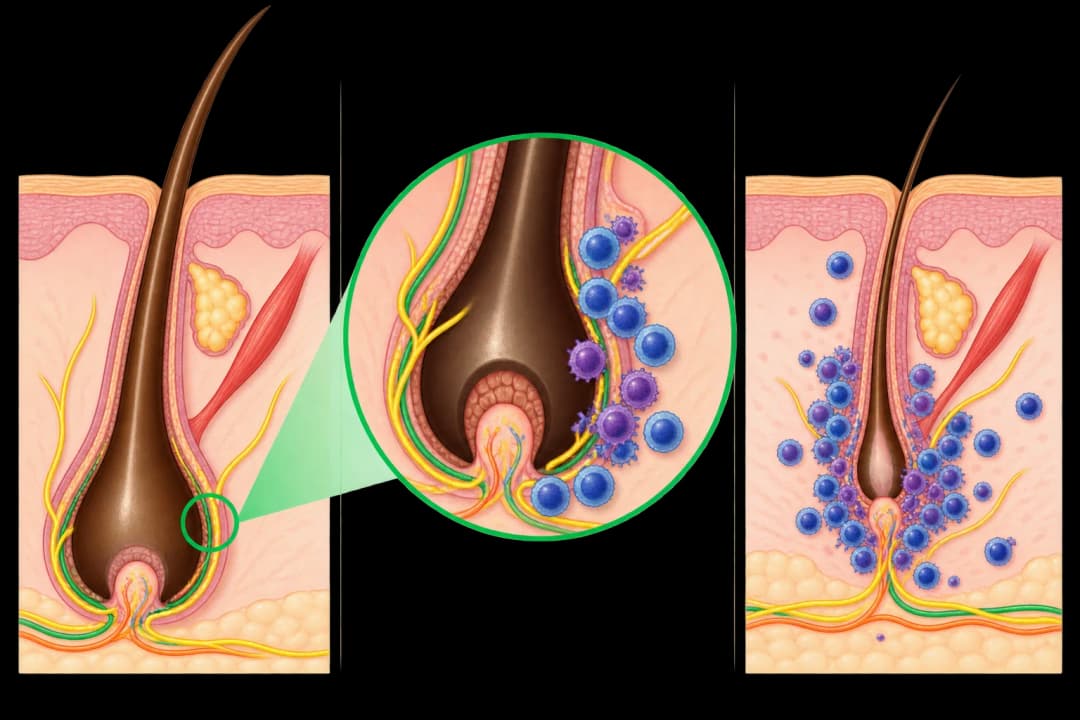
Alopecia areata can cause smooth, sharply defined patches of hair loss when immune signals affect follicles. A JAK inhibitor works inside immune signalling pathways. The aim is to quiet signals associated with active hair loss and create conditions in which follicles can resume producing hair. New growth may be uneven, fine, or lighter at first, and treatment response differs between people. Hair can shed again if treatment is stopped, so your dermatologist will discuss how response and maintenance should be assessed.
Preparing for treatment
Your clinician will review your medical history, medicines, infections, vaccination status, and any factors that affect immune treatment. Follow the prescribed schedule and do not change the dose without advice. Attend blood tests or other checks requested by your care team. Keep a simple record of scalp patches, eyebrow or eyelash changes, and new symptoms so progress is easier to discuss. Gentle hair care can reduce breakage while regrowth is developing.
When to contact your care team
Seek prompt medical advice for fever, a persistent cough, painful skin lesions, unusual tiredness, unexplained bruising, or signs of an infection while taking the medicine. Urgent help is needed for severe breathing difficulty, chest pain, sudden weakness, or swelling of the face or throat. These symptoms may have causes unrelated to alopecia areata, but they should not be ignored during immune-modifying treatment.
Questions for your dermatologist
Ask which JAK inhibitor is appropriate for you, what improvement would count as a useful response, which checks are needed before and during treatment, and what to do after a missed dose. Discuss pregnancy plans, vaccinations, travel, infection exposure, and whether you need advice about eyebrow, eyelash, or scalp protection.
Find care
General Clinics & Polyclinics in Abu Dhabi
That answer is general. If you want it applied to your own case, these are licensed general clinics & polyclinics listed in Abu Dhabi.
27 Ar Ruwwad St - Shakhbout City - MSH4 - Abu Dhabi - United Arab Emirates
Accepts: Daman, Thiqa, Cigna, MetLife +20 more
Al Ruwais, Al Dhafrah
Accepts: Daman, Thiqa, AXA, Cigna +16 more
Al Bahyah - Al Bahyah Old - Abu Dhabi - United Arab Emirates
Accepts: Daman, Thiqa, Cigna, Allianz Care +18 more
Abu Dhabi
Accepts: Daman, Thiqa, AXA, Cigna +27 more
Ordered by verification status and how complete each clinic's public record is, then alphabetically. This is a directory listing, not a ranking — Zavis does not rate or recommend providers.
A factual listing drawn from the DHA, DOH and MOHAP licence registers. It is not a referral, an endorsement, or advice that any of these providers is right for you.
Questions people ask
Will hair regrow immediately?
No. Follicles need time to move from active hair loss toward new growth, and early regrowth may be fine or patchy.
Can alopecia areata return after treatment?
It can. Your dermatologist can explain relapse monitoring and whether ongoing treatment or another approach is appropriate.
Related
Related reading
Keep reading
Medical disclaimer. This page is general health information, not medical advice, and it cannot diagnose you. Always consult a licensed healthcare provider about your own symptoms and treatment. In an emergency in the UAE, call 998 for an ambulance.