
What happens if kidney infection is not treated?
Short answer
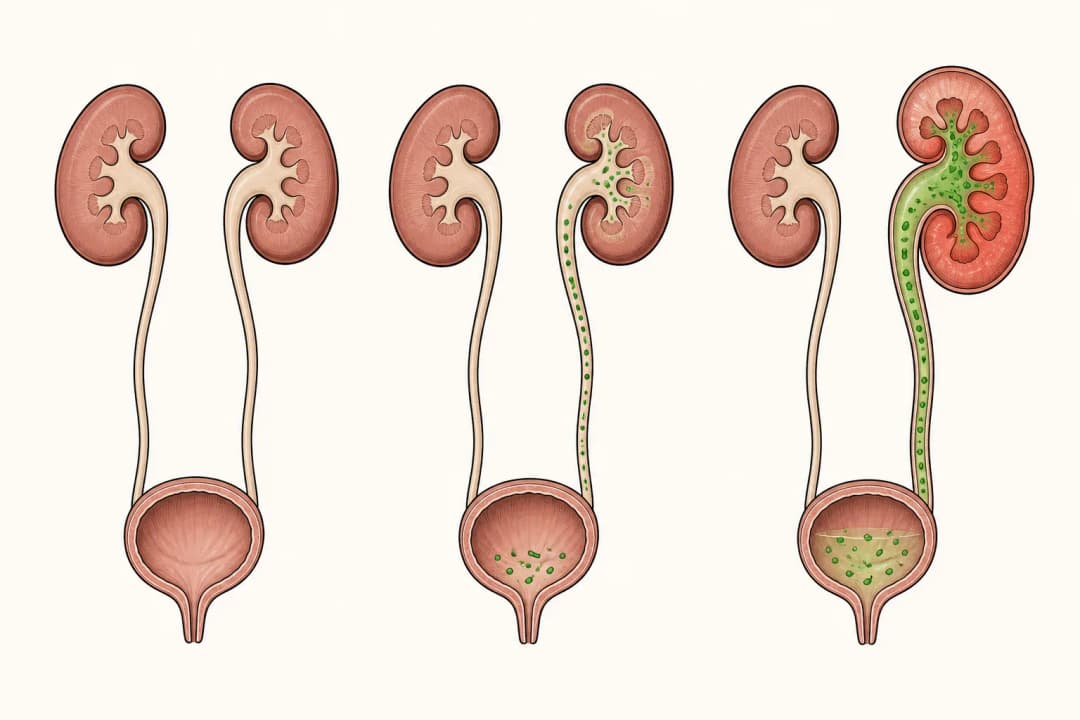
If a kidney infection is not treated, it can worsen, spread into the bloodstream and cause serious illness or reduced kidney function.
This answers one question. It is not a diagnosis and does not replace an assessment by a licensed doctor.
At a glance
- Concerning combination
- Urinary symptoms with fever, chills or side and back pain
- First assessment
- Clinical review with urine testing when appropriate
Why prompt treatment matters
A kidney infection is usually caused by bacteria reaching the upper urinary tract. Pain in the side or back, fever, chills, nausea, cloudy urine, blood in the urine and painful urination can occur. Without treatment, inflammation and infection may progress from the kidney to the bloodstream, causing a life-threatening whole-body response.
The risk is more concerning for people who are pregnant, have diabetes, a weakened immune system, urinary blockage or difficulty emptying the bladder. Kidney infections are different from milder lower urinary infections and should not be managed by waiting for symptoms to pass.
What to do next
Arrange same-day medical assessment when a urinary infection is accompanied by fever, chills, side or back pain, vomiting or feeling markedly unwell. A urine test can help identify infection and guide treatment. A clinician may prescribe antibiotic treatment and advise how to take it and when to return.
Drink fluids if you can keep them down, rest, and use only medicines that are suitable for you. Do not use leftover antibiotics or stop a prescribed course early without medical advice. A urinary tract infection can travel upwards, so worsening urinary symptoms need review.
When to seek urgent care
Go to urgent care for confusion, fainting, severe weakness, difficulty breathing, persistent vomiting, inability to pass urine, severe flank pain or rapidly worsening fever and chills. Pregnant people, children, older adults and anyone with significant medical conditions should seek advice promptly when kidney infection is possible.
Questions for your doctor
Do my symptoms suggest a kidney infection rather than a lower urinary infection? Should I have a urine test or further assessment? Which antibiotic is appropriate, and when should I expect improvement? What symptoms mean I should return urgently?
Find care
General Clinics & Polyclinics in Abu Dhabi
That answer is general. If you want it applied to your own case, these are licensed general clinics & polyclinics listed in Abu Dhabi.
27 Ar Ruwwad St - Shakhbout City - MSH4 - Abu Dhabi - United Arab Emirates
Accepts: Daman, Thiqa, Cigna, MetLife +20 more
Al Ruwais, Al Dhafrah
Accepts: Daman, Thiqa, AXA, Cigna +16 more
Al Bahyah - Al Bahyah Old - Abu Dhabi - United Arab Emirates
Accepts: Daman, Thiqa, Cigna, Allianz Care +18 more
Abu Dhabi
Accepts: Daman, Thiqa, AXA, Cigna +27 more
Ordered by verification status and how complete each clinic's public record is, then alphabetically. This is a directory listing, not a ranking — Zavis does not rate or recommend providers.
A factual listing drawn from the DHA, DOH and MOHAP licence registers. It is not a referral, an endorsement, or advice that any of these providers is right for you.
Questions people ask
Can a kidney infection spread?
Yes. Without prompt treatment, infection can spread from the urinary tract into the bloodstream and cause severe illness.
Is painful urination alone proof of a kidney infection?
No. Painful urination has several possible causes; fever, flank pain and feeling unwell make prompt assessment more important.
Related
Related reading
Keep reading
Medical disclaimer. This page is general health information, not medical advice, and it cannot diagnose you. Always consult a licensed healthcare provider about your own symptoms and treatment. In an emergency in the UAE, call 998 for an ambulance.