
What happens if asthma is not treated?
Short answer
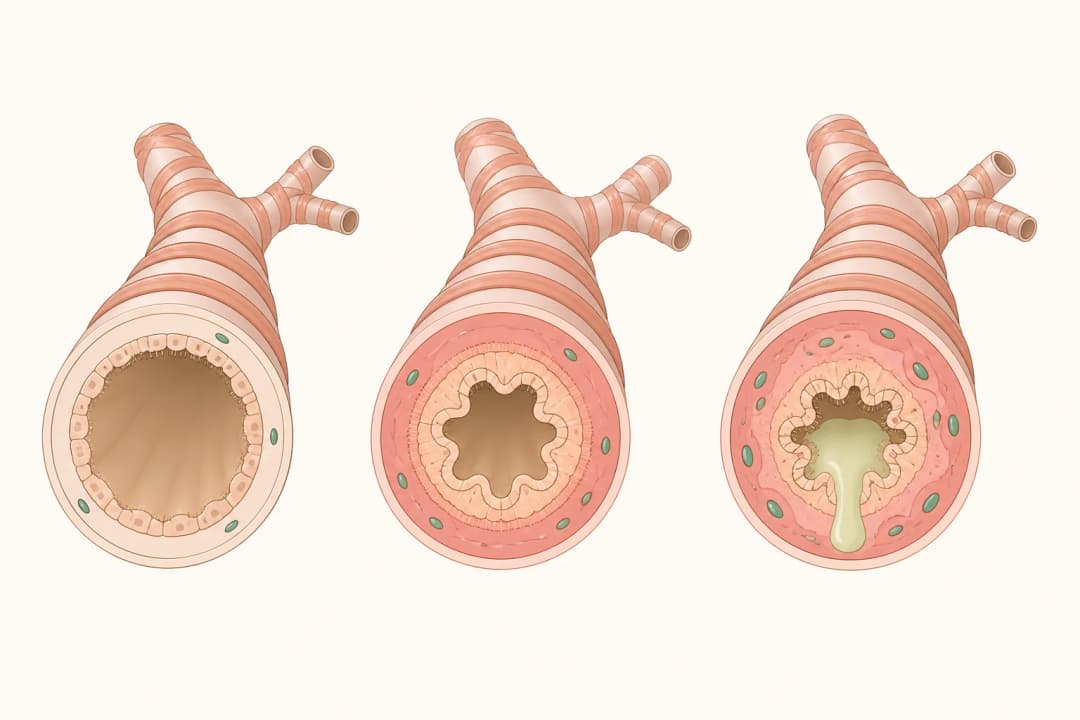
If asthma is not treated, airway inflammation can persist, symptoms may become more frequent, and a severe attack can restrict breathing.
This answers one question. It is not a diagnosis and does not replace an assessment by a licensed doctor.
At a glance
- Main problem
- Inflamed, narrowed airways
- Assessment
- Spirometry and inhaler-technique review
- Emergency warning
- Severe breathing difficulty despite the action plan
What untreated asthma can do
Asthma causes sensitive, inflamed airways that can narrow when exposed to triggers such as infections, allergens, smoke, exercise or cold air. Without a suitable management plan, coughing, wheezing and shortness of breath may interrupt sleep, activity, work or school. Frequent symptoms can also make it harder to recognise a serious change.
A severe flare can leave very little air moving through the lungs. Symptoms may worsen quickly, and a reliever inhaler may not provide enough control. Asthma severity can vary from one person to another, so a previous mild episode does not predict the next one.
How to regain control
Book a review if symptoms recur, wake you at night, limit activity or require your reliever inhaler more often. Assessment may include spirometry, inhaler-technique checks and a review of triggers. A chronic disease review can help keep a written action plan current.
Use preventer and reliever inhalers exactly as prescribed; correct technique matters because medicine must reach the airways. Do not stop a preventer simply because you feel well. Ask whether allergy assessment is useful, and keep prescribed medicines available when travelling or exercising.
When to seek emergency care
Call emergency services if breathing is severely difficult, speech is limited to a few words, lips look blue or grey, you become exhausted or confused, or symptoms keep worsening despite the prescribed reliever plan. Sit upright, follow your action plan and do not drive yourself.
Urgent assessment is also needed when wheezing or shortness of breath is new, unusually intense or accompanied by faintness. A nebuliser may be used by clinicians in acute care, but home treatment should follow your individual plan.
Questions for your doctor
How well controlled is my asthma? Which inhaler is for prevention and which is for quick relief? Can you check my technique, identify triggers, arrange spirometry or allergy testing, and explain exactly when my action plan means I should seek emergency help?
Find care
General Clinics & Polyclinics in Abu Dhabi
That answer is general. If you want it applied to your own case, these are licensed general clinics & polyclinics listed in Abu Dhabi.
27 Ar Ruwwad St - Shakhbout City - MSH4 - Abu Dhabi - United Arab Emirates
Accepts: Daman, Thiqa, Cigna, MetLife +20 more
Al Ruwais, Al Dhafrah
Accepts: Daman, Thiqa, AXA, Cigna +16 more
Al Bahyah - Al Bahyah Old - Abu Dhabi - United Arab Emirates
Accepts: Daman, Thiqa, Cigna, Allianz Care +18 more
Abu Dhabi
Accepts: Daman, Thiqa, AXA, Cigna +27 more
Ordered by verification status and how complete each clinic's public record is, then alphabetically. This is a directory listing, not a ranking — Zavis does not rate or recommend providers.
A factual listing drawn from the DHA, DOH and MOHAP licence registers. It is not a referral, an endorsement, or advice that any of these providers is right for you.
Questions people ask
Can asthma damage daily life if untreated?
Yes. Persistent symptoms can disturb sleep, reduce activity and affect concentration, work or school.
Should I stop my inhaler when symptoms settle?
Do not change prescribed treatment without a clinician's advice; preventer treatment may be keeping inflammation controlled.
Related
Related reading
Keep reading
Medical disclaimer. This page is general health information, not medical advice, and it cannot diagnose you. Always consult a licensed healthcare provider about your own symptoms and treatment. In an emergency in the UAE, call 998 for an ambulance.