
What are the treatment options for groin strain?
Short answer
Treatment options for groin strain include relative rest, gradual exercise therapy, physiotherapy, and a step-by-step return to sport after pain and strength improve.
This answers one question. It is not a diagnosis and does not replace an assessment by a licensed doctor.
At a glance
- Common focus
- Reduce painful load, then rebuild hip and inner-thigh strength.
- Return to sport
- Progress through running and sport-specific drills before full play.
- Get assessed
- Seek care for severe pain, difficult walking, marked bruising, or unusual groin symptoms.
Treatment options at a glance
The right plan depends on which groin muscle is injured, how much strength has been lost, and whether the pain began suddenly or built up over time.
What groin strain treatment involves
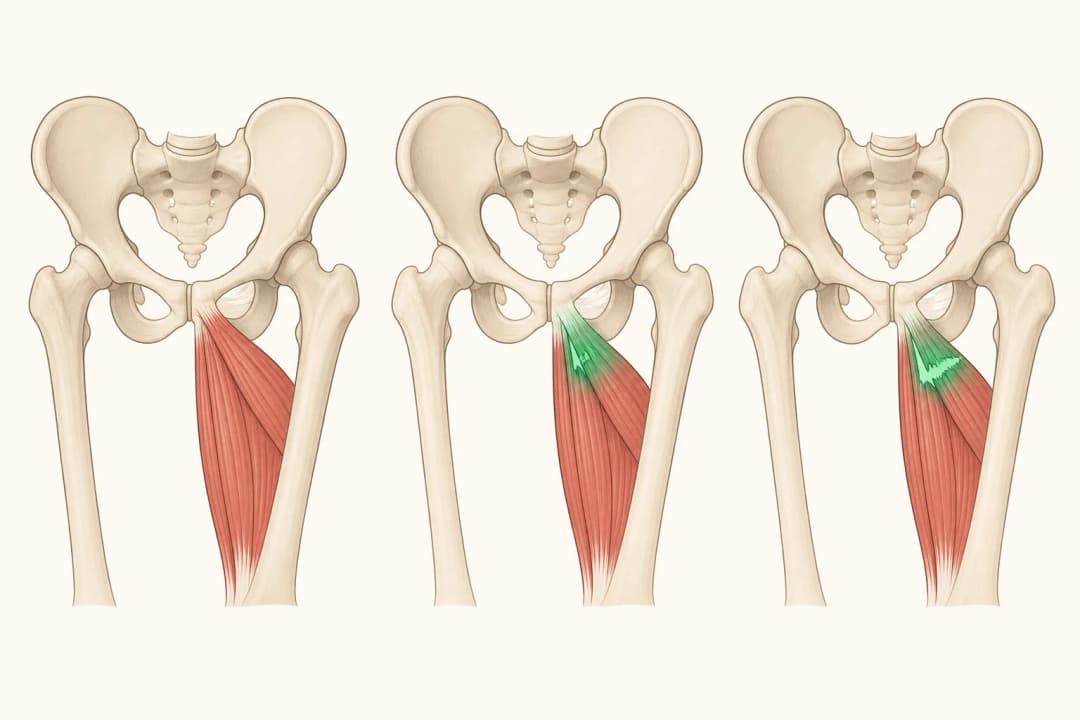
A groin strain is an injury to muscle or tendon on the inner thigh, often involving the adductor muscles. Early care usually reduces activities that provoke pain while keeping comfortable movement. A clinician may check walking, hip movement, muscle strength, and tenderness to judge the injury and rule out other causes of groin pain.
As symptoms settle, rehabilitation typically progresses from gentle movement to controlled strengthening, balance, changes of direction, and sport-specific drills. Exercise therapy can help restore the ability of the inner-thigh and hip muscles to manage load. Sports physiotherapy may tailor this progression for running, kicking, cutting, or other demands.
What you can do now
For the first stage, stop the movement that caused the pain and avoid sprinting, kicking, sudden side steps, and forceful stretching. Keep moving within a comfortable range, such as easy walking if it does not increase symptoms. Cold therapy wrapped in a cloth may feel soothing for a short period; protect the skin and stop if it irritates you.
Once ordinary movement is comfortable, a physiotherapist can introduce exercises such as gentle adductor contractions, hip strengthening, and progressively heavier tasks. Do not advance because a calendar says you should: pain that lingers or worsens after exercise means the load may need adjusting. A return-to-sport programme can test jogging, acceleration, sport skills, and changes of direction before full participation.
When to seek medical care
Arrange an assessment if pain is severe, walking is difficult, bruising or swelling is marked, or you felt a sudden pop when the injury occurred. Seek prompt care for numbness, weakness, a visible deformity, fever, abdominal pain, testicular pain, or a groin lump that is painful or cannot be pushed back.
If symptoms are not steadily improving with activity modification, or they repeatedly return when you resume sport, a clinician should reassess the diagnosis and rehabilitation load. Persistent groin pain can have causes other than a muscle strain.
Questions for your doctor or physiotherapist
Ask which structure appears injured, which activities are safe today, and what sign should guide the next exercise progression. You can also ask how strength will be compared between sides, when running or kicking may restart, and which symptoms would require a further examination.
Find care
General Clinics & Polyclinics in Abu Dhabi
That answer is general. If you want it applied to your own case, these are licensed general clinics & polyclinics listed in Abu Dhabi.
27 Ar Ruwwad St - Shakhbout City - MSH4 - Abu Dhabi - United Arab Emirates
Accepts: Daman, Thiqa, Cigna, MetLife +20 more
Al Ruwais, Al Dhafrah
Accepts: Daman, Thiqa, AXA, Cigna +16 more
Al Bahyah - Al Bahyah Old - Abu Dhabi - United Arab Emirates
Accepts: Daman, Thiqa, Cigna, Allianz Care +18 more
Abu Dhabi
Accepts: Daman, Thiqa, AXA, Cigna +27 more
Ordered by verification status and how complete each clinic's public record is, then alphabetically. This is a directory listing, not a ranking — Zavis does not rate or recommend providers.
A factual listing drawn from the DHA, DOH and MOHAP licence registers. It is not a referral, an endorsement, or advice that any of these providers is right for you.
Questions people ask
Should I completely rest a groin strain?
Usually, avoid the painful activity rather than staying completely still. Comfortable walking and gentle movement may help maintain mobility, while rehabilitation restores strength in stages.
When can I return to sport after a groin strain?
Return when everyday movement and progressive exercises are comfortable, strength is improving, and sport-specific running, kicking, or direction changes can be completed without a symptom flare. A physiotherapist can guide the progression.
Related
Related reading
Keep reading
Medical disclaimer. This page is general health information, not medical advice, and it cannot diagnose you. Always consult a licensed healthcare provider about your own symptoms and treatment. In an emergency in the UAE, call 998 for an ambulance.