
What are the treatment options for genitourinary syndrome of menopause?
Short answer
Treatment for genitourinary syndrome of menopause may include moisturisers, lubricants, vaginal oestrogen and dilator therapy.
This answers one question. It is not a diagnosis and does not replace an assessment by a licensed doctor.
At a glance
- Symptoms addressed
- Dryness, irritation, urinary discomfort and painful sex
- Local option
- Vaginal oestrogen may be suitable for some people
What the condition involves
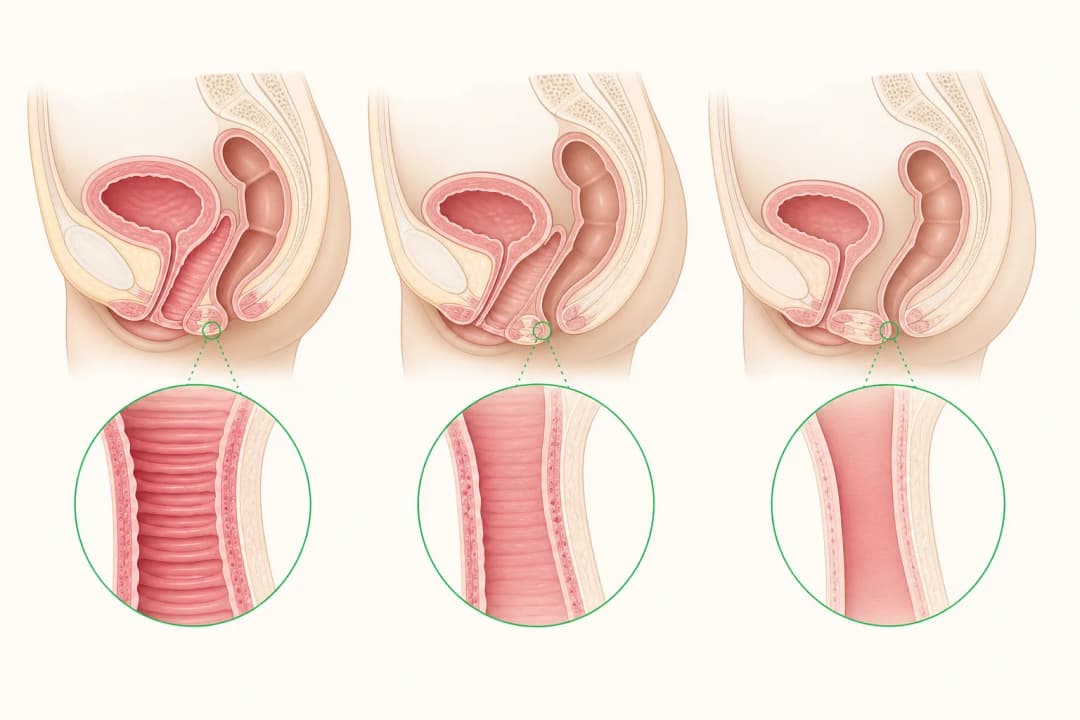
Lower oestrogen after menopause can make vaginal and vulval tissues thinner, drier and more sensitive. Urinary burning, urgency, recurrent urinary symptoms and pain during sex can occur alongside irritation. Genitourinary Syndrome of Menopause describes this group of symptoms and can continue without hot flushes or other menopause symptoms.
Treatment is tailored to the symptoms and to your medical history. Regular vaginal moisturiser may help ongoing dryness, while a water-based or silicone lubricant can reduce friction during sexual activity. These products support comfort but do not replace assessment of bleeding or infection.
How treatment may be tailored
Vaginal Oestrogen Therapy delivers a small amount of oestrogen locally and may help dryness, irritation, urinary discomfort and painful sex. Your clinician will check whether it is suitable, explain how to use it and review your response.
Vaginal Dilator Therapy uses graduated devices with guidance to gently maintain or improve comfort with insertion. It may be useful when tightness, pain or scarring makes penetration difficult. Pelvic-floor support, gentle routines and treatment of an identified urinary infection may be included in the plan.
When to seek care
Arrange an assessment for bleeding after menopause, blood in the urine, new pelvic pain, unusual discharge, sores, fever or urinary symptoms that persist or return. Seek urgent help for severe pain, heavy bleeding, fever with flank pain or inability to pass urine.
Questions for your doctor
Ask which symptoms fit this condition, whether infection or another cause should be excluded, and which local treatment suits your history. Discuss expected improvement, how long to try each option, and what to do if sex, insertion or urination remains painful.
Find care
General Clinics & Polyclinics in Abu Dhabi
That answer is general. If you want it applied to your own case, these are licensed general clinics & polyclinics listed in Abu Dhabi.
27 Ar Ruwwad St - Shakhbout City - MSH4 - Abu Dhabi - United Arab Emirates
Accepts: Daman, Thiqa, Cigna, MetLife +20 more
Al Ruwais, Al Dhafrah
Accepts: Daman, Thiqa, AXA, Cigna +16 more
Al Bahyah - Al Bahyah Old - Abu Dhabi - United Arab Emirates
Accepts: Daman, Thiqa, Cigna, Allianz Care +18 more
Abu Dhabi
Accepts: Daman, Thiqa, AXA, Cigna +27 more
Ordered by verification status and how complete each clinic's public record is, then alphabetically. This is a directory listing, not a ranking — Zavis does not rate or recommend providers.
A factual listing drawn from the DHA, DOH and MOHAP licence registers. It is not a referral, an endorsement, or advice that any of these providers is right for you.
Questions people ask
Are moisturisers and lubricants the same?
No. Moisturisers are used regularly for ongoing dryness, while lubricants are used around sexual activity or insertion to reduce friction.
Can vaginal oestrogen help urinary symptoms?
It may improve some urinary and vaginal symptoms, but persistent burning, fever or blood in the urine needs medical assessment.
Related
Related reading
Keep reading
Medical disclaimer. This page is general health information, not medical advice, and it cannot diagnose you. Always consult a licensed healthcare provider about your own symptoms and treatment. In an emergency in the UAE, call 998 for an ambulance.